


 Aperçu en situation
 Envoyer
 Partager
 Détails de l'œuvre
 Guide
Guide

 Télécharger l'image
 Articles similaires
 Radiographie
 Diaporama
 Questions et réponses
 Statistiques
Mammy


 Lire la suite
L’œuvre d'art présentée sur cette page est protégée par le droit d'auteur, ce qui signifie que nous ne pouvons légalement créer ou vendre de reproduction identique. Cette protection est appliquée en vertu d'accords internationaux tels que la Convention de Berne et par les lois nationales, notamment celles énoncées par le Loi américaine sur le droit d'auteur - Titre 17.
Cette méthode est pleinement conforme aux réglementations sur le droit d'auteur car elle ne repose pas sur la copie ou la duplication de l'œuvre protégée. Il s'agit plutôt d'une réinterprétation créative — une nouvelle peinture qui s'inspire de l'original sans pour autant lui être identique.
Giclées et impressions d'art
Impressions giclées ou sur toile de qualité musée, avec une production rapide et des finitions au choix. ( Commander la reproduction peinte à la main Passer au format numérique)




P118B €10

P118H €10

P118W €10

P438Z €10

P508JH €12

P508YH €12

P805H €10

P805Z €10

P919BZ €10

P919G €10

P919XJ €10

P959ZH €10

P968JZ €12

W106C €8

W218G €10

W218JH €8

W218Y €10

W307PJ €10

W316G €10

W316PJ €8

W316Y €10

W398PJ €8

W4111J €10

W500HY €15

W500JH €15

W692G €12

W849H €8

W940BG €15

W953PJ €8




Choisissez parmi nos formats prédéfinis qui respectent les proportions originales de l’œuvre.

Saisissez la largeur et la hauteur souhaitées pour qu'elles s'adaptent à votre cadre ou à votre mur. Une impression peut être recadrée, mais jamais agrandie au-delà de l'image originale ; ainsi, un format de forme différente entraînera la perte d'une partie de l'image. Nous vous envoyons une maquette numérique pour approbation avant toute impression. L'image présentée sur cette page ne montre pas le recadrage réel — seule la maquette le permet.
Livraison dans le monde entier () en 2 semaines au lieu des 4/5 semaines habituelles. (19 novembre)

Livraison express gratuite dans le monde entier

Toile de lin de qualité supérieure

Assurance transport complète

Garantie de remboursement des droits de douane

Garantie de fidélité des couleurs

Politique de retour de 100 jours (uniquement en cas de défaut)

Garantie de remboursement à 100%

Offre de tarifs dégressifs
 L'option verre n'est disponible que pour les dimensions inférieures à 110 cm.

Mammy
Giclées et impressions d'art
Format de la reproduction
-


Prix total
€ 58
Andy Warhol’s Mammy: A Bold Portrait Challenging Stereotypes
Andy Warhol's "Mammy," created in 1981 as part of his influential Myths series, stands as a striking testament to the artist's fascination with celebrity culture and his willingness to confront uncomfortable truths about American history. This silkscreen print, housed within Ronald Feldman Gallery’s collection, transcends mere visual representation; it embodies Warhol’s deliberate engagement with societal anxieties surrounding gender roles and racial identity—a conversation that continues to resonate today. The artwork itself is deceptively simple: a portrait of Sylvia Williams, former director of the Smithsonian Institution’s National Museum of African Art, rendered in Warhol's signature style – bold color blocking against a stark black background.- Subject & Composition: Warhol meticulously chose Williams as his subject, recognizing her significance within the broader context of Black womanhood and artistic representation. The composition prioritizes frontal positioning, emphasizing direct gaze and fostering an immediate connection with the viewer. Warhol’s masterful use of geometric shapes—circles for earrings and ovals for lips—creates a stylized aesthetic that deliberately eschews realism, opting instead for iconic visual language reminiscent of advertising campaigns.
- Pop Art & Technique: “Mammy” exemplifies Warhol's core tenets of Pop Art. Employing the technique of screen printing – a method he championed to elevate art beyond traditional mediums—Warhol achieved remarkable precision and consistency in color application. The diamond dust incorporated into the print adds an ethereal shimmer, enhancing its visual impact and subtly elevating it beyond commonplace decoration.
Symbolism & Historical Context
The title itself carries considerable weight, referencing the “Mammy” archetype—a pervasive figure in American folklore and literature depicting Black women who served white families as domestic servants, often nurturing children while maintaining subservient roles. Warhol’s appropriation of this stereotype is provocative, prompting reflection on how cultural narratives perpetuate biases regarding gender and race. However, Warhol deftly subverts expectations by imbuing Williams with vibrant hues—particularly the crimson bandana and gold earrings—that convey confidence and defiance. This deliberate contrast underscores Warhol's intention to reclaim and reimagine the Mammy archetype as a symbol of empowerment.- The Mammy Archetype Revisited: Warhol’s selection of Sylvia Williams wasn’t merely an aesthetic choice; it was a conscious effort to engage with ongoing debates surrounding representation in art and culture. The Mammy figure has historically been portrayed as both nurturing and oppressed, embodying the complexities inherent in Black womanhood within the context of slavery and its aftermath. Warhol's reimagining seeks to challenge conventional stereotypes and acknowledge the historical significance of this archetype.
- Warhol’s Critique of Celebrity Culture: “Mammy” operates on multiple levels—as a visual statement about glamour, confidence, and cultural heritage; and as an indictment of societal biases regarding gender roles. Warhol's appropriation of this figure speaks to his broader preoccupation with celebrity culture and the pervasive influence of media images on shaping perceptions of identity.
Emotional Impact & Interior Design Considerations
“Mammy” possesses a captivating visual presence that commands attention within any interior space. Its minimalist aesthetic—characterized by bold color blocking against a dark background—creates an arresting focal point, ideal for contemporary design schemes. The print’s luminous quality – achieved through Warhol's skillful use of diamond dust – lends it an air of sophistication and adds textural depth to its surface. When considered as art décor, “Mammy” serves as more than just decoration; it stimulates dialogue about artistic heritage, cultural critique, and the enduring power of visual imagery. Its striking color palette—primarily crimson and gold—harmonizes beautifully with neutral tones, offering designers versatile options for creating impactful compositions.- A Conversation Starter: Warhol’s artwork invites contemplation and discussion regarding themes of identity, representation, and societal biases. “Mammy” stands as a testament to Warhol's artistic vision—a bold exploration of cultural narratives that continues to provoke thought and inspire creativity.
- Versatile Aesthetic Integration: The print’s understated elegance lends itself seamlessly to diverse interior design styles—from modern minimalism to bohemian chic—creating an unforgettable visual experience. Its luminous quality complements natural light, enhancing its beauty and adding warmth to any room.
Questions et réponses
Où puis-je trouver des œuvres d'art similaires à «Mammy» de Andy Warhol ?
Les œuvres similaires à « Mammy » sont répertoriées sur la page Œuvres similaires de l'œuvre.
Quelle intensité et quelle saturation «Mammy» de Andy Warhol présente-t-il ?
Les couleurs de «Mammy» de Andy Warhol présentent une saturation Atténué et une intensité Équilibré.
Pourquoi le statut du droit d'auteur de « Mammy » est-il tel qu'il est ?
«Mammy» de Andy Warhol est dans le toujours protégé par le droit d'auteur. La durée du droit d'auteur court à partir du décès de l'artiste, survenu en 1987.
Œuvres similaires


Biographie de l'artiste
La jeunesse d'Andy Warhol
Pour comprendre les mécanismes de l'image moderne, il faut remonter aux racines industrielles et brutes de Pittsburgh, en Pennsylvanie. Andy Warhol est né Andrew Warhola Jr. le 6 août 1928, au sein d'un milieu ouvrier dépourvu de tout prétendu raffinement culturel. Dernier de trois fils, il est le fruit de l'union d'Andrej Warhola et de Julia Zavacky Warhola. Ses parents, immigrés de la région européenne qui est aujourd'hui la Slovaquie, lui ont offert un ancrage dans une réalité américaine authentique et sans fard. Cette lignée a instauré la tension fondamentale entre l'expérience de l'immigré et l'explosion consumériste qu'il allait, plus tard, documenter.
La stabilité de ses premières années fut brusquement interrompue par les dures réalités du travail industriel et de la maladie. Son père travaillait dans une mine de charbon, un métier qui a façonné le paysage économique de la famille jusqu'à son décès en 1942, des suites d'une péritonite tuberculeuse. Cette perte survint alors que Warhol n'avait que quatorze ans, une période qui balaya la sécurité domestique de son enfance. Le foyer fut alors marqué par la rudesse du paysage de Pittsburgh et l'absence soudaine du principal pourvoyeur de ressources. Ces premières années ne furent pas un prélude à la gloire, mais une période de stricte nécessité matérielle.
Maladie d'enfance et créativité précoce
Le langage visuel qui allait finir par définir un siècle a pris racine dans l'immobilité forcée d'une chambre de malade. Une crise de chorée de Sydenham durant son enfance, également connue sous le nom de danse de Saint-Guy, l'a contraint à rester enfermé chez lui pendant de longues périodes. Ce confinement ne fut pas un vide, mais plutôt une période d'observation intense et concentrée. Il passait ses journées à dessiner et à confectionner des albums à partir de magazines hollywoodiens, absorbant les visages glacés et manufacturés d'une culture de la célébrité lointaine. Sa mère lui fournissait la matière première essentielle : des bandes dessinées et des magazines de cinéma. Ce furent les premières images qu'il apprit à décoder, instaurant une préférence pour le produit de masse plutôt que pour l'unique.
Cette immersion précoce dans les médias imprimés a forgé une manière singulière de voir le monde. Il ne contemplait pas la réalité à travers des prismes classiques, mais à travers l'imagerie saturée et répétitive de la page de magazine. Sa fascination pour la photographie est née parallèlement à cet apprentissage visuel. Il aimait utiliser le Kodak Baby Brownie Special de la famille pour capturer son environnement. Cet intérêt fut pris au sérieux par ses proches ; son père et ses frères lui aménagèrent même une chambre noire au sous-sol. Cette installation lui permit de passer de la simple observation à la manipulation technique de l'image, une compétence qui allait plus tard constituer le socle de toute son approche de la reproduction artistique.
Formation académique et succès commercial
La transition d'Andy Warhol du statut d'étudiant à celui de professionnel fut portée par une précision technique acquise au fil d'un cursus académique rigoureux. Après avoir fréquenté la Holmes Elementary School et la Schenley High School, il s'est tourné vers des études supérieures au Carnegie Institute of Technology. Il y obtient, en 1949, un Bachelor of Fine Art en design pictural. Cette formation spécialisée a jeté les bases structurelles d'une carrière qui allait, par la suite, démanteler la distinction entre le grand art et l'imagerie commerciale. C'est en 1949 qu'il s'installe à New York, apportant avec lui la discipline du designer dans le paysage ultra-compétitif de Manhattan.
Ses premières années professionnelles furent marquées par l'illustration commerciale de haut vol. Loin de chercher d'emblée à défier le statu quo, il a d'abord cherché à le maîtriser. En collaborant avec des noms prestigieux tels que Tiffany & Co., Vogue ou Harper's Bazaar, il a appris les rouages par lesquels les marques fabriquent le désir. Sa liste de clients constituait une véritable cartographie de la consommation américaine du milieu du siècle, incluant The New York Times, I. Miller Shoes, Bonavit Teller, Columbia Records, Fleming-Joffe et NBC. Cette période de pratique ne fut pas un simple détour, mais un apprentissage rigoureux des mécanismes de la distribution de masse et de l'identité visuelle. Il avait déjà parfaitement compris le cycle de vie d'un produit bien avant de tenter de le déconstruire sur une toile.
L'Ascension de la Pop Art et L'Atelier
Dès les années 1960, le passage de l'illustration de produits à l'utilisation des produits eux-mêmes comme sujets a tout bouleversé. Andy Warhol a cessé de dessiner la marque pour commencer à présenter l'objet. Il a adopté le procédé de la sérigraphie pour refléter la nature répétitive de la culture de consommation, une méthode qui effaçait la main traditionnelle de l'artiste au profit d'une esthétique mécanique. Il ne s'agissait plus de savoir-faire artisanal, mais de l'application de la logique de la chaîne de montage à la toile.
Son studio, connu sous le nom de « The Factory », fonctionnait comme le point névralgique d'un cercle social new-yorkais très particulier. C'était un foyer d'expérimentation avant-gardiste qui rassemblait drag queens, poètes, bohémiens, musiciens et riches mécènes. Cet espace a brouillé les frontières entre vie privée et personnage public, créant un environnement contrôlé où la culture était fabriquée au même titre que l'art. Entre 1963 et 1968, il a étendu cette expérimentation au cinéma, produisant plus de 600 œuvres qui ont défié la manière dont le public consommait l'image animée.
- Marilyn Diptych (1962)
- Campbell's soup cans (1962)
- Triple Elvis (1963)
Thèmes de la consommation et de la célébrité
La fascination d'Andy Warhol pour l'influence omniprésente de la culture des célébrités sur la société américaine n'était pas une simple observation passive ; il s'agissait d'une véritable dissection de la manière dont la gloire est fabriquée et consommée. Il avait compris qu'un être humain pouvait être transformé en produit par le biais de la répétition et de la saturation médiatique. Cette logique s'appliquait avec la même force à l'étagère d'un supermarché qu'au grand écran du cinéma. En traitant les visages de stars telles que Marilyn Monroe et Elizabeth Taylor avec le même détachement mécanique que celui utilisé pour les biens de consommation, il a exposé l'artificialité de la persona publique. Il ne se contentait pas de peindre des individus ; il documentait la construction de l'idole moderne.
Cette obsession pour la nature répétitive de la consommation s'étendait jusqu'au banal. Ses représentations des Campbell's Soup Cans en 1962 ont transformé des objets du quotidien en sujets de l'art majeur, reflétant la réalité de la production de masse de l'expérience américaine du milieu du siècle. Il percevait le supermarché comme un paysage aussi significatif que n'importe quelle galerie d'art. Cependant, son regard n'était pas toujours éclatant ou coloré. Il interrogeait également les facettes les plus sombres et les plus violentes de l'expérience américaine, produisant des séries centrées sur les accidents de voiture et les chaises électriques. Ces œuvres dépouillaient l'ère médiatique de son glamour pour révéler la sinistre réalité du sensationnalisme qui captive l'attention du public.
Son influence a même irrigué l'industrie musicale à travers la gestion du groupe de rock The Velvet Underground. Ce lien a davantage brouillé les frontières entre le grand art et le pouls brut et souterrain de la culture populaire. Il était fasciné par la manière dont tout — de la boîte de soupe à la rock star — pouvait être emballé, marqué par une marque et vendu aux masses.
- Campbell's Soup Cans (1962)
- Marilyn Diptych (1962)
Technique et méthodes artistiques
L'impact d'Andy Warhol puise sa force dans son rejet délibéré de la main traditionnelle de l'artiste. En embrassant le processus de la sérigraphie, il a réussi à instaurer une esthétique mécanique et aplatie, véritable miroir de la production de masse des biens de consommation qu'il dépeignait. Cette méthode permettait un détachement de la touche manuelle du pinceau, privilégiant un aspect répétitif et industriel. Dans ses premières œuvres, il utilisait la technique de la « ligne absorbée » (blotted line), une méthode qui accentuait la qualité graphique de ses dessins. Son approche ne visait jamais la touche singulière d'un créateur, mais cherchait plutôt à capturer l'efficacité de la machine.
Son expérimentation s'est étendue à la dimension temporelle à travers le cinéma. Il a utilisé des plans longs et fixes dans des œuvres telles que Sleep et Empire pour défier la manière dont le public consomme l'image animée. Ces durées statiques et prolongées imposaient une confrontation directe avec le médium lui-même. Il a également exploré diverses méthodes photographiques et cinématographiques, notamment la photographie 35 mm et la cinématographie à l'image unique. Il utilisait fréquemment un Polaroid Big Shot pour capturer ses sujets, une pratique qui a profondément nourri son langage visuel fondé sur l'immédiateté et la répétition.
- Sleep (1963)
- Empire (1964)
La tentative d'assassinat et la fin de sa carrière
La trajectoire de la carrière d'Andy Warhol a basculé de manière irréversible en 1968, lorsque Valerie Solanas a fait irruption dans son atelier de Manhattan pour lui tirer dessus. Cette intrusion violente a fait bien plus que laisser des séquelles physiques durables ; elle a fondamentalement altéré les rouages de son activité. L'énergie sociale et chaotique de la première époque de l'Atelier s'est muée en une entreprise plus structurée et orientée vers les affaires. Il s'est éloigné des marges imprévisibles de l'underground pour tendre vers une gestion plus calculée de sa propre marque et de sa présence médiatique.
Ses dernières années furent marquées par une expansion agressive dans les domaines de l'édition et de la télévision. Il a fondé le magazine Interview, une publication centrée sur l'intersection du cinéma, de la mode et de la culture populaire. Ce mouvement faisait écho à son obsession de toujours pour les mécanismes de la célébrité. Il a également investi les salons du grand public à travers des émissions télévisées, notamment Andy Warhol's TV (1980–83) et Andy Warhol's Fifteen Minutes (1985–87). Ces projets n'étaient pas de simples divertissements ; ils constituaient des extensions de son intérêt pour la manière dont les images sont consommées et diffusées.
Même en consolidant son statut commercial, il a maintenu un lien avec l'avant-garde émergente grâce à des collaborations significatives. Il a travaillé aux côtés de jeunes artistes tels que Jean-Michel Basquiat et Keith Haring, jetant un pont entre son héritage établi de Pop Art et la génération suivante d'expression visuelle. Cette période a prouvé que son influence n'était pas un vestige statique des années 1960, mais une force continue et évolutive dans le paysage médiatique.
Les dernières années et la mort
À l'approche de la fin de sa vie, Andy Warhol avait depuis longtemps délaissé l'identité singulière de peintre pour devenir une entité multimédia, naviguant entre la photographie, l'édition et la télévision avec la même efficacité mécanique qu'il appliquait autrefois à la sérigraphie. Cette expansion n'était pas un renoncement à ses intérêts, mais plutôt la progression logique de son obsession pour l'image. Il ne se contentait plus de créer de l'art ; il gérait une véritable marque qui occupait chaque écran et chaque page disponible.
La fin survint de manière abrupte à New York. À la suite d'une opération pour l'ablation de la vésicule biliaire, il s'éteignit le 22 février 1987, emporté par une arythmie cardiaque. Il avait 58 ans. Sa disparition marqua le terme d'une carrière qui avait réussi le pari de fusionner l'univers feutré des galeries d'art avec la réalité de masse des rayons de supermarchés et des écrans de télévision.
- Beethoven (1987)
- Les peintures de la Cène (1986/1987)
L'héritage impérissable d'Andy Warhol
Andy Warhol demeure l'artiste le plus crucial de la seconde moitié du XXe siècle. Il ne s'est pas contenté d'observer l'ère médiatique ; il a interrogé la nature même de ce que signifie « être vu » au sein de celle-ci. En transformant les textures répétitives de la consommation en un véritable langage visuel, il a prédit une réalité définie par la saturation numérique et une visibilité constante. Il est l'homme qui a popularisé l'expression « quinze minutes de célébrité », un concept qui est passé du statut de prédiction à celui de règle fondamentale de l'existence moderne. Son œuvre a anticipé la manière dont la célébrité et la marchandise deviennent indiscernables dans une société hyper-connectée.
Le marché reconnaît son influence par son poids économique pur. Il a été décrit comme le baromètre du marché de l'art, une figure dont la production dicte la direction des collections les plus prestigieuses. Sa capacité à combler le fossé entre l'étagère du supermarché et le mur de la galerie a transformé la manière dont la valeur est attribuée à l'image. Il a détourné l'art de l'âme intérieure pour le diriger vers l'objet extérieur, produit en série. Ce basculement a permis à sa présence de se faire sentir dans chaque recoin de la culture visuelle contemporaine, des enchères de prestige aux esthétiques filtrées des réseaux sociaux.
- Marilyn Diptych (1962)
- Campbell's soup cans (1962)
- Mao (1972–73)
- Shot Sage Blue Marilyn (1964)
Où voir ses œuvres aujourd'hui
Pour se confronter à la réalité physique de sa production, il faut se tourner vers les institutions qui ont su préserver sa présence. L'Andy Warhol Museum de Pittsburgh détient la concentration la plus importante de son œuvre, s'imposant comme le plus grand musée des États-Unis dédié à un artiste unique. Il demeure le site de référence pour quiconque cherche à saisir l'ampleur monumentale de sa production. Au-delà du paysage américain, son influence est ancrée dans de grandes collections internationales. La Tate Modern à Londres et le Museum of Modern Art à New York possèdent chacun deux œuvres, offrant des points de contact essentiels pour l'étude de son langage visuel. En Europe, le Lentos Kunstmuseum Linz conserve également deux pièces dans sa collection.
Ces collections offrent bien plus qu'une simple contemplation ; elles fournissent le contexte spécifique de son engagement envers les médias de masse et la célébrité. Contempler son travail dans ces cadres permet une confrontation directe avec les textures mécaniques qu'il utilisait pour refléter la culture de la consommation. La présence de son imagerie dans des lieux géographiques aussi divers confirme l'envergure de son esthétique. Son œuvre subsiste dans ces espaces comme le témoignage d'une époque singulière, saturée par les médias.
- Marilyn Diptych
- Campbell's soup cans
- Mao
- Elvis Presley
- Mick Jagger
- Superman
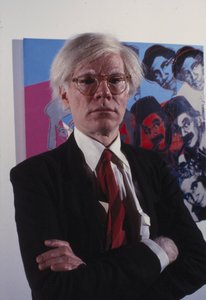
Andy Warhol
1928 - 1987 , États-Unis
L'essentiel de l'artiste
- Artistes Ou Mouvements Influencés Par Cet Artiste: ['Pop Art']
- Date De Décès: 1987
- Date De Naissance: 1928
- Lieu De Naissance: Pittsburgh, États-Unis d'Amérique
- Mouvement Ou Style Artistique: Pop Art
- Nationalité: Américaine
- Nom Complet: Andrew Warhola Jr.
- Œuvres Notables:
- Marilyn Diptych
- Campbell's soup cans
- Triple Elvis
- Mao
Articles connexes

Pop Art Decoded: How Mass Culture and Iconic Imagery Redefined Modern Art
Discover how Pop Art redefined modern culture through icons like Warhol and Lichtenstein. Explore the legacy of mass media art today.

Icons of Mass Media: Examining the Intersection of Consumerism and Celebrity in Pop Art
Explore the profound impact of Pop Art on consumerism and celebrity culture through expert analysis. Discover the icons of mass media now.

Les 25 chefs-d'œuvre iconiques de Roy Lichtenstein qui ont défini le Pop Art
Explorez les 25 chefs-d'œuvre de Roy Lichtenstein et l'énergie du Pop Art. Découvrez toute la collection sur AllPaintingsStore.com.

Les 25 chefs-d'œuvre iconiques d'Andy Warhol qui ont défini le Pop Art
Plongez dans l'univers vibrant d'Andy Warhol. Explorez 25 chefs-d'œuvre du Pop Art, de Marilyn aux soupes Campbell, et trouvez l'inspiration pour votre décor avec nos reproductions de qualité musée. Découvrez tous les chefs-d'œuvre sur AllPaintingsStore.com.

L'Art Abstrait : Dynamiser et Créer du Flux dans l'Architecture d'Intérieur
Optimisez vos projets d'architecture d'intérieur avec l'art abstrait. Guide expert pour designers : maîtrisez le flux visuel et la dynamique des espaces via des reproductions sur mesure de haute qualité, idéales pour les projets hôteliers et corporatifs à grande échelle.


