


 Aperçu en situation
 Envoyer
 Partager
 Détails de l'œuvre
 Guide
Guide

 Télécharger l'image
 Articles similaires
 Radiographie
 Diaporama
 Q&A
Q&A Statistiques
Rooftops
 Acrylic
- WallArt
- Geometric Abstraction
 1912
1912 42.0 x 32.0 cm
 Lire la suite
Giclées et impressions d'art
Impressions giclées ou sur toile de qualité musée, avec une production rapide et des finitions au choix. ( Commander la reproduction peinte à la main Passer au format numérique)




P118B €10

P118H €10

P118W €10

P438Z €10

P508JH €12

P508YH €12

P805H €10

P805Z €10

P919BZ €10

P919G €10

P919XJ €10

P959ZH €10

P968JZ €12

W106C €8

W218G €10

W218JH €8

W218Y €10

W307PJ €10

W316G €10

W316PJ €8

W316Y €10

W398PJ €8

W4111J €10

W500HY €15

W500JH €15

W692G €12

W849H €8

W940BG €15

W953PJ €8




Choisissez parmi nos formats prédéfinis qui respectent les proportions originales de l’œuvre.

Saisissez la largeur et la hauteur souhaitées pour qu'elles s'adaptent à votre cadre ou à votre mur. Une impression peut être recadrée, mais jamais agrandie au-delà de l'image originale ; ainsi, un format de forme différente entraînera la perte d'une partie de l'image. Nous vous envoyons une maquette numérique pour approbation avant toute impression. L'image présentée sur cette page ne montre pas le recadrage réel — seule la maquette le permet.
Livraison dans le monde entier () en 2 semaines au lieu des 4/5 semaines habituelles. (30 octobre)

Livraison express gratuite dans le monde entier

Toile de lin de qualité supérieure

Assurance transport complète

Garantie de remboursement des droits de douane

Garantie de fidélité des couleurs

Politique de retour de 100 jours (uniquement en cas de défaut)

Garantie de remboursement à 100%

Offre de tarifs dégressifs
 L'option verre n'est disponible que pour les dimensions inférieures à 110 cm.

Rooftops
Giclées et impressions d'art
Format de la reproduction
-


Prix total
€ 56
A Symphony of Steel and Stone: Exploring Fernand Léger’s Rooftops
Fernand Léger's "Rooftops," painted in 1912, isn’t merely a depiction of urban architecture; it’s an ambitious declaration of artistic intent—a bold experiment in translating the burgeoning anxieties and exhilarations of the early twentieth century onto canvas. Created during a period marked by rapid industrialization and technological advancement, Léger's watercolor captures a cityscape brimming with energy, reflecting the pervasive influence of machine aesthetics on artistic sensibilities. The painting’s subject matter – rooftops viewed from above – is deceptively simple, yet it serves as a springboard for profound explorations into form, color, and the artist’s relationship to his environment.- Subject Matter: Léger eschews traditional landscapes in favor of an urban panorama, prioritizing geometric abstraction over representational accuracy. The rooftops themselves are rendered with meticulous attention to detail—their varied textures and angles conveying a palpable sense of solidity and permanence against the backdrop of movement.
- Style & Technique: Léger’s distinctive style is characterized by “Constructivism,” an artistic movement that championed geometric abstraction as a means of expressing social ideals. He employs bold, angular brushstrokes—primarily in shades of gray and ochre—to build up layered planes of color, creating a visual rhythm reminiscent of industrial machinery. The watercolor medium lends itself beautifully to capturing the subtle nuances of light and shadow, enhancing the painting’s textural richness.
Questions et réponses
Quelle nuance dominante traverse «Rooftops» de Fernand Léger ?
«Rooftops» tend vers une nuance Ochre to Sepia.
Quel est le niveau de contraste de «Rooftops» de Fernand Léger ?
Le contraste clair-obscur de « Rooftops » est évalué à Serene. Le contraste décrit l'intensité de la différence entre les zones claires et les zones sombres.
Quelle technique a été utilisée pour « Rooftops » et quand cette œuvre a-t-elle été créée ?
«Rooftops» a été réalisé en 1912, en Acrylic.
Œuvres similaires


Biographie de l'artiste
jeune vie et formation
fernand léger, peintre, sculpteur et cinéaste français, est né le 4 février 1881 à Argentan, Orne, en Normandie inférieure. Son père élevait du bétail, et léger a initialement été formé à l'architecture de 1897 à 1899. Il s’est ensuite installé à Paris en 1900, se débrouillant comme dessinateur architectural.développement artistique
Le travail précoce de léger a été influencé par l'impressionnisme, comme le montrent le jardin de ma mère (mon jardin) (1905). Après avoir fréquenté l'école des beaux-arts et l’académie Julian, il a commencé à travailler sérieusement comme peintre à 25 ans. Son style s'est développé en une forme personnelle de cubisme, que les critiques ont qualifié de "tubisme" pour son accent sur les formes cylindriques.cubisme et le groupe des Puteaux
En 1910, léger a exposé au Salon d’automne aux côtés de jean metzinger et henri le fauconnier. Il a rejoint le groupe des Puteaux, également connu sous le nom de section d’or (la section dorée), avec d'autres artistes tels que francis picabia et marcel duchamp.guerre et son influence sur le travail de léger
Les expériences de léger à la Première Guerre mondiale ont eu un impact significatif sur son œuvre. Pendant son séjour au front, il a produit des croquis d'artillerie, d'avions et de soldats. Sa peinture soldier avec un tuyau (1916) reflète cette période.œuvre ultérieure et héritage
L'œuvre post-guerre de léger, caractérisée par des formes machine-like élégantes, le lia à la tradition de la peinture figurative française. Ses paysages animés de 1921 ont présenté des figures et des animaux dans des formes harmonieuses et rationalisées.- voir les œuvres de fernand léger sur AllPaintingsStore
- en savoir plus sur fernand léger sur wikipedia
- découvrez le musée national fernand léger (france) avec AllPaintingsStore
- la femme assise (100 x 81 cm, tubisme)
- élément de machine (cubisme)
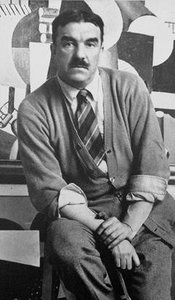
Fernand Léger
1881 - 1955 , France
L'essentiel de l'artiste
- Artistes Influents:
- Cézanne
- Impressionnisme
- Date De Décès: 1955
- Date De Naissance: 4 février 1881
- Influences Artistiques: ['Pop Art']
- Lieu De Naissance: Argentan, France
- Mouvement Artistique: Cubisme, Tubisme
- Nationalité: Française
- Nom Complet: Fernand Léger
- Oeuvres Notables:
- La Grande Parade
- Machine Élément
- Femme assise
- Paysages animés
Articles connexes

Abstraction Géométrique : Les 10 Chefs-d'œuvre qui ont Marqué l'Histoire de l'Art
Plongez au cœur de l'abstraction géométrique avec AllPaintingsStore.com ! Découvrez les 10 œuvres majeures de Mondrian, Malevitch et Kandinsky qui ont révolutionné l'art moderne. Inspirez votre décoration intérieure avec des reproductions de tableaux exceptionnelles. Explorez la collection en ligne !

Les 10 Chefs-d'œuvre de l'Aquarelle qui ont Révolutionné l'Art | AllPaintingsStore
Plongez dans l'univers fascinant des 10 chefs-d'œuvre de l'aquarelle qui ont marqué l'histoire de l'art. Découvrez Turner, Monet, Goya et bien d'autres ! Retrouvez ces œuvres emblématiques en reproductions exceptionnelles sur AllPaintingsStore.com.
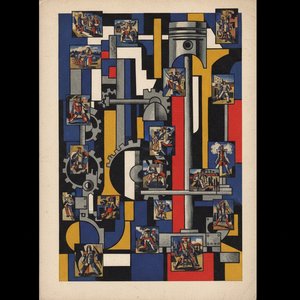
Fernand Léger : Les 25 Œuvres Maîtresses d'un Pionnier du Modernisme | AllPaintingsStore
Plongez dans l'univers vibrant de Fernand Léger ! Découvrez les 25 œuvres majeures du cubisme et du tubisme, explorant formes géométriques et couleurs audacieuses. Retrouvez des reproductions d'art exceptionnelles sur AllPaintingsStore.com.

Éphémères Visions : L'Aquarelle, Histoire et Résonance Émotionnelle d'un Art Intemporel
Explorez l'histoire fascinante de l'aquarelle, des origines à nos jours. Découvrez les techniques, les artistes emblématiques et nos conseils d'experts pour collectionner ces œuvres éphémères. AllPaintingsStore.

Ephemeral Visions: Exploring the Artistic Legacy & Contemporary Practice of Watercolor Painting
Explore the captivating world of watercolor painting! Discover its rich history, essential techniques, influential artists & collecting tips. A comprehensive guide for art enthusiasts from AllPaintingsStore.


