

Romanticism · 1822
Cloud Study (John Constable, 1822)
Cloud Study est une œuvre de John Constable (1776–1837). Elle date de 1822. Il appartient au mouvement Romanticism. Réalisée en Oil. Il est conservé au Yale Center for British Art à New Haven, États-Unis d'Amérique. Ses dimensions sont 28.6 × 48.3 cm.
- 1822
- Oil
- 28.6 × 48.3 cm
- Yale Center for British Art, New Haven

 Aperçu en situation

 Acheter une impression
 Envoyer
 Partager
 Fiche pédagogique


 Télécharger l'image
 Articles similaires
 Radiographie
 Diaporama
 Questions et réponses

 Statistiques
Cloud Study : détails clés
- Titre
- Cloud Study
- Artiste
- John Constable (1776–1837)
- Lieu de naissance de l'artiste
- East Bergholt, Royaume-Uni
- Date
- 1822
- Technique
- Oil
- Dimensions
- 28.6 × 48.3 cm
- Où le voir
- Yale Center for British Art, New Haven, États-Unis d'Amérique
- Mouvement
- Romanticism
- Période
- 19th Century
- Sujet
- clouds, sky, blue sky, white clouds, gray clouds, texture
Que représente Cloud Study ?
Identification of Cloud Study by John Constable
Cloud Study is an oil on paper study executed by John Constable in 1821. This work focuses on the atmospheric movement of the sky, capturing the transient nature of light and vapor. It belongs to the Romanticism movement of the 19th century.
The piece is part of the Paul Mellon Collection and is currently held at the Yale Center for British Art in New Haven. It represents a period of intense observation for the artist, specifically regarding the meteorological conditions of the English landscape.
Composition and Visual Elements of the Sky
The composition focuses on atmospheric sky and cloud formations, utilizing a palette of blue, gray, and white. Swirling strokes and soft white vapor create a sense of movement across the expanse. These elements interact with cream tones and charcoal to define the shifting structures of the clouds. The arrangement emphasizes the weight and volume of the vaporous forms against the blue sky.
Texture is central to the visual experience, as the interplay of light and shadow defines the cloudscapes. While the primary focus remains on the sky, the composition includes glimpses of landscape, such as trees and dark foliage, which provide a sense of scale and grounding to the celestial activity. The interaction between the gray clouds and the lighter, white highlights suggests a dynamic, changing atmosphere.
Technique and Physical Materials Used
Executed in oil on paper laid on board, the work demonstrates a commitment to the immediacy of plein air study. The artist employs an impasto-like technique to build physical weight upon the surface, creating a tactile presence that mimics the density of vapor. These thick applications of paint allow for a direct engagement with the medium, capturing the transient nature of light and atmosphere through material substance.
The surface is defined by expressive brushstrokes and fluid, gestural movements. Layered textures emerge from the application of pigment, utilizing swirling strokes to suggest the motion of the sky. This method relies on a sophisticated handling of light and shadow to provide volume to the cloud formations. The result is a surface that prioritizes the physical reality of the paint to convey the shifting conditions of the atmosphere.
Documented Interpretations and Scholarly Debates
Scholarly discussion often centers on the extent to which meteorological science influenced the artist's approach to the sky. A significant debate concerns the impact of Luke Howard’s cloud classification system, published in the early 19th century. Some researchers suggest that familiarity with these scientific categorizations resulted in a more balanced light, increased freshness, and a heightened sense of realism in the artist's work during this period.
However, this connection remains contested. While some argue that these studies represent a shift toward scientific naturalism, others maintain that the works produced at Hampstead Heath between 1821 and 1822 were never actually utilized in later, larger compositions. This tension raises questions about the functional purpose of such studies—whether they were intended as direct preparatory tools for major landscapes or as independent investigations into the transient nature of the atmosphere.
Related Works by the Same Artist
Constable’s preoccupation with atmospheric conditions is evident in several other studies from the same period. His investigations into the sky continued through 1821 and 1822, resulting in works such as Cloud Study, Hampstead, Tree at Right (1821) and a separate Cloud Study held in the National Museum in Warsaw, dated about 1822.
His larger compositions often integrated these meteorological observations to establish a sense of place. Notable examples include The Hay Wain (1821) and Salisbury Cathedral from the Meadows (1831). These works demonstrate how his study of light and vapor informed his approach to the English landscape.
Où se trouve Cloud Study aujourd'hui ?
Yale Center for British Art
New Haven, États-Unis d'Amérique
L'Histoire du Yale Center for British Art Fondé en 1966, le Yale Center for British Art occupe une place de choix à New Haven, dans le Connecticut, aux États-Unis d'Amérique. L'institution est née du legs d'une collection extraordinaire amassée par Paul Mellon. Cette fondation a transformé le paysage des études sur l'art britannique dans la région, offrant un écrin permanent à des œuvres qui retracent l'évolution de l'identité visuelle d'une nation.


Cloud Study : fichiers image

Domaine public : l'artiste est décédé en 1837.
Tous les formats et recadrages →John Constable, Cloud Study (1822), Yale Center for British Art. Domaine public
Préparé à partir d'une image haute résolution de notre base de données, et non de l'image web : minimum 300 DPI. Couleurs contrôlées par rapport à l'original, fichier retouché par un expert numérique.
Acheter l'image haute résolutionQuestions sur Cloud Study
Où peut-on voir «Cloud Study» de John Constable actuellement ?
«Cloud Study» de John Constable est exposé au Yale Center for British Art, New Haven, États-Unis d'Amérique. La mention du musée se rapporte à l'œuvre originale et non aux reproductions.
En quelle année «Cloud Study» de John Constable a-t-il été créé ?
L'œuvre «Cloud Study» de John Constable date de 1822.
Quelle est la technique utilisée pour «Cloud Study» de John Constable ?
«Cloud Study» de John Constable est réalisé en Oil. Les reproductions visent à restituer l'aspect de cette technique.
Quelles sont les dimensions de l'œuvre originale « Cloud Study » ?
«Cloud Study» mesure 28.6 x 48.3cm dans sa forme originale. Les dimensions originales constituent une référence utile lors du choix de la taille d'une reproduction.
Que représente «Cloud Study» de John Constable ?
L'œuvre « Cloud Study » représente clouds, sky, blue sky, white clouds, gray clouds, texture.
L'œuvre «Cloud Study» de John Constable est-elle dans le domaine public ?
Statut des droits d'auteur pour «Cloud Study» de John Constable : l'œuvre est dans le dans le domaine public - ses droits d'auteur sont tombés dans le domaine public. Cela détermine si les reproductions de l'image peuvent être réalisées librement.
Qui est l'artiste derrière « Cloud Study » ?
« Cloud Study » est attribué à John Constable.
À quel mouvement artistique appartient «Cloud Study» de John Constable ?
« Cloud Study » est une œuvre issue du Romanticism. Ce mouvement définit la tradition artistique à laquelle l'œuvre appartient.
À quelle période de la carrière de John Constable se situe « Cloud Study » ?
« Cloud Study » est représentatif de la période Mature Period de John Constable.
À propos de John Constable
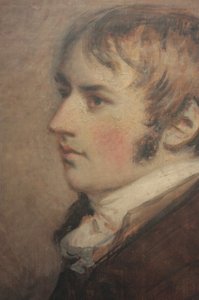
1776–1837, Royaume-Uni
John Constable
Jeunesse, Famille et Formation John Constable naquit en 1776 dans le village d'East Bergholt, dans le Suffolk. Deuxième fils de Golding et d'Ann (Watts) Constable, il grandit dans un environnement marqué par l'activité commerciale. Son père, un prospère négociant en céréales et en charbon, était propriétaire de Flatford Mill. Ce lien étroit avec la rivière et le commerce local imprégnait le quotidien de la maison, où les rythmes de l'eau et le mouvement des marchandises constituaient une toile de fond constante.
Toutes les œuvres de John Constable, avec dimensions et prix → À propos de l'artiste Œuvres célèbres de John Constable
Autres œuvres de John Constable
 The Hay Wain1821
 Vue de la cathédrale de Salisbury depuis les terrains épiscopaux1823
 Cathédrale de Salisbury
 Le Chemin de Hay (détail)1821

Pour en savoir plus sur Cloud Study
 25 chefs-d'œuvre incontournables à découvrir au Yale Center for British ArtExplorez 25 chefs-d'œuvre du romantisme anglais au Yale Center. Trouvez l'inspiration sur AllPaintingsStore.com.
 Cieux Éthérés : Guide de Collection pour les Paysages Nuageux et la Grandeur AtmosphériqueMaîtrisez l'art des paysages nuageux et de la perspective aérienne. Explorez la grandeur des cieux avec notre guide expert.
 Les 25 plus beaux chefs-d'œuvre de John Constable : l'âme des paysages anglaisExplorez les 25 chefs-d'œuvre de John Constable et l'âme du romantisme anglais. Découvrez nos reproductions sur AllPaintingsStore.com.