

1872. Acrylic On Canvas, 24.0 x 36.0 cm.

§ 1Catalogue data
 Acrylic On Canvas
- WallArt
- Symbolism
 1872
1872- 19th Century
 24.0 x 36.0 cm
§ 2Abstract
Description de la pièce
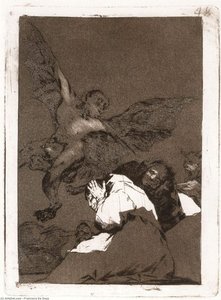
A haunting black and white photograph captures Odilon Redon’s 1872 "Fallen Angel," a poignant depiction of a winged woman in a grassy landscape, showcasing the artist's symbolic exploration of dreams and the unseen. Discover this evocative masterpiece and bring its timeless beauty into your collection.
 Lire la suite
Biographie de l'artiste
Odilon Redon (1840-1916): Maître du Symbolisme français, explorez son univers onirique & ses gravures énigmatiques. Précurseur du Surréalisme, influencé par le Japonisme et l'Orient.
§ 3Commentary
A Descent into Shadow: Exploring Odilon Redon’s “Fallen Angel”
Odilon Redon's "Fallen Angel," created in 1872, is not merely a depiction of a woman with wings; it’s a profound meditation on loss, regret, and the unsettling beauty found within the subconscious. This evocative monochrome image, meticulously captured from the original painting, offers a window into the intensely personal and symbolic world of one of France's most significant Symbolist artists. Redon, born Bertrand-Jean Redon in Bordeaux in 1840, dedicated his life to translating the hidden landscapes of dreams and anxieties onto canvas, rejecting the prevailing academic realism of his time in favor of a deeply subjective visual language.
- Subject Matter: The central figure – a woman lying prone amidst a field of grass – immediately evokes biblical imagery, specifically the story of Lucifer’s fall from grace. However, Redon avoids straightforward narrative; instead, he presents a fragmented, almost spectral presence, suggesting a state of profound sorrow and isolation rather than triumphant rebellion.
- Style & Technique: Redon's style is characterized by its haunting atmosphere and meticulous attention to detail. He employed a technique heavily influenced by his early training in etching and lithography – skills he honed under the tutelage of Rodolphe Bresdin – allowing him to create incredibly detailed textures, particularly in the delicate rendering of the angel’s wings and the rough grasses beneath her. The use of black and white amplifies the sense of melancholy and emphasizes the formal qualities of the composition.
Symbolism and the Language of Dreams
“Fallen Angel” is saturated with symbolic weight, reflecting Redon's fascination with the darker aspects of human experience. The angel’s pose – lying defeated, vulnerable – speaks to themes of brokenness and spiritual decline. The grassy field, often associated with rebirth and renewal, here becomes a site of stagnation and decay, mirroring the angel’s state. The dress, though elegant in its design, adds another layer of complexity; it suggests a lost dignity, a fallen grace. Redon's work frequently draws upon Romantic and Pre-Raphaelite influences, but he transcends these movements through his intensely personal vision.
- Romantic Influence: The painting aligns with the Romantic movement’s emphasis on emotion, imagination, and the sublime—particularly in its depiction of a figure overwhelmed by sorrow.
- Pre-Raphaelite Echoes: The meticulous detail and focus on beauty within decay resonate with Pre-Raphaelite aesthetics, though Redon's approach is far more psychologically driven.
Historical Context & Redon’s Vision
Created in 1872, “Fallen Angel” emerged during a period of significant artistic and intellectual ferment in France. The Symbolist movement was gaining momentum, challenging the dominance of Realism and Impressionism with its focus on subjective experience and esoteric themes. Redon's work anticipated many of the key concerns of Symbolism – exploring the hidden realms of consciousness, confronting mortality, and utilizing art as a vehicle for spiritual or emotional expression. His brief military service during the Franco-Prussian War undoubtedly influenced his darker, more introspective artistic direction.
This particular reproduction captures a piece that speaks to the anxieties of a rapidly changing world – a world grappling with industrialization, scientific advancements, and the decline of traditional religious beliefs. Redon’s art offers a poignant response to these uncertainties, inviting viewers to confront their own fears and vulnerabilities.
A Timeless Masterpiece for Your Collection
This hand-painted reproduction of Odilon Redon's “Fallen Angel” (24 x 36 cm, 1872) offers a unique opportunity to acquire a piece of art history. The meticulous detail and evocative atmosphere of the original painting are faithfully reproduced, making it an ideal addition to any discerning collection or interior design scheme. Whether you’re drawn to Redon's haunting beauty or seeking a statement piece that embodies contemplation and mystery, this reproduction is sure to captivate and inspire.
Questions et réponses
Quelle technique a été utilisée pour « Fallen Angel » et quand cette œuvre a-t-elle été créée ?
«Fallen Angel» a été réalisé en 1872, en Acrylic On Canvas.
Quelle est la technique utilisée pour «Fallen Angel» de Odilon Redon ?
Odilon Redon a utilisé la technique du Acrylic On Canvas pour « Fallen Angel ». Cette technique définit la nature matérielle de l'œuvre originale.
Quelle est la luminance de «Fallen Angel» de Odilon Redon ?
«Fallen Angel» de Odilon Redon présente une luminance de Soft Shadow. La luminance décrit la quantité de lumière que les couleurs semblent réfléchir.




 Passer au format impression


 Pour les œuvres ou reproductions dont un côté mesure plus de 105 cm (environ 41 pouces), le cadre sera expédié sous forme de kit démonté. Cette méthode garantit une livraison sécurisée et prévient tout dommage pendant le transport.


