


 Aperçu en situation
 Envoyer
 Partager
 Détails de l'œuvre
 Guide
Guide

 Télécharger l'image
 Articles similaires
 Radiographie
 Diaporama
 Q&A
Q&A Statistiques
The Golden Cell


 Lire la suite
Giclées et impressions d'art
Impressions giclées ou sur toile de qualité musée, avec une production rapide et des finitions au choix. ( Commander la reproduction peinte à la main Passer au format numérique)




P118B €10

P118H €10

P118W €10

P438Z €10

P508JH €12

P508YH €12

P805H €10

P805Z €10

P919BZ €10

P919G €10

P919XJ €10

P959ZH €10

P968JZ €12

W106C €8

W218G €10

W218JH €8

W218Y €10

W307PJ €10

W316G €10

W316PJ €8

W316Y €10

W398PJ €8

W4111J €10

W500HY €15

W500JH €15

W692G €12

W849H €8

W940BG €15

W953PJ €8




Choisissez parmi nos formats prédéfinis qui respectent les proportions originales de l’œuvre.

Saisissez la largeur et la hauteur souhaitées pour qu'elles s'adaptent à votre cadre ou à votre mur. Une impression peut être recadrée, mais jamais agrandie au-delà de l'image originale ; ainsi, un format de forme différente entraînera la perte d'une partie de l'image. Nous vous envoyons une maquette numérique pour approbation avant toute impression. L'image présentée sur cette page ne montre pas le recadrage réel — seule la maquette le permet.
Livraison dans le monde entier () en 2 semaines au lieu des 4/5 semaines habituelles. (30 octobre)

Livraison express gratuite dans le monde entier

Toile de lin de qualité supérieure

Assurance transport complète

Garantie de remboursement des droits de douane

Garantie de fidélité des couleurs

Politique de retour de 100 jours (uniquement en cas de défaut)

Garantie de remboursement à 100%

Offre de tarifs dégressifs
 L'option verre n'est disponible que pour les dimensions inférieures à 110 cm.

The Golden Cell
Giclées et impressions d'art
Format de la reproduction
-


Prix total
€ 57
A Glimpse into the Subconscious Mind
Odilon Redon’s The Golden Cell, painted in 1892, is not merely a portrait; it is an invitation into the labyrinthine corridors of the human psyche. The subject—a woman rendered with striking blue tones against a luminous, almost ethereal yellow background—captures a moment suspended between deep thought and quiet revelation. Her downward gaze suggests introspection, as if she is contemplating secrets only visible in the stillness of her own mind. Redon, forever drawn to the unseen realms of imagination, uses this composition to transport the viewer beyond the tangible reality into a space rich with symbolic weight.
Symbolism and the Allure of Blue
The interplay of color is central to the painting's mesmerizing effect. The vibrant blue dominating the woman’s attire and features contrasts sharply yet harmoniously with the radiant yellow ground, creating an immediate visual tension that draws the eye inward. In Symbolist art, such colors often carry profound emotional resonance. Blue frequently speaks to melancholy, spirituality, or mystery, while gold tones suggest enlightenment or a sacred enclosure—the titular "Golden Cell." This juxtaposition hints at a soul contained within a moment of brilliant, yet perhaps isolating, contemplation. The elongated neck adds an almost sculptural quality to the figure, emphasizing her thoughtful detachment from the bustling world outside the canvas.
Mastery in Technique and Style
As a key exponent of Symbolism, Redon eschewed the straightforward narratives of academic art for something more suggestive and dreamlike. While his early work explored etching and lithography, The Golden Cell showcases his painterly ability to evoke atmosphere. The technique allows the edges to soften, blurring the line between solid form and surrounding ether. It is a masterful handling of light against shadow, giving the entire piece an almost phosphorescent quality. For those who appreciate art that whispers rather than shouts its meaning, this work exemplifies the delicate balance between detailed portraiture and pure emotional abstraction.
Creating an Atmosphere for Modern Spaces
For collectors and interior designers alike, The Golden Cell offers more than just aesthetic beauty; it provides a focal point of profound contemplation. Its rich, jewel-toned palette—the deep blues against the warm gold—makes it exceptionally versatile. Imagine this piece anchoring a drawing-room or a study, where its enigmatic presence encourages conversation and quiet reflection. Owning a high-quality reproduction allows one to bring this specific mood of sophisticated mystery into your personal sanctuary, transforming a mere wall into a portal to Redon’s imaginative world.
Questions et réponses
Qui a créé « The Golden Cell » et dans quel style s'inscrit cette œuvre ?
« The Golden Cell » a été créé par Odilon Redon dans le style Symbolism. L'artiste et le mouvement définissent la tradition de l'œuvre.
Quelle est la place historique de « The Golden Cell » ?
«The Golden Cell» de Odilon Redon appartient au mouvement Symbolism, durant la période 19th Century. Ensemble, ils confèrent à l'œuvre sa place dans l'histoire de l'art.
Quelle couleur domine dans « The Golden Cell » ?
Midnight Blue (#2b2f6b) est la couleur dominante de «The Golden Cell» de Odilon Redon.
Œuvres similaires


Biographie de l'artiste
Jeunesse et Formation
Odilon Redon, né Bertrand Jean Redon le 20 avril 1840 à Bordeaux, en Aquitaine, est issu d'une famille aisée. Son père, ayant amassé une fortune grâce au commerce négrier en Louisiane, a contribué à la prospérité familiale. Sa mère, Odile, lui donna le surnom "Odilon". Très tôt, Redon manifesta un talent pour le dessin et remporta un prix scolaire dès l'âge de dix ans. Ses premières études d'architecture, suivies d'un passage bref mais significatif sous la direction de Jean-Léon Gérôme en 1864, ne menèrent pas à une carrière d'architecte, mais l’initièrent aux bases de la peinture. Il se tourna ensuite vers la sculpture avant de perfectionner ses compétences dans la gravure et la lithographie sous l'égide de Rodolphe Bresdin.L’Évolution Artistique : Des “Noirs” au Symbolisme
Après son service militaire pendant la guerre franco-prussienne (1870-1871), Redon s'installa à Paris et se consacra principalement à la gravure, notamment à la lithographie. C’est durant cette période qu’il créa ses célèbres “noirs”, des œuvres en noir et blanc empreintes de mystère et d'une atmosphère onirique. Ces images, souvent peuplées de créatures fantastiques et de figures spectrales, témoignent d'une profonde exploration du subconscient. En 1878, "Esprit Gardien des Eaux" marqua une première reconnaissance publique. Son premier album de lithographies, "Dans le Rêve", publié en 1879, consolida sa réputation. Le roman "À rebours" de Joris-Karl Huysmans (1884) contribua grandement à la diffusion et à l'admiration pour son œuvre. Au cours des années 1890, Redon abandonna progressivement les noirs pour se tourner vers le pastel et l’huile, couleurs qui lui permirent d'exprimer une palette plus riche et lumineuse.Influences et Thèmes Majeurs
L'œuvre de Redon est profondément marquée par diverses influences. Le Japonisme, avec ses estampes aux lignes épurées et à la composition originale, joue un rôle important dans son évolution artistique. Il s’intéressa également aux cultures orientales, notamment l'hindouisme et le bouddhisme, qui inspirèrent des œuvres comme "La Mort du Bouddha" (1899). Ses thèmes récurrents incluent les rêves, les mythes, la nature, et l'exploration de la psyché humaine. Les figures féminines, souvent énigmatiques et symboliques, occupent une place centrale dans son œuvre.Réalisations Notables et Reconnaissance
Redon réalisa plusieurs commandes importantes, dont les 17 panneaux décoratifs pour le château de Domecy-sur-le-Vault (1900-1901), commandés par le baron Robert de Domecy. Ces œuvres marquent une transition vers une abstraction plus poussée et témoignent d'une maîtrise croissante des couleurs et des formes. Il fut exposé au musée d’Orsay et au Getty Museum, où ses portraits de la baronne de Domecy et de sa fille Jeanne furent particulièrement remarqués. En 1903, il reçut la Légion d'honneur. La publication d'un catalogue de ses gravures et lithographies par André Mellerio en 1913, suivie d’une exposition majeure à l’Armory Show de New York, contribuèrent à une reconnaissance internationale grandissante.Héritage et Importance Historique
Odilon Redon est aujourd'hui considéré comme un précurseur du surréalisme et une figure majeure du symbolisme français. Son exploration de l’inconscient, son intérêt pour les cultures orientales et sa recherche d’une expression artistique nouvelle ont influencé de nombreux artistes après lui. Son œuvre continue d'inspirer et de fasciner par sa poésie visuelle et sa capacité à évoquer des mondes oniriques et mystérieux.
Odilon Redon
1840 - 1916 , France
L'essentiel de l'artiste
- Artistes Influents:
- Rodolphe Bresdin
- Jean-Léon Gérôme
- Date De Naissance: 20 avril 1840
- Influences Artistiques:
- Surréalisme
- Japonisme
- Lieu De Naissance: Bordeaux, France
- Mouvement Artistique: Symbolisme
- Nationalité: Française
- Nom Complet: Odilon Redon
- Œuvres Notables:
- Esprit Gardien des Eaux
- Cyclope
- L'Enfant Prédestiné
- La Mort du Bouddha
Articles connexes

The Golden Hue: Exploring Symbolism & Emotion in Yellow Art
Explore the rich symbolism & emotional power of yellow in art history! From Van Gogh to Kandinsky, discover how artists used this vibrant hue. Expert analysis & high-quality reproductions at AllPaintingsStore.
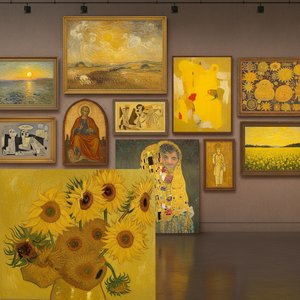
Top 10 des Tableaux Célèbres Dominés par le Jaune Chrome : Art & Décor
Plongez dans le monde vibrant du jaune chrome à travers 10 tableaux célèbres ! Découvrez l'histoire de Van Gogh, Monet et d'autres maîtres impressionnistes. Trouvez l'inspiration déco et achetez des reproductions d'art de qualité muséale sur AllPaintingsStore.com.

The Allure of Azure: Exploring the Symbolic & Aesthetic Depths of Blue in Art History
Explore the rich history of blue in art! Discover its symbolism, from ancient pigments to modern masterpieces by Kandinsky & Seurat. Uncover the psychological impact and cultural meanings behind this captivating hue.
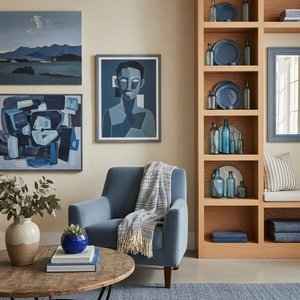
Les 10 Chefs-d'œuvre Dominés par le Bleu Ardoise : Art, Histoire & Décor
Plongez dans l'univers fascinant des 10 plus beaux tableaux dominés par le bleu ardoise. Découvrez l'histoire, les artistes et les techniques de ces chefs-d'œuvre impressionnistes et contemporains. Inspirez votre décoration intérieure avec !

Top 10 des Tableaux Célèbres Dominés par l'Ocre Jaune : Art & Décor Intemporel
Plongez dans la magie de l'ocre jaune à travers 10 tableaux célèbres ! Découvrez les histoires, techniques et émotions derrière ces chefs-d'œuvre d'artistes comme Van Gogh & Monet. Inspirez votre décoration intérieure avec – reproductions de qualité musée.


