Satisfait ou remboursé sous 100 jours Livraison gratuite dans le monde entier
449 587œuvres d'art 30 613artistes 4 660musées 32Langues
Devise
    Langue
      Atelier · Depuis 2015 · Paris, France
      AllPaintingsStore
      allpaintingsstore.com
      Catalogue entry

      War

      Acrylic On Canvas.

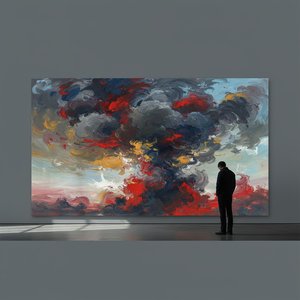
      Fig. 1. Jackson Pollock, War. Shown as the reproduction you are specifying: , .

      § 1Catalogue data

      § 2Abstract

      Description de la pièce

      Biographie de l'artiste

      Découvrez l'art révolutionnaire de Jackson Pollock (1912-1956), pionnier de l’Expressionnisme Abstrait et de la peinture à gouttes ! Explorez ses œuvres emblématiques, son intensité émotionnelle et son héritage durable.

      § 3Commentary

      War: A Descent into Chaos – Jackson Pollock’s Post-Traumatic Masterpiece

      Jackson Pollock's *War*, painted in 1947, isn’t merely a canvas splashed with color; it’s a visceral embodiment of the anxieties and turmoil gripping America in the aftermath of World War II. This monumental work, rendered in thick layers of black ink and colored pencil on paper, plunges the viewer into a maelstrom of fragmented figures, violent gestures, and unsettling symbols – a direct reflection of the psychological landscape of a nation grappling with unprecedented devastation and uncertainty. The painting’s power lies not in representational accuracy but in its raw emotional intensity, a hallmark of Jackson Pollock's pioneering approach to Abstract Expressionism. It’s a piece that demands attention, inviting contemplation on themes of conflict, loss, and the enduring scars of war.

      The Language of Drip: Technique and Process

      Pollock’s signature “drip” technique is utterly central to *War*'s impact. He abandoned traditional brushwork, instead pouring, dripping, and splattering paint directly onto the canvas laid flat on the floor – a revolutionary act that liberated him from the constraints of easel painting. This method wasn't random; it was meticulously controlled chaos. The layering of ink creates a dense, almost sculptural surface, punctuated by sharp lines and frantic bursts of color—primarily black, red, and yellow—that seem to writhe with barely contained energy. Notice how he utilizes both linear strokes and areas of broad, diffused color, creating a dynamic tension between order and disorder. The sheer physicality of the process is evident in the visible texture and the sense that the painting was actively *made*, rather than passively observed. It’s as if Pollock wrestled with his demons onto the surface, channeling his anxieties into this monumental expression.

      Abstract Expressionism: A Reflection of a Fractured World

      *War* stands as a pivotal example of Abstract Expressionism, an artistic movement that exploded in New York during the 1940s and 50s. Rejecting European traditions, American artists like Pollock sought to express raw emotion and subjective experience through non-objective forms. Unlike earlier movements focused on depicting reality, Abstract Expressionists aimed to capture the inner world—the anxieties, fears, and hopes—of the individual. *War* embodies this ethos perfectly, eschewing recognizable imagery in favor of a symbolic language that speaks directly to the viewer’s subconscious. It's deeply connected to the broader cultural context of the post-war era, a time marked by disillusionment, fear of nuclear annihilation, and a profound sense of societal upheaval.

      Decoding the Symbols: Figures of Conflict and Despair

      The painting is populated with unsettling figures—human and animal—engaged in what appears to be a chaotic battle or ritualistic sacrifice. A hooded figure, reminiscent of Christ on the cross, dominates the right side of the composition, while a bull, often associated with primal instincts and aggression, looms over a pile of human debris. The fragmented nature of these forms suggests a breakdown of order and humanity, mirroring the devastation of war. The presence of the animal adds another layer of complexity, hinting at the brutal, instinctual forces that drive conflict. Some art historians have linked the imagery to Picasso’s *Guernica*, suggesting a dialogue between two artists grappling with the horrors of modern warfare. The overall effect is profoundly disturbing, forcing the viewer to confront the uncomfortable realities of violence and loss.

      A Legacy of Raw Emotion: Pollock's Enduring Impact

      *War* remains a powerfully resonant work, not just for its historical significance but also for its enduring emotional impact. It’s a testament to Jackson Pollock’s innovative technique and his willingness to explore the darkest corners of the human psyche. Reproductions of *War*, offered by AllPaintingsStore.com, allow you to bring this monumental piece into your own space, experiencing its raw energy and unsettling beauty firsthand. Its continued relevance speaks volumes about the timeless nature of art's ability to capture and convey the complexities of the human experience—particularly in times of profound turmoil. Consider exploring other works by Pollock, Mark Rothko, or Lee Krasner – artists who similarly sought to express the emotional realities of their era through bold, innovative approaches to painting.

      Questions et réponses

      Que représente "War" et quelle atmosphère s'en dégage ?

      «War» de Jackson Pollock dépeint war, conflict, chaos, drip painting, abstract, figures, turbulence, emotion, dans une atmosphère Dramatic. Le sujet et l'ambiance définissent ensemble l'œuvre.

      À quel point la palette de "War" est-elle saturée ?

      Les couleurs de «War» de Jackson Pollock présentent une saturation Subtle Color. La saturation indique si les couleurs sont vives ou atténuées.

      Pour quelle pièce «War» de Jackson Pollock est-il recommandé ?

      Une reproduction de « War » s'intègre parfaitement dans une Living Room.

      § 4The artist

      Jackson Pollock

      Jackson Pollock

      1912 - 1956, États-Unis

      Quick facts about Jackson Pollock

      • Artistic Movement Or Style: Abstract Expressionism
      • Artists Who Influenced This Artist:
        • José Clemente Orozco
        • Thomas Hart Benton
      • Date Of Birth: January 28, 1912
      • Date Of Death: August 11, 1956
      • Full Name: Paul Jackson Pollock
      • Nationality: American
      • Notable Artworks:
        • Number 1, 1950 (Lavender Mist)
        • One: Number 31, 1950
        • Blue Poles: Number 11, 1952
        • Convergence
      • Place Of Birth: Cody, USA

      Biographie de l'artiste

      Early Life and the Seeds of Innovation

      Paul Jackson Pollock, born in Cody, Wyoming, in 1912, was a restless spirit from the outset. His early life was marked by frequent relocation as his father pursued work as a land surveyor across the vast landscapes of the American West. This itinerant existence instilled in young Pollock a deep connection to the natural world and an exposure to diverse cultures, particularly through encounters with Native American art during those surveying trips – impressions that would subtly permeate his artistic vision later in life.

      Pollock’s formal artistic training began at the Manual Arts High School in Los Angeles, followed by studies at the Art Students League of New York under the tutelage of Thomas Hart Benton. Benton, a prominent figure in the Regionalist movement, emphasized rhythmic composition and narrative themes rooted in American life. While Pollock initially absorbed these lessons, his inherent inclination leaned toward more abstract explorations. He was also profoundly impacted by Mexican muralists like José Clemente Orozco, whose powerful depictions of social struggle resonated deeply with him. These early influences laid a foundation, but it was the burgeoning world of Surrealism that truly unlocked Pollock’s artistic potential.

      The Birth of Action Painting and a Revolutionary Technique

      The 1930s saw Pollock experimenting with various techniques, seeking alternatives to traditional brushwork. He began pouring paint, exploring its fluidity and unpredictable nature. However, it was around 1947 that his artistic trajectory underwent a radical transformation. Abandoning the easel altogether, Pollock laid canvases directly on the floor, initiating what would become known as his “drip painting” technique.

      This wasn’t merely about applying paint; it was about embodying the act of creation itself. Pollock's canvases became arenas for physical expression, capturing the immediacy of his gestures and emotions. The resulting paintings are characterized by their “all-over” composition – a lack of central focus that invites the viewer to explore the entire surface as a unified field of energy. Intricate networks of lines and colors intertwine, creating a visual complexity that is both captivating and challenging. He employed unconventional tools—sticks, knives, even syringes—to manipulate the paint in unpredictable ways, further emphasizing the spontaneous nature of his process.

      This innovative approach positioned Pollock as a central figure in the burgeoning Abstract Expressionist movement, which emerged in post-World War II New York City. Abstract Expressionism prioritized spontaneous gesture, large scale, and non-representational imagery, reflecting a broader cultural shift away from traditional artistic conventions. His marriage to fellow artist Lee Krasner was also pivotal; she provided unwavering emotional support and actively encouraged his artistic development, recognizing the groundbreaking nature of his work.

      Iconic Works and Lasting Legacy

      Pollock’s most celebrated works—such as Number 1, 1950 (Lavender Mist), One: Number 31, 1950, Blue Poles: Number 11, 1952, and Convergence—are testaments to his revolutionary technique. These paintings are not simply images; they are records of a performance, imbued with the artist’s physical presence and emotional intensity. The dynamic energy that emanates from these canvases is palpable, drawing viewers into a world of pure abstraction.

      His style transcends mere aesthetics; it's an exploration of process over product. Pollock sought to capture the immediacy of his actions and emotions on canvas, rejecting traditional notions of composition and representation. He delved into Jungian psychology, exploring archetypes and the subconscious in his art, seeking to tap into universal symbols and primal energies.

      Pollock’s impact on the history of art is immeasurable. He fundamentally altered the way artists approached painting, breaking free from easel-based methods and embracing a more performative approach. His work helped solidify New York City's position as a global center for modern art, shifting the focus away from European dominance. His influence can be seen in the work of countless artists who followed, including those associated with Color Field painting and later forms of abstract expressionism.

      Though initially met with mixed reviews—some critics dismissed his work as chaotic or lacking skill—Pollock’s reputation grew steadily after his untimely death in 1956 at age 44. Today, he is universally recognized as one of the most important and influential artists of the 20th century, a visionary who dared to challenge conventions and redefine the boundaries of artistic expression.

      § 5Comparanda

      § 6Questions

      Informations clés

      • Location: Metropolitan Museum of Art
      • Subject or theme: Conflict, turmoil
      • Artistic style: Chaotic, dynamic
      • Influences:
        • Picasso
        • Siqueiros
      • Dimensions: 20 5/8 in x 26 in
      • Medium: Ink & Colored Pencils

      Quiz d'art

      Chaque question ne comporte qu'une seule bonne réponse.

      Question 1:
      What artistic movement is Jackson Pollock most closely associated with?
      Question 2:
      The painting 'War' primarily evokes which of the following emotions?
      Question 3:
      Which artist’s style is most reminiscent of Jackson Pollock's 'War'?
      Question 4:
      What technique is most prominently featured in Jackson Pollock’s ‘War’?
      Question 5:
      The painting 'War' was created during which historical period?

      § 7Cite this entry

      AllPaintingsStore.com, “Jackson Pollock, War”, https://allpaintingsstore.com/fr/art/paul-jackson-pollock-war-8EWJZU-en/ (accessed 1 octobre 2026).

      § 8The reproduction

      Reproduction à l'huile faite à la main

      Huile sur toile peinte à la main, avec cadre et dimensions personnalisés, réalisée sur commande par nos artistes. ( Passer au format impression Passer au format numérique)

      It is specified on the order sheet in the margin; the present state of that sheet reads as follows.

      War

      Technique de reproduction

      Format de la reproduction

      -

      Artiste de prestige

      Plus de détails, de finesse et un temps de production accru

      -

      Cadre de reproduction

      -

      -

      Pour les œuvres ou reproductions dont un côté mesure plus de 105 cm (environ 41 pouces), le cadre sera expédié sous forme de kit démonté. Cette méthode garantit une livraison sécurisée et prévient tout dommage pendant le transport.

      Assemblage professionnel requis - ce produit n'est pas destiné au bricolage (DIY).
      Le kit doit être assemblé et la toile tendue par un encadreur professionnel expérimenté, en utilisant de la colle à bois (non fournie), une pince à tendre la toile et des serre-joints pour maintenir les traverses d'équerre pendant le séchage de la colle. Un assemblage incorrect ou une tension inégale de la toile peut endommager l'œuvre de manière irréversible et n'est pas couvert par notre garantie.

      • Toutes les baguettes en bois massif sont incluses, découpées avec précision à la taille requise.

      • À assembler avec les vis fournies, ainsi qu'avec de la colle à bois pour les assemblages d'angles (non fournie), à prévoir par votre encadreur.

      • L'utilisation d'outils professionnels est requise et non incluse : une pince à tendre la toile (tendeur) et des serre-joints pour maintenir les baguettes bien d'équerre pendant le séchage de la colle.

      Important :
      L'assemblage des angles nécessite de la colle à bois, les barres doivent être maintenues avec des serre-joints jusqu'au séchage complet de la colle, et le tendage de la toile sur le châssis assemblé nécessite une pince à tendre la toile. Aucun de ces éléments n'est inclus dans le kit. Veuillez consulter un encadreur professionnel expérimenté avant de commander ce format.

      Cartel

      -

      -

      Vernis de protection

      Vernis brillant (intensifie les couleurs, protège de la lumière et de l'humidité)

      -

      Personnaliser mon œuvre

      Exemples de personnalisation : remplacer le visage par une photo du client ; ajouter un animal de compagnie (par exemple, remplacer un chat par un chien) ; inclure un message caché en arrière-plan ; modifier le paysage ou les éléments d'arrière-plan.

      -

      Livraison urgente

      Livraison dans le monde entier () en 3 à 4 semaines au lieu des 5 semaines habituelles. (29 octobre). Aucune concession sur la qualité.

      -

      Livraison express

      Livraison dans le monde entier () sous 5 semaines. (5 novembre).

      Inclus

      Prix total

      € 227

      Included with every order

      • Livraison express gratuite dans le monde entier
      • Toile de lin de qualité supérieure
      • Assurance transport complète
      • Garantie de remboursement des droits de douane
      • Garantie de fidélité des couleurs
      • Politique de retour de 100 jours (uniquement en cas de défaut)
      • Garantie de remboursement à 100%
      • Offre de tarifs dégressifs
      Order sheet