


 Aperçu en situation
 Envoyer
 Partager
 Détails de l'œuvre
 Guide
Guide

 Télécharger l'image
 Articles similaires
 Radiographie
 Diaporama
 Q&A
Q&A Statistiques
st. augustine


 Lire la suite
Giclées et impressions d'art
Impressions giclées ou sur toile de qualité musée, avec une production rapide et des finitions au choix. ( Commander la reproduction peinte à la main Passer au format numérique)




P118B €10

P118H €10

P118W €10

P438Z €10

P508JH €12

P508YH €12

P805H €10

P805Z €10

P919BZ €10

P919G €10

P919XJ €10

P959ZH €10

P968JZ €12

W106C €8

W218G €10

W218JH €8

W218Y €10

W307PJ €10

W316G €10

W316PJ €8

W316Y €10

W398PJ €8

W4111J €10

W500HY €15

W500JH €15

W692G €12

W849H €8

W940BG €15

W953PJ €8




Choisissez parmi nos formats prédéfinis qui respectent les proportions originales de l’œuvre.

Saisissez la largeur et la hauteur souhaitées pour qu'elles s'adaptent à votre cadre ou à votre mur. Une impression peut être recadrée, mais jamais agrandie au-delà de l'image originale ; ainsi, un format de forme différente entraînera la perte d'une partie de l'image. Nous vous envoyons une maquette numérique pour approbation avant toute impression. L'image présentée sur cette page ne montre pas le recadrage réel — seule la maquette le permet.
Livraison dans le monde entier () en 2 semaines au lieu des 4/5 semaines habituelles. (31 octobre)

Livraison express gratuite dans le monde entier

Toile de lin de qualité supérieure

Assurance transport complète

Garantie de remboursement des droits de douane

Garantie de fidélité des couleurs

Politique de retour de 100 jours (uniquement en cas de défaut)

Garantie de remboursement à 100%

Offre de tarifs dégressifs
 L'option verre n'est disponible que pour les dimensions inférieures à 110 cm.

st. augustine
Giclées et impressions d'art
Format de la reproduction
-


Prix total
€ 57
A Vision of Devotion: The Soul of St. Augustine
In the quiet, luminous depths of Sandro Botticelli’s St. Augustine, we encounter more than a mere portrait; we enter a sanctuary of profound spiritual contemplation. Painted during the twilight of the Quattrocento, this masterpiece serves as an evocative window into the Early Renaissance, capturing the moment where human intellect meets divine grace. The subject, the venerable Bishop of Hippo, is depicted not as a distant icon, but as a man caught in a moment of intense, inward reflection. As he sits at his table, his hands resting gently upon his chest, the viewer is invited to share in his stillness. The presence of a book nearby suggests a life dedicated to the pursuit of wisdom, bridging the gap between the earthly study of scripture and the celestial understanding of faith.
Botticelli’s mastery of technique breathes life into the very fabric of the panel. Utilizing the traditional method of tempera on panel, the artist achieved a breathtaking luminosity that seems to radiate from within the figure itself. Through the meticulous application of thin, translucent glazes, he creates a skin tone that possesses an ethereal glow, a hallmark of his Florentine training. Here, we see an early and masterful adoption of sfumato—the subtle blurring of edges—which softens the contours of Augustine’s face, imbuing him with a sense of gentle serenity. This is further heightened by the use of chiaroscuro, where the dramatic interplay of light and shadow sculpts the saint's form, lending a physical weight to his presence while simultaneously highlighting the spiritual lightness of his expression.
Symbolism and the Florentine Spirit
Every element within this composition is steeped in the humanist ideals that defined Botticelli’s era. The rich, crimson hue of Augustine’s robes is not merely a display of pigment but a symbol of his ecclesiastical authority and the passion of his faith. The arrangement of figures in the periphery—shadowy, observant presences—adds a layer of narrative complexity, suggesting that while the saint is lost in private prayer, he remains an integral part of the communal religious fabric. This tension between the individual soul and the wider world reflects the burgeoning Renaissance fascination with the dignity of man and his capacity for reason.
For the discerning collector or interior designer, this work offers a profound emotional resonance that transcends time. It is a piece that commands attention through its quietude rather than through clamor. Whether placed in a library, a study, or a formal living space, a high-quality reproduction of this Botticelli classic brings an atmosphere of intellectual depth and timeless elegance to any environment. It serves as a poignant reminder of the beauty found in introspection, making it an ideal centerpiece for those who seek to surround themselves with art that inspires both thought and peace.
Questions et réponses
Puis-je voir «st. augustine» de Sandro Botticelli sous différents éclairages ?
La page Radiographie de «st. augustine» de Sandro Botticelli est un visionneur interactif qui vous permet de parcourir onze couches optiques de l'image de l'œuvre, incluant une vue de style radiographie.
À quel courant artistique «st. augustine» de Sandro Botticelli appartient-il ?
« st. augustine » est une œuvre issue du Early Renaissance Early Renaissance. Ce mouvement définit la tradition artistique à laquelle l'œuvre appartient.
Quelle émotion «st. augustine» de Sandro Botticelli dégage-t-il ?
«st. augustine» est empreint d'un sentiment Reflective. La tonalité émotionnelle décrit l'impression qui se dégage de l'œuvre.
Œuvres similaires


Biographie de l'artiste
jeune vie et formation
Sandro Botticelli, né Alessandro di Mariano di Vanni Filipepi vers 1445, est une figure clé de la Renaissance italienne précoce. Initialement relégué à l'arrière-plan après sa mort, l'œuvre de Botticelli a été revitalisée au XIXe siècle par les préréfables, conduisant à une réévaluation de ses contributions artistiques. Botticelli est né à Florence, en Italie, et y a vécu toute sa vie dans le même quartier. Sa famille, dont son père Mariano di Vanni d'Amadeo Filipepi, était impliquée dans diverses professions, ce qui leur a permis de se rencontrer avec des artistes. Giorgio Vasari rapportait que Botticelli avait initialement été formé comme orfèvre.style artistique et œuvres notables
L'œuvre de Botticelli est caractérisée par une élégante linéarité, reliant le gothique italien tardif à la Renaissance précoce. Ses œuvres les plus célèbres, La Naissance de Vénus et *Primavera*, sont exposées à la Galerie des Offices à Florence, qui abrite une importante collection de ses œuvres. * La Naissance de Vénus (voir sur AllPaintingsStore) * *Primavera* (explorer l'art de Sandro Botticelli sur AllPaintingsStore) * Nativité mystique (National Gallery, Londres), datée 1501, est la seule œuvre de Botticelli avec une date claire.héritage et influence
Le style de Botticelli a évolué vers une approche plus personnelle dans les années 1490, s'écartant des contemporains comme Léonard de Vinci et du style de la Renaissance haute émergente. Son œuvre a été reconnue comme une contribution significative au mouvement artistique de la Renaissance italienne. * le mouvement artistique de la Renaissance italienne * Sandro Botticelli sur Wikipédia- Des artistes notables de la Renaissance italienne comprennent Sandro Botticelli, Léonard de Vinci, Michel-Ange et Titien.
- La Galerie des Offices à Florence abrite une importante collection d'œuvres de Botticelli.
- L'œuvre de Botticelli a été reconnue comme une figure clé de la Renaissance italienne précoce.
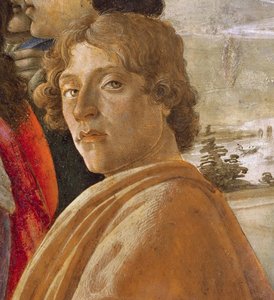
Sandro Botticelli
1445 - 1510 , Italie
L'essentiel de l'artiste
- Artistes Influents:
- Fra Angelico
- Paolo Uccello
- Date De Décès: 1510
- Date De Naissance: c. 1445
- Lieu De Naissance: Florence, Italie
- Mouvement Artistique: Renaissance italienne
- Nationalité: Italienne
- Nom Complet: Sandro Botticelli
- Oeuvres Notables:
- La Naissance de Vénus
- Primavera
- Nativité mystique
Articles connexes

Saint George in Art: A Scholarly Exploration of Iconic Masterpieces and Eternal Legends
Delve into the profound legacy of Saint George through art history. Explore iconic masterpieces by Raphael and Dürer, decoding the iconography of the dragon legend. Discover scholarly insights and bring these timeless tales to life with our museum-quality, hand-painted oil reproductions.

Discover the Divine: Inspiring Saint Anthony Artworks to Elevate Your Home Decor
Transform your home with the profound beauty of Saint Anthony artworks. Explore exquisite Baroque reproductions by Murillo and Zurbarán, hand-painted on 100% cotton canvas to bring divine serenity and timeless elegance to your interior design.

Les 25 chefs-d'œuvre de Sandro Botticelli : Guide ultime du maître de la Renaissance
Explorez les 25 chefs-d'œuvre de Botticelli et l'éclat de la Renaissance. Découvrez toute la collection sur AllPaintingsStore.com.

Les 25 chefs-d'œuvre incontournables de la Galerie des Offices à Florence
Explorez les 25 chefs-d'œuvre des Offices, de Botticelli à De Vinci. Trouvez l'art des musées sur AllPaintingsStore.com.
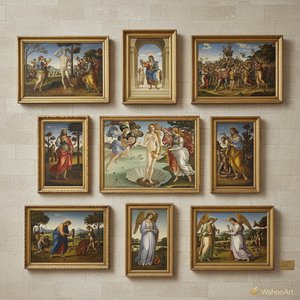
Les 10 Chefs-d'œuvre de la Renaissance Précoce : Artistes et Décor Intemporels
Plongez au cœur de la Renaissance italienne ! Découvrez les 10 chefs-d'œuvre de Botticelli, Léonard de Vinci et Raphaël. Histoire, techniques & inspiration déco. Reproductions tableaux sur


