Satisfait ou remboursé sous 100 jours Livraison gratuite dans le monde entier
449 564œuvres d'art 30 613artistes 4 658musées 32Langues
Entrée de catalogue

Pietà

Huile sur toile.

Fig. 1. Titian, Pietà. Présenté comme la reproduction que vous spécifiez : , .

§ 1Données du catalogue

§ 2Abstrait

Description de la pièce

Explorez la poignante « Pietà » de Titan, un chef-d'œuvre de la Renaissance vénitienne. Admirez la force du pinceau et la profondeur émotionnelle de ce tableau emblématique, témoignage du génie de Tiziano Vecellio.

Biographie de l'artiste

Tiziano Vecellio : Le titan vénitien ! Maître de la couleur et révolutionnaire de la peinture italienne avec ses œuvres emblématiques comme Venise et les Éléphants.

§ 3Commentaire

A Vision of Sorrow and Grace

In the twilight of his illustrious career, Tiziano Vecellio, known eternally as Titian, delivered a profound testament to human suffering and divine compassion through his masterpiece, Pieta. Completed between 1575 and 1576, this monumental work serves as a cornerstone of the Venetian Baroque, capturing a moment of intense theological contemplation. The scene is not merely a depiction of death, but a complex dialogue between grief and grace. As we gaze upon the canvas, we find Mary Magdalene cradling the lifeless body of Christ, her sorrow palpable through the heavy, atmospheric textures that define Titian’s late style. Beside them stands Nicodemus—a figure widely believed to be a poignant self-portrait of the aging master himself—confronting the divine majesty and his own mortality with a quiet, somber dignity.

The composition is a marvel of structural harmony and emotional depth. Titian employs a triangular arrangement involving Mary Magdalene, the torso of Christ, and Nicodemus to provide a sense of stability amidst the surrounding chaos of grief. This geometric balance is subtly disrupted by the presence of Saint Helena, adding layers of familial and spiritual complexity to the narrative. The setting itself feels ancient and weathered, a partially ruined temple or tomb that evokes the passage of time and the decay of earthly glory. Through this architectural backdrop, Titian creates a sense of claustrophobia that draws the viewer into the intimate circle of mourners, making the experience of the painting feel deeply personal and inescapable.

The Mastery of Light and Color

To behold the Pieta is to witness the revolutionary evolution of Venetian technique. Moving away from the crisp, linear precision of the early Renaissance, Titian embraces a revolutionary approach characterized by atmospheric haze and thick, expressive impasto. The surface of the painting is alive with texture; the flesh of Christ and the rugged stone of the shrine are rendered with bold brushstrokes that catch the light, creating an illusion of three-dimensional presence. This technique, known as chiaroscuro, utilizes stark contrasts between deep shadows and luminous highlights to heighten the theatricality of the scene, casting a dramatic spotlight on the central tragedy.

The color palette is a masterclass in emotional resonance. Eschewing bright, distracting hues, Titian relies on a sophisticated arrangement of earthy browns, ochres, and deep reds, punctuated by subtle glints of gold and ethereal pale blues. These muted tones work in unison to evoke a sense of solemnity and mourning. The way the light seems to dissolve the edges of the figures into the surrounding gloom creates an otherworldly, spiritual atmosphere, as if the scene is emerging from a divine mist. For the collector or the interior designer, this painting offers more than just visual beauty; it provides a profound emotional anchor, bringing a sense of historical weight and contemplative stillness to any space.

An Enduring Legacy for the Discerning Collector

The Pieta remains one of the most moving achievements in Western art history. It is a work that speaks to the universal experience of loss while simultaneously pointing toward the hope of resurrection. Because it was one of Titian's final works—left unfinished at his death and completed with great care by Palma Giovane—it carries an inherent intimacy, a sense of a master pouring his final breaths into the canvas. This raw, unshielded emotion makes the piece incredibly captivating for those who appreciate art that transcends mere decoration to become a window into the human soul.

For those seeking to adorn a curated collection or a sophisticated interior with a high-quality reproduction, this work offers unparalleled inspiration. A hand-painted rendition of such a masterpiece allows the dramatic interplay of light and the rich, somber textures to breathe within a modern setting. It serves as a conversation piece that invites reflection, bringing the grandeur of the Venetian Baroque into the contemporary home and ensuring that the profound legacy of Titian continues to inspire awe for generations to come.

Questions et réponses

Peut-on visionner un diaporama de «Pietà» de Titian ?

Le diaporama de « Pietà » est disponible sur la page Diaporama de l'œuvre.

Quelle nuance dominante traverse «Pietà» de Titian ?

Une nuance Spectre du vert au violet traverse «Pietà» de Titian.

Est-il possible de télécharger l'image de « Pietà » ?

Un téléchargement est disponible pour « Pietà » : la page Téléchargement de l'œuvre propose téléchargement d'une image numérique haute résolution.
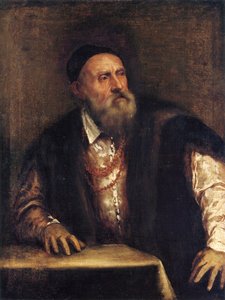
§ 4L'artiste

Titian

Titian

1490 - 1576, Italie

Informations clés sur Titian

  • Artistic Movement Or Style: Renaissance, Venise
  • Artists Or Movements Influenced By This Artist:
    • Rubens
    • Delacroix
  • Artists Who Influenced This Artist:
    • Giovanni Bellini
    • Giorgione
  • Date Of Birth: c. 1490
  • Date Of Death: 1576
  • Full Name: Tiziano Vecellio
  • Nationality: Italien
  • Notable Artworks:
    • La Schiavona
    • Venus Urbino
  • Place Of Birth: Pieve di Cadore, Italie

Biographie de l'artiste

Tiziano Vecellio: The Venetian Titan

Tiziano Vecellio, universally known as Titian, stands as a monumental figure of the Italian Renaissance—perhaps its most celebrated colorist and a master who redefined the possibilities of oil painting. Born around 1490 in Pieve di Cadore, nestled amidst the dramatic landscapes of the Venetian Alps, his journey from humble beginnings to international acclaim is a testament to prodigious talent and an unwavering dedication to artistic innovation. The exact date of Titian’s birth remains elusive, debated among scholars, but contemporary sources and his early stylistic development converge on estimates between 1488 and 1490.

His father, Gregorio Vecellio, was a military man—a profession that instilled in young Tiziano a disciplined spirit and an appreciation for observation. Lucia, his mother, nurtured him with affection and fostered his artistic inclinations. Recognizing their sons’ potential, the family orchestrated Tiziano’s apprenticeship with Sebastiano Zuccato, a renowned mosaicist—a decision that would irrevocably steer him toward mastering one of Venice’s most prestigious crafts.

Giovanni Bellini, Titian’s elder brother and mentor, further honed his artistic skills. Under Bellini’s guidance, Tiziano absorbed the principles of Venetian painting—characterized by a harmonious blend of realism and spirituality—and developed a distinctive style marked by luminous colors and subtle tonal gradations. This formative period cemented Bellini's influence on Titian's aesthetic sensibilities.

Early Artistic Development & Giorgione’s Influence

The encounter with Giorgione proved pivotal in shaping Tiziano’s artistic trajectory. Like Bellini, Giorgione had trained under Giovanni Bellini—establishing a lineage of Venetian artists committed to exploring innovative visual languages. Together, they embarked on ambitious projects, notably the decoration of the Fondaco dei Tedeschi—a bustling trading post frequented by German merchants—where their collaboration yielded masterpieces that epitomized the Venetian Renaissance.

Giorgione’s distinctive style—characterized by hazy atmospheric effects and muted palettes—challenged conventional artistic conventions. Tiziano embraced Giorgione’s aesthetic principles, incorporating similar techniques into his own paintings. *A Man with a Quilted Sleeve*, completed around 1509, exemplifies this stylistic fusion—demonstrating Tiziano’s burgeoning talent for portraiture while simultaneously reflecting Giorgione’s ethereal vision.

Venetian Mastery & Expanding Horizons

Titian swiftly ascended to prominence within Venice’s artistic milieu. He secured commissions from influential patrons—including Alfonso I d’Este and Cardinal Giovanni Grimani—and established himself as one of the foremost painters of his era. His reputation for capturing psychological depth and rendering textures with remarkable accuracy quickly garnered acclaim.

Among his most celebrated achievements were the frescoes adorning Santa Maria Gloriosa dei Frari—a monumental undertaking that showcased Tiziano’s mastery of color and composition. The ambitious project cemented his position as a leading figure in Venetian painting and solidified his legacy as an innovator who pushed the boundaries of artistic expression.

Beyond Venice, Titian cultivated relationships with artists across Europe—including Peter Paul Rubens and Rembrandt—who recognized him as a beacon of artistic excellence. His influence extended far beyond his lifetime, shaping the stylistic sensibilities of subsequent generations of painters and cementing his place among the titans of Western art history.

A Legacy Illuminated

Titian died in Venice in 1576—leaving behind an unparalleled oeuvre that continues to captivate audiences worldwide. His paintings reside in museums spanning continents—from the Galleria Palatina in Florence to the Prado Museum in Madrid and the National Gallery in London—serving as enduring reminders of his artistic genius.

To gaze upon a Titian is to immerse oneself in a realm of luminous color, masterful brushwork, and profound psychological insight. He remains an unsurpassed exemplar of Renaissance artistry—a painter who transformed the visual language of his time and bequeathed to posterity a legacy of beauty and innovation that continues to inspire awe and admiration.

§ 5Œuvres similaires

§ 6Questions

Informations clés

  • Title: Pietà
  • Movement: Baroque
  • Artist: Tiziano Vecellio
  • Location: Gallerie dell'Accademia, Venise
  • Medium: Huile sur toile

§ 7Citer cette entrée

AllPaintingsStore.com, “Titian, Pietà”, https://allpaintingsstore.com/fr/art/titian-pieta-7ykg36-fr/ArtistReproduction/ (consulté le 11 octobre 2026).

§ 8La reproduction

Reproduction à l'huile faite à la main

Huile sur toile peinte à la main, avec cadre et dimensions personnalisés, réalisée sur commande par nos artistes. ( Passer au format impression Passer au format numérique)

Il est précisé dans la marge de la fiche de commande ; l'état actuel de cette fiche se lit comme suit.

Pietà

Technique de reproduction

Format de la reproduction

-

Artiste de prestige

Plus de détails, de finesse et un temps de production accru

-

Cadre de reproduction

-

-

Pour les œuvres ou reproductions dont un côté mesure plus de 105 cm (environ 41 pouces), le cadre sera expédié sous forme de kit démonté. Cette méthode garantit une livraison sécurisée et prévient tout dommage pendant le transport.

Assemblage professionnel requis - ce produit n'est pas destiné au bricolage (DIY).
Le kit doit être assemblé et la toile tendue par un encadreur professionnel expérimenté, en utilisant de la colle à bois (non fournie), une pince à tendre la toile et des serre-joints pour maintenir les traverses d'équerre pendant le séchage de la colle. Un assemblage incorrect ou une tension inégale de la toile peut endommager l'œuvre de manière irréversible et n'est pas couvert par notre garantie.

  • Toutes les baguettes en bois massif sont incluses, découpées avec précision à la taille requise.

  • À assembler avec les vis fournies, ainsi qu'avec de la colle à bois pour les assemblages d'angles (non fournie), à prévoir par votre encadreur.

  • L'utilisation d'outils professionnels est requise et non incluse : une pince à tendre la toile (tendeur) et des serre-joints pour maintenir les baguettes bien d'équerre pendant le séchage de la colle.

Important :
L'assemblage des angles nécessite de la colle à bois, les barres doivent être maintenues avec des serre-joints jusqu'au séchage complet de la colle, et le tendage de la toile sur le châssis assemblé nécessite une pince à tendre la toile. Aucun de ces éléments n'est inclus dans le kit. Veuillez consulter un encadreur professionnel expérimenté avant de commander ce format.

Cartel

-

-

Vernis de protection

Vernis brillant (intensifie les couleurs, protège de la lumière et de l'humidité)

-

Personnaliser mon œuvre

Exemples de personnalisation : remplacer le visage par une photo du client ; ajouter un animal de compagnie (par exemple, remplacer un chat par un chien) ; inclure un message caché en arrière-plan ; modifier le paysage ou les éléments d'arrière-plan.

-

Livraison urgente

Livraison dans le monde entier () en 3 à 4 semaines au lieu des 5 semaines habituelles. (9 novembre). Aucune concession sur la qualité.

-

Livraison express

Livraison dans le monde entier () sous 5 semaines. (16 novembre).

Inclus

Prix total

€ 342

Inclus avec chaque commande

  • Livraison express gratuite dans le monde entier
  • Toile de lin de qualité supérieure
  • Assurance transport complète
  • Garantie de remboursement des droits de douane
  • Garantie de fidélité des couleurs
  • Politique de retour de 100 jours (uniquement en cas de défaut)
  • Garantie de remboursement à 100%
  • Offre de tarifs dégressifs
Bon de commande