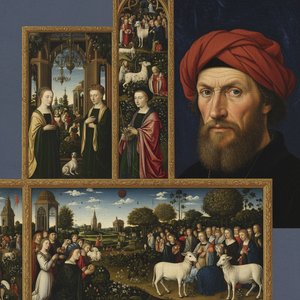
1436. Olajfestmény vászonon, 39.0 x 24.0 cm. Thyssen-Bornemisza Múzeum.

§ 1Katalógusadatok

- 39.0 x 24.0 cm


§ 2Absztrakt
A gyűjtemény leírása
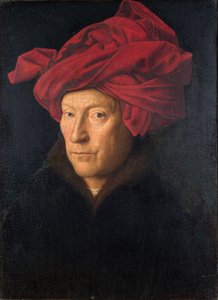
Jan van Eyck ( van EYEK; Dutch: [ˈjɑɱ vɑn ˈɛik]; c. before 1390 – 9 July 1441) was a Flemish painter active in Bruges who was one of the early innovators of what became known as Early Netherlandish painting, and one of the supreme figures of the Early Northern Renaissance. Such was his legacy, that he has been called “the
 Összes részlet megjelenítése
A művész életrajza
A korai németalföldi festészet és az Arnolfini-portré úttörője. Fedezze fel forradalmi olajfestési technikáit és remekműveit ma!
§ 3Magyarázat
A Window Into Divine Revelation: Jan van Eyck’s Annunciation
Jan van Eyck's Annunciation stands as an unparalleled testament to the artistic brilliance of the Early Netherlandish Renaissance, cementing its place among the most revered paintings in Western art history. Created in 1436 for St Bavo Cathedral in Ghent, Belgium—a commission that would propel him to international fame—this monumental altarpiece transcends mere visual representation; it embodies a profound spiritual narrative meticulously crafted with groundbreaking artistic innovation.- Subject Matter: The painting depicts the pivotal moment when Gabriel announces to Mary that she will conceive Jesus Christ, marking the genesis of Christian faith and tradition. This biblical scene is rendered with breathtaking realism, capturing the serene intimacy of the Virgin’s contemplation and the angelic messenger's solemn proclamation.
- Style & Technique: Van Eyck’s mastery lies in his pioneering application of oil paint—a technique previously uncommon in Northern Europe—allowing for unprecedented levels of detail and luminosity. Layers upon layers of pigment create a palpable sense of depth, capturing textures with astonishing accuracy, from the folds of Mary's robe to the delicate feathers of Gabriel’s wings.
Compositional Genius: Linear Perspective and Architectural Framing
The painting’s composition is masterful, employing linear perspective to establish a convincing illusion of space within the cathedral interior. A doorway frames the scene, subtly dividing the space into two distinct realms—the earthly sanctuary and the divine realm—symbolizing the transition between human experience and spiritual grace. This architectural element isn't merely decorative; it serves as a crucial tool in conveying the painting’s overarching message.
Symbolism: Dove and Light – Echoes of Holy Spirit
Beyond its visual splendor, Annunciation is rich with symbolic significance. The dove perched atop Gabriel’s left shoulder represents the Holy Spirit—God’s divine presence illuminating Mary's womb and signifying the incarnation of Christ. This emblem underscores the painting’s theological core, emphasizing God’s intervention in human history and reaffirming the sanctity of faith.
Historical Context & Legacy
Jan van Eyck was a pivotal figure within the Early Netherlandish artistic movement alongside Rogier van der Weyden and Petrus Christus. His work challenged prevailing conventions, prioritizing meticulous observation and capturing the subtleties of human emotion—a departure from earlier Gothic styles. The Annunciation profoundly influenced subsequent artists, establishing standards for realism and expressive detail that would endure for centuries. Its enduring appeal lies in its ability to evoke contemplation and inspire awe, reminding viewers of the transformative power of faith.
Bringing Van Eyck’s Vision Home
A high-quality reproduction of Annunciation by Jan van Eyck offers a captivating glimpse into the artistic achievements of the Renaissance. Explore stunning reproductions at AllPaintingsStore.com and discover how this iconic masterpiece can enrich your interior space.
- Size: 39 x 24 cm
- Date: 1436
Further Exploration
Delve deeper into Jan van Eyck’s artistic world and the broader context of Northern Renaissance art by visiting The Annunciation at The National Gallery of Art or exploring St Bavo’s Cathedral in Ghent.
Kérdések és válaszok
Maradt-e a "Annunciation" mű a művész hon országában?
Nem – a műtárgy külföldön található. A „Annunciation” mű Spanyolország múzeumának gyűjteményében található, míg Jan Van Eyck Hollandia országban született.
Milyen formájú és méretű „Annunciation”, Jan Van Eyck alkotása?
A „Annunciation”, Jan Van Eyck alkotása egy Lankás kompozíció, amely az eredeti méretét tekintve 39 x 24 cm-es.
Mennyire fényes „Annunciation”, Jan Van Eyck alkotása?
A „Annunciation”, Jan Van Eyck alkotása alkotás Lágy árnyékok fényerőséggel rendelkezik. A fényerő azt mutatja meg, hogy a színek mennyire tűnnek visszafényesnek.


 Váltás nyomtatványra


 A bármely oldalsó méretét túlszálaló 105 cm (kb. 41 hüvelyk) meghaladó műalkotások vagy reprodukciók esetében a keret összeszerelhető készletként, szétszerelve kerül szállításra. Ez a módszer biztosítja a biztonságos szállítást, és megakadályozza a szállítás során fellépő sérüléseket.