


 Anteprima in scala reale
 Condividi
 Condividi
 Dettagli
 Guida
Guida

 Scarica
 Articoli simili
 Radiografia
 Slideshow
 Statistiche
The Life of the Virgin


 Leggi tutto
Riproduzione a olio fatta a mano
Olio su tela dipinto a mano nelle tue dimensioni e con la tua cornice, realizzato su ordinazione dai nostri artisti. ( Passa alle stampe Passa all'immagine digitale)




P118B $10

P118H $10

P118W $10

P438Z $10

P508JH $12

P508YH $12

P805H $10

P805Z $10

P919BZ $10

P919G $10

P919XJ $10

P959ZH $10

P968JZ $12

W106C $8

W218G $10

W218JH $8

W218Y $10

W307PJ $10

W316G $10

W316PJ $8

W316Y $10

W398PJ $8

W4111J $10

W500HY $15

W500JH $15

W692G $12

W849H $8

W940BG $15

W953PJ $8




Scegli tra le nostre dimensioni predefinite, che rispettano le proporzioni originali dell'opera d'arte.

È possibile inserire dimensioni personalizzate per adattare l'opera a una cornice o a uno spazio specifico. Se la dimensione selezionata non corrisponde alle proporzioni dell'immagine originale, provvederemo a ritagliare l'opera o a estendere il dipinto con elementi aggiuntivi dipinti a mano. Un mockup digitale ti sarà inviato per approvazione prima dell'inizio della produzione.
Si prega di notare che l'anteprima a schermo non riflette il ritaglio o l'estensione effettivi. Solo il mockup mostrerà accuratamente la composizione finale.
Sebbene siano disponibili dimensioni personalizzate, consigliamo di selezionare una dimensione dall'elenco predefinito per preservare le proporzioni originali.
Dopo l'ordine, il team di AllPaintingsStore.com contatterà il cliente via e-mail per ricevere le istruzioni e fornirà un'anteprima del mockup
Consegna in tutto il mondo () in 3/4 settimane anziché nelle normali 5 settimane. (21 Settembre). Nessun compromesso sulla qualità.

Spedizione espressa gratuita in tutto il mondo

Tela in lino di alta qualità

Assicurazione completa sulla spedizione

Garanzia di rimborso dei dazi doganali

Garanzia di perfetta fedeltà cromatica

Politica di reso entro 100 giorni (solo per difetti di fabbricazione)

Garanzia di rimborso al 100%

Sconto per acquisti multipli
 L'opzione vetro è disponibile solo per dimensioni inferiori a 110 cm

The Life of the Virgin
Tecnica di riproduzione
Dimensioni della riproduzione
-


Prezzo totale
$ 483
A Window into Devotion: Adriaen Isenbrant’s “The Life of the Virgin”
Adriaen Isenbrant's "The Life of the Virgin," painted in 1521, is not merely a depiction of biblical scenes; it’s a carefully constructed invitation to contemplation. This small triptych, now housed within a meticulously carved wooden frame, offers a poignant glimpse into the devotional practices of its intended audience – likely a private individual seeking solace and connection with the Virgin Mary. Isenbrant, a figure shrouded in scholarly debate due to the scarcity of definitively attributed works, masterfully blends elements of Early Netherlandish tradition with emerging Renaissance influences, creating an artwork that is both deeply rooted in the past and subtly forward-looking.
The painting’s genesis lies within the bustling artistic hub of Bruges during a period of significant transition. Bruges, renowned for its thriving trade networks and burgeoning merchant class, was experiencing a surge in wealth and patronage – a perfect environment for artists like Isenbrant to flourish. The work reflects this prosperity through its intricate detail and luxurious materials, yet it also retains the solemnity and spiritual depth characteristic of the Early Netherlandish style. It’s believed that Isenbrant honed his skills within Gerard David's workshop, absorbing the master’s meticulous approach to realism and composition while simultaneously developing a distinctive artistic voice.
A Symphony of Grisaille and Color
The triptych unfolds with a deliberate grace. The exterior wings, executed in grisaille – a monochrome technique utilizing shades of gray – immediately establish a formal and restrained atmosphere. These panels depict the Annunciation, showcasing the Archangel Gabriel presenting Mary with the news of her impending motherhood, and the Visitation, portraying Mary’s visit to Elizabeth. The architectural settings are rendered with impressive precision, incorporating elements reminiscent of Albrecht Dürer's popular engravings – a testament to Isenbrant’s awareness of contemporary artistic trends. The use of grisaille serves not only as a visual anchor but also as a symbolic preparation for the more vibrant and emotionally charged interior scenes.
Turning inward, the central panel reveals the Nativity, a scene brimming with carefully orchestrated detail. The figures – Mary, Joseph, the shepherds, and the infant Jesus – are arranged within a modest stable, bathed in a dramatic, single-source light that emphasizes their humanity and vulnerability. The drapery is rendered with exquisite realism, cascading folds revealing intricate textures and suggesting movement. Notice the subtle variations in color—the rich reds of Mary’s robes, the earthy browns of the animals, and the cool blues of the sky – all contributing to a sense of depth and atmosphere.
Symbolism and Narrative Depth
Each panel within the triptych is laden with symbolic meaning. The Annunciation emphasizes Mary's humility and obedience, while the Visitation highlights her close relationship with Elizabeth, representing divine grace and support. The Nativity itself is a powerful meditation on sacrifice and redemption. The carefully chosen objects – the manger, the swaddling clothes, the halo above the infant Jesus – all carry significant religious weight. Beyond these explicit symbols, Isenbrant’s composition invites viewers to engage in empathetic contemplation, prompting them to consider Mary's role as a model of faith, compassion, and maternal love.
Craftsmanship and Technique
“The Life of the Virgin” is executed in oil on panel, a technique that allowed for rich colors, subtle gradations of tone, and meticulous detail. The artist’s mastery of perspective—a hallmark of Early Netherlandish painting—is evident in the carefully constructed space, where objects recede into the distance with convincing realism. The use of layering and glazing creates a luminous quality, enhancing the sense of depth and volume. Close examination reveals the painstaking effort invested in rendering textures – from the smooth skin tones to the rough wool of the animals – demonstrating Isenbrant’s commitment to achieving an unparalleled level of visual fidelity. The dark frames surrounding each panel further accentuate the illuminated scenes, creating a dramatic and visually arresting effect.
A Timeless Testament
Despite the ongoing debate surrounding his oeuvre, Adriaen Isenbrant's “The Life of the Virgin” stands as a testament to the enduring power of devotional art. This small triptych offers a profound meditation on faith, family, and the mysteries of the Christian narrative—a timeless work that continues to resonate with viewers centuries after its creation. Reproductions capture only a fraction of the original’s depth and nuance, but they provide an accessible means of experiencing the beauty and spiritual significance of this remarkable artwork.
Opere correlate


Biografia dell'artista
A Shadowy Master of Bruges: Unraveling the Enigma of Adriaen Isenbrant
Adriaen Isenbrant, or Ysenbrandt as he is sometimes known, remains one of the most elusive figures in Northern Renaissance painting. Born around 1490, likely in Haarlem, his life unfolded amidst the burgeoning artistic climate of Bruges, yet a definitive body of work attributable solely to his hand continues to tantalize and frustrate art historians. Documentary evidence suggests he was a successful and respected artist, deeply embedded within the guild system and enjoying patronage from wealthy merchants and traders—a testament to the dynamism of Bruges during its golden age—but concrete links between this thriving workshop leader and surviving artworks remain stubbornly scarce. This has led to decades of scholarly debate, with Isenbrant variously proposed as the author of works previously attributed to Gerard David and Jan Mostaert — earning him the moniker “Pseudo-Mostaert” — or even dismissed as a convenient label for a collective of anonymous artists.Life and Guild Affiliations in a Flourishing City
Isenbrant’s documented life begins in 1510, when he established himself as a burgher of Bruges. He swiftly ascended within the city's artistic community, becoming a master in both the painters’ guild of St. Luke and the goldsmiths’ guild of St. Elooi that same year. This dual membership speaks to the interconnectedness of crafts during the period and suggests Isenbrant possessed a versatile skillset. Over the following decades, he repeatedly held positions of responsibility within the guilds — serving nine times as a “deacon” (vinder) and twice as governor (treasurer) — demonstrating his standing among his peers. His workshop flourished in the Korte Vlaminckstraat, strategically located near those of Gerard David and Hans Memling, placing him at the heart of Bruges’ artistic activity. The city itself was a magnet for wealth and refinement; its thriving merchant class eager to commission diptychs, portraits, and devotional pieces that reflected their status and piety. Isenbrant catered primarily to this private clientele, though he also produced works without specific commissions, indicating a robust demand for his art. Legal records from 1534 reveal the scale of his operation — a suit brought against Jan van Eyck (not the celebrated Jan van Eyck) for failing to deliver paintings Isenbrant had ordered for completion. He even acted as an agent in Bruges for Adriaan Provoost, further solidifying his position within the artistic network.Artistic Influences and a Conservative Style
The influence of Gerard David is perhaps the most consistently cited element in discussions surrounding Isenbrant’s style. David’s compositional strategies—particularly the use of panoramic landscapes—and meticulous attention to detail are frequently echoed in works tentatively attributed to Isenbrant, suggesting a period of direct or indirect mentorship. However, unlike David’s increasingly refined and expressive approach, Isenbrant’s work — as it is tentatively identified — tends towards a more conservative aesthetic rooted in the traditions of Early Netherlandish painting. This manifests in meticulous detail, a restrained emotional palette, and a focus on precise rendering rather than dramatic innovation. The paintings attributed to him often depict religious subjects—the *Seven Sorrows of the Virgin* being particularly prominent—and devotional scenes intended for private contemplation. While possessing technical skill, these works lack the groundbreaking experimentation seen in some of his contemporaries. Some scholars suggest this deliberate adherence to tradition was a strategic choice, catering to the tastes of a conservative clientele who favored familiarity and piety over stylistic novelty. He was believed by Georges Hulin de Loo to be the same person as the anonymous Master of the Seven Sorrows of the Virgin or Pseudo-Mostaert. Other art historians doubt that any works can be reliably attributed to him, and the number of paintings attributed to him by major museums has been in decline for many decades. ## Major Achievements and Legacy Despite the pervasive uncertainty surrounding his oeuvre—the absence of securely documented paintings—Adriaen Isenbrant nevertheless achieved considerable renown during his lifetime. His workshop produced a prolific output of religious artworks, contributing significantly to Bruges’ artistic heritage and bolstering its reputation as a center for devotional painting. The *Seven Sorrows of the Virgin*, housed in both the St. Mary Magdalene Church in Bruges and the Groeningemuseum, stands as Isenbrant’s undisputed masterpiece—a testament to his mastery of technique and compositional vision. Its serene beauty and masterful depiction of sorrowful figures exemplify the stylistic conventions of the period while simultaneously demonstrating Isenbrant’s ability to synthesize influences from both David and Memling. Furthermore, Isenbrant served as a respected guild official, overseeing matters of administration and upholding standards of excellence within St. Luke’s Guild—a role that underscores his commitment to artistic integrity and civic responsibility. Although the precise scope of his artistic output remains elusive, Adriaen Isenbrant nonetheless cemented his place in art history as one of the most prominent figures of Bruges’ artistic milieu during its zenith—a legacy preserved through scholarly research and celebrated by connoisseurs worldwide. ## Further Research & Attribution Challenges The enduring fascination with Isenbrant stems not only from his undeniable skill but also from the fundamental difficulty inherent in definitively attributing works to him. Georges Hulin de Loo, a pioneering art historian, championed the attribution of several paintings previously ascribed to David and Mostaert to Isenbrant—a controversial stance that continues to fuel debate among scholars today. Many researchers now contend that “Isenbrant” represents a collective designation for a group of artworks sharing stylistic similarities rather than the product of a single artist’s hand—a perspective supported by meticulous stylistic analysis and corroborated by comparative studies. Documents reveal that Isenbrant engaged in export trade, sending paintings to Spain—indicating an international reputation—yet these specific works have not been identified with certainty. Despite the pervasive uncertainty surrounding his oeuvre, Adriaen Isenbrant nonetheless cemented his place in art history as one of the most prominent figures of Bruges’ artistic milieu during its zenith—a legacy preserved through scholarly research and celebrated by connoisseurs worldwide.
Adriaen Isenbrant
1580 - 1551 , Paesi Bassi
Informazioni rapide
- Artistic Movement Or Style: Northern Renaissance
- Artists Who Influenced This Artist: ['Gerard David']
- Date Of Birth: c. 1490
- Date Of Death: 1551
- Full Name: Adriaen Isenbrant
- Nationality: Dutch
- Notable Artworks:
- The Virgin and Child Enthroned
- St. Mary Magdalene Reading
- Place Of Birth: Haarlem, Netherlands
Articoli correlati

Divine Grace: A Journey Through the Most Iconic Depictions of the Virgin Mary in Art History
Embark on a profound journey through art history with our exploration of the most iconic depictions of the Virgin Mary. Discover the divine grace, symbolism, and masterful techniques found in Renaissance masterpieces and sacred iconography.

Jan Gossart: Bridging Netherlandish Realism & Renaissance Humanism – A Comprehensive Exploration
Explore the captivating world of Jan Gossart, a pivotal figure bridging Netherlandish realism & Renaissance humanism. Discover his masterpieces, patronage, and lasting influence – an essential guide for discerning art collectors.

Divine Grace: An Art Historian's Journey Through Iconic Masterpieces of the Virgin Mary
Explore the profound beauty of Marian iconography through an art historian's lens. Discover iconic masterpieces by Raphael and Renaissance masters, celebrating the divine grace and timeless elegance of the Virgin Mary in classical fine art.
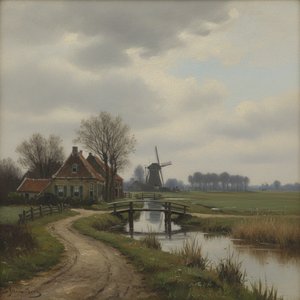
Jacob Maris: Il Maestro del Realismo Atmosferico e dell'Intimo Paesaggio Olandese
Scopri Jacob Maris, il maestro del realismo atmosferico olandese e figura chiave della Scuola dell'Aia. Approfondisci la sua vita, le opere iconiche e l'influenza sulla pittura paesaggistica del XIX secolo.

I 10 Capolavori della Pittura Fiamminga Antica: Arte, Storia e Stile per la Tua Casa
Esplora i 10 capolavori della pittura fiamminga antica! Jan van Eyck, Rogier van der Weyden e altri maestri rinascimentali. Scopri storia, tecnica e simbolismo di questi dipinti iconici. Trova riproduzioni d'arte di alta qualità per la tua casa su AllPaintingsStore.com.

