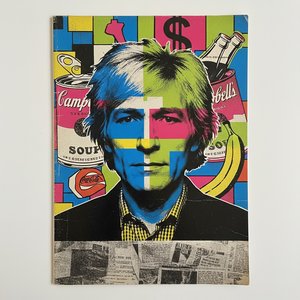
1968. Acrilico su tela.

§ 1Catalogue data


Quest'opera è protetta da copyright
L'opera d'arte visualizzata in questa pagina è protetta dalle leggi sul diritto d'autore, il che significa che non possiamo legalmente creare o vendere una riproduzione identica. Tale protezione è garantita da accordi internazionali quali la Convenzione di Berna e dalle leggi nazionali, incluse quelle stabilite da Legge sul copyright degli Stati Uniti - Titolo 17. Tutti i diritti riservati. Le immagini presenti su questo sito sono protette da copyright e non possono essere riprodotte o utilizzate senza l'autorizzazione scritta di WahooArt.com o dei rispettivi proprietari del copyright.
Come alternativa rispettosa e legale, offriamo opere d'arte personalizzate e dipinte a mano, ispirate all'originale. I nostri artisti esperti e professionisti studiano con cura lo stile, l'atmosfera e l'essenza artistica dell'opera originale per creare un pezzo nuovo e unico che evochi la stessa emozione, pur rimanendo una creazione originale a pieno titolo.
Questo metodo è pienamente conforme alle normative sul diritto d'autore poiché non prevede la copia o la duplicazione dell'opera protetta. Si tratta invece di una rielaborazione creativa: un nuovo dipinto che trae ispirazione dall'originale, senza tuttavia esserne identico.
 Scopri di più
§ 2Abstract
Descrizione del reperto
Andy Warhol's "Flash—November 22" è una serie di stampe serigrafiche che cattura l'immagine della tragedia mediatica dell'assassinio di JFK, sfidando la sensazione di apatia e celebrando il potere delle immagini.
Biografia dell'artista
Esplora l'iconica Pop Art di Andy Warhol (1928-1987) – serigrafie di Marilyn, Campbell's Soup Cans e cultura delle celebrità. Scopri il suo impatto duraturo sull'arte presso AllPaintingsStore.
§ 3Commentary
A Fragmented Reflection on Loss: Decoding Andy Warhol’s ‘Flash—November 22, 1963’
Andy Warhol’s ‘Flash—November 22, 1963’ isn’t a painting in the traditional sense; it's a visceral reaction captured in eleven screenprints, a fragmented memorial to a nation irrevocably altered. Created in 1968, five years after the assassination of President John F. Kennedy, this series isn’t about the event itself, but rather about *how* we consumed that event – through the relentless churn of mass media. Warhol doesn’t offer grief; he presents its packaging, the way tragedy was filtered and disseminated to a stunned public. The work stands as a chilling commentary on desensitization, the blurring lines between reality and representation, and the burgeoning power of image-making in shaping collective memory.
The Echoes of a News Bulletin
The title itself, “Flash—November 22, 1963,” evokes the urgent language of news bulletins, the staccato bursts of information that interrupted everyday life. Warhol deliberately sourced his imagery from campaign posters, newspaper photographs, and advertisements – the very materials that flooded homes across America in those days of mourning. He wasn’t interested in creating a heroic portrait or a solemn elegy; instead, he replicated the visual noise surrounding the assassination, presenting Kennedy's image alongside that of Lee Harvey Oswald, the Presidential Seal, even the gun used in the shooting. This deliberate juxtaposition is deeply unsettling. The repetition inherent in the screenprinting process further amplifies this effect, mimicking the relentless replay of images on television screens and in newspapers. Each print feels less like an individual artwork and more like a frame from an endless loop, a haunting echo of that fateful day.
Pop Art’s Confrontation with Tragedy
Warhol's choice of subject matter was particularly provocative for the Pop Art movement, which had largely focused on consumer culture and celebrity iconography. While his earlier works celebrated the vibrancy of everyday objects like Campbell’s Soup cans and Coca-Cola bottles, ‘Flash—November 22, 1963’ plunged into a far darker territory. It challenged the notion that art should be purely aesthetic or celebratory, forcing viewers to confront uncomfortable truths about violence, loss, and the manipulative power of media. The series is a stark departure from the glossy optimism often associated with Pop Art, revealing its potential for social critique. Warhol himself confessed his initial detachment from the event, stating he was more disturbed by the *way* television dictated public emotion than by Kennedy’s death itself – a sentiment that permeates every print in the series.
A Legacy of Discomfort and Reflection
‘Flash—November 22, 1963’ remains profoundly relevant today. In an age saturated with information and increasingly reliant on visual media, Warhol's work serves as a prescient warning about the dangers of passive consumption and the erosion of genuine emotional connection. The series doesn’t offer answers or closure; it presents a fragmented, unsettling portrait of a nation grappling with trauma. It is a powerful reminder that images are not neutral representations of reality but rather constructed narratives that shape our perceptions and influence our understanding of the world. Owning a reproduction of this work isn’t simply acquiring an iconic piece of art history; it’s inviting a dialogue about memory, media, and the enduring impact of tragedy.
Photo Description: The image is a colorful advertisement for Italian Carbine rifles. The ad features a picture of the gun with a price tag of $127. The rifle is displayed in various positions throughout the ad, including one on top and another on the bottom right side. There are also two smaller guns visible within the main image. In addition to the main advertisement, there is a small illustration of a person holding a gun located towards the left side of the image. The overall composition of the ad is visually appealing with its vibrant colors and attention-grabbing design.
Size: Unknown
Date: 1968
Artist Information:
Artist: Andy Warhol
Birth Year: 1928
Death Year: 1987
Birth City: Pittsburgh
Birth Country: United States of America
Biography: Warhol, born Andrew Warhola Jr. in 1928 amidst the industrial heartland of Pittsburgh, Pennsylvania, was a figure destined to redefine the boundaries of art and celebrity. His early life was marked by both hardship and burgeoning creativity. A childhood illness, Sydenham's chorea – often called St. Vitus’ Dance – confined him indoors for extended periods, fostering an intense inner world where artistic expression became a vital outlet. This period wasn’t one of isolation, however; his mother nurtured his talent with art supplies and a steady stream of popular imagery—comic books and movie magazines—that would later become foundational to his iconic style.
He excelled at the Carnegie Institute of Technology, graduating in 1949 with a degree in Pictorial Design, before embarking on a journey to New York City, driven by an ambition to establish himself as a commercial illustrator. This initial foray i
Domande e risposte
Dove posso acquistare una stampa di "Flash—November 22" di Andy Warhol?
Puoi ordinare una stampa di "Flash—November 22" di Andy Warhol direttamente nella sua pagina Stampa Fine Art: una stampa fine art su tela di cotone o carta canvas d'archivio.
Qual è la dimensione di stampa consigliata per "Flash—November 22"?
Per "Flash—November 22", si consiglia un formato di stampa Grande formato. Sono disponibili altri formati con le stesse proporzioni.
"Flash—November 22" di Andy Warhol è un ritratto, un paesaggio o una composizione quadrata?
"Flash—November 22" di Andy Warhol ha un formato Quadrato. Il formato descrive le proporzioni della composizione.


 Passa alle stampe


 Per opere d'arte o riproduzioni con un lato superiore a 105 cm (circa 41 pollici), la cornice verrà spedita in forma di kit smontato. Questo metodo garantisce una consegna sicura e previene danni durante il trasporto.