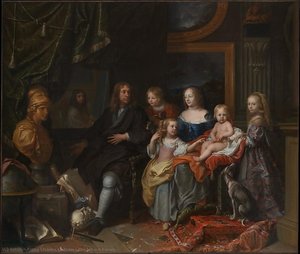
1645. Pittura, 190.0 x 124.0 cm. Museo dell'Ermitage.

§ 1Dati del catalogo

- 190.0 x 124.0 cm


§ 2Astratto
Descrizione del reperto
Experience Baroque dynamism with Le Brun's dramatic Daedalus and Icarus, capturing the tragic flight through masterful chiaroscuro; discover this timeless masterpiece today.
 Espandi i dettagli
Biografia dell'artista
Scopri Charles Le Brun (1619-1690), pittore barocco francese e teorico dell'arte! Esplora i suoi incarichi reali, l'eredità artistica e l'impatto a Versailles.
§ 3Commento
Daedalus and Icarus by LE BRUN, Charles
Charles Le Brun’s “Daedalus and Icarus,” painted in 1645 during his formative years in Rome, stands as a testament to the burgeoning influence of Caravaggio on French Baroque art. This dramatic depiction captures a pivotal moment from Greek mythology – the perilous flight of Daedalus and his son Icarus after escaping Crete, attempting to reach Sicily with wings crafted from feathers and wax.
- Subject Matter: The painting portrays Daedalus tirelessly supporting Icarus as he descends from the heavens, a poignant image symbolizing ambition, folly, and the consequences of disregarding divine warnings.
- Style & Technique: Le Brun’s masterful execution exemplifies Baroque dynamism and theatricality. Employing chiaroscuro—the dramatic interplay of light and shadow—he achieves an unparalleled sense of realism and emotional intensity. The meticulous detail in depicting Icarus's falling form underscores the artist’s commitment to capturing human vulnerability against a monumental backdrop.
- Historical Context: Created during Le Brun’s Roman apprenticeship, “Daedalus and Icarus” reflects the artistic fervor of the era, mirroring the stylistic innovations championed by Nicolas Poussin and absorbing lessons from Raphael’s classical ideals. It aligns with the broader trend toward portraying mythological narratives with psychological depth and moral contemplation—a hallmark of Baroque art’s ambition to engage viewers on an emotional level.
- Symbolism: The wax wings represent human aspiration, albeit tragically flawed. Their disintegration symbolizes hubris – excessive pride – and the inevitable downfall that accompanies disregard for prudence. The angel hovering in the upper left corner serves as a visual reminder of divine judgment and underscores the narrative’s moral dimension.
Beyond its artistic merits, “Daedalus and Icarus” resonates with timeless themes of human ambition versus responsibility. Le Brun's masterful rendering elevates this mythological tale into an enduring symbol of cautionary wisdom—a captivating subject for collectors seeking to adorn their homes with a piece of Baroque grandeur.
Domande e risposte
Quale colore risalta di più in "Daedalus and Icarus"?
Il colore dominante di "Daedalus and Icarus" di Charles Le Brun è Nero (#191214).
A quale periodo della carriera di Charles Le Brun appartiene "Daedalus and Icarus"?
All'interno della carriera di Charles Le Brun, "Daedalus and Icarus" appartiene al Early Period. Questa fase permette di confrontarla con le altre opere dell'artista.
Quanto sono vivaci i colori di "Daedalus and Icarus"?
I colori di "Daedalus and Icarus" di Charles Le Brun presentano una saturazione Colori delicati e un'intensità Equilibrato.


 Passa alle stampe


 Per opere d'arte o riproduzioni con un lato superiore a 105 cm (circa 41 pollici), la cornice verrà spedita in forma di kit smontato. Questo metodo garantisce una consegna sicura e previene danni durante il trasporto.