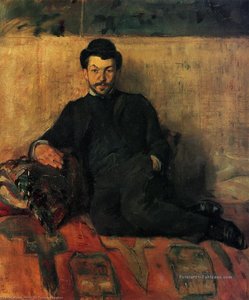
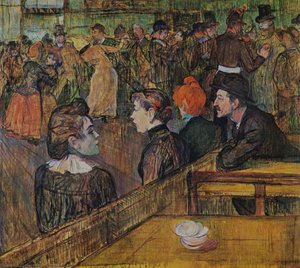
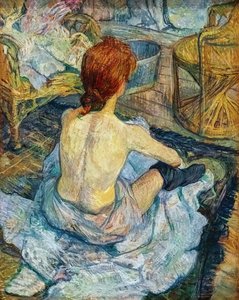
Anteprima in scala reale
 Condividi
 Condividi
 Dettagli
 Guida
Guida

 Scarica
 Articoli simili
 Radiografia
 Slideshow
 Statistiche
Aristide Bruant in his Cabaret


 Leggi tutto
Riproduzione a olio fatta a mano
Olio su tela dipinto a mano nelle tue dimensioni e con la tua cornice, realizzato su ordinazione dai nostri artisti. ( Passa alle stampe Passa all'immagine digitale)




P118B $10

P118H $10

P118W $10

P438Z $10

P508JH $12

P508YH $12

P805H $10

P805Z $10

P919BZ $10

P919G $10

P919XJ $10

P959ZH $10

P968JZ $12

W106C $8

W218G $10

W218JH $8

W218Y $10

W307PJ $10

W316G $10

W316PJ $8

W316Y $10

W398PJ $8

W4111J $10

W500HY $15

W500JH $15

W692G $12

W849H $8

W940BG $15

W953PJ $8




Scegli tra le nostre dimensioni predefinite, che rispettano le proporzioni originali dell'opera d'arte.

È possibile inserire dimensioni personalizzate per adattare l'opera a una cornice o a uno spazio specifico. Se la dimensione selezionata non corrisponde alle proporzioni dell'immagine originale, provvederemo a ritagliare l'opera o a estendere il dipinto con elementi aggiuntivi dipinti a mano. Un mockup digitale ti sarà inviato per approvazione prima dell'inizio della produzione.
Si prega di notare che l'anteprima a schermo non riflette il ritaglio o l'estensione effettivi. Solo il mockup mostrerà accuratamente la composizione finale.
Sebbene siano disponibili dimensioni personalizzate, consigliamo di selezionare una dimensione dall'elenco predefinito per preservare le proporzioni originali.
Dopo l'ordine, il team di AllPaintingsStore.com contatterà il cliente via e-mail per ricevere le istruzioni e fornirà un'anteprima del mockup
Consegna in tutto il mondo () in 3/4 settimane anziché nelle normali 5 settimane. (21 Settembre). Nessun compromesso sulla qualità.

Spedizione espressa gratuita in tutto il mondo

Tela in lino di alta qualità

Assicurazione completa sulla spedizione

Garanzia di rimborso dei dazi doganali

Garanzia di perfetta fedeltà cromatica

Politica di reso entro 100 giorni (solo per difetti di fabbricazione)

Garanzia di rimborso al 100%

Sconto per acquisti multipli
 L'opzione vetro è disponibile solo per dimensioni inferiori a 110 cm

Aristide Bruant in his Cabaret
Tecnica di riproduzione
Dimensioni della riproduzione
-


Prezzo totale
$ 258
Aristide Bruant in his Cabaret: A Parisian Night Captured
Henri de Toulouse-Lautrec’s “Aristide Bruant in his Cabaret” (1893) is more than just a depiction of a cabaret singer; it's a vibrant snapshot of late 19th-century Parisian life, rendered with an unparalleled sensitivity to the city’s marginalized figures and its intoxicating atmosphere. The painting immediately arrests the viewer with Bruant himself – a figure both imposing and vulnerable, instantly recognizable by his signature red scarf, bulky velvet cape, and tall boots. This isn't a formal portrait; it’s a raw, honest portrayal of a man deeply embedded in the heart of Montmartre’s bohemian underworld.
Toulouse-Lautrec’s genius lies not merely in his technical skill – though his mastery of lithography is undeniable – but in his ability to distill an entire world onto canvas. The composition itself is deliberately theatrical, echoing the stage setting of Bruant's performances. The back view, with Bruant’s head turned towards the audience, creates a sense of immediacy and invites the viewer into the scene as if we too are part of the captivated crowd. The use of stark contrasts – the deep black of his cape against the brighter tones of the surrounding figures – further emphasizes Bruant's presence and draws our attention to him.
The Figure of Aristide Bruant: A Symbol of Montmartre
Aristide Bruant was a central figure in the vibrant, often chaotic world of Parisian cabaret. He wasn’t merely a singer; he was a poet, composer, and a master of self-deprecating humor who used his performances to satirize the wealthy patrons frequenting these establishments. Toulouse-Lautrec recognized in Bruant a kindred spirit – an outsider who thrived on challenging social conventions and offering a glimpse into a world often ignored by the mainstream. Bruant’s swagger, his rough voice, and his deliberately provocative attire were all carefully constructed elements of his persona, designed to both entertain and provoke.
The red scarf, in particular, has become iconic, representing not just Bruant's style but also a symbol of the rebellious spirit that defined Montmartre. It’s a visual shorthand for the city’s artistic energy and its willingness to embrace unconventional beauty. The artist cleverly uses this detail to draw the eye and create a focal point within the crowded scene.
Lithography and the Avant-Garde
“Aristide Bruant in his Cabaret” exemplifies Toulouse-Lautrec's innovative use of color lithography, a technique that was rapidly gaining popularity among avant-garde artists of the time. Unlike traditional oil painting, lithography allowed for multiple prints to be created from a single stone, making it ideal for mass distribution and reaching a wider audience. Toulouse-Lautrec’s bold use of color – particularly the vibrant red of Bruant's scarf – was revolutionary, revitalizing graphic design and challenging established artistic norms.
Furthermore, Toulouse-Lautrec’s decision to depict scenes from everyday Parisian life—the cabarets, the street performers, the prostitutes—was a deliberate move towards embracing mass culture. He wasn’t interested in creating idealized representations of beauty; he sought to capture the raw, unvarnished reality of urban existence, reflecting a shift in artistic sensibilities that valued authenticity and accessibility.
A Window into Parisian Life
“Aristide Bruant in his Cabaret” offers a powerful glimpse into a pivotal moment in Parisian history – the Belle Époque. It’s a testament to Toulouse-Lautrec's keen eye for detail, his ability to capture not just appearances but also the underlying emotions and social dynamics of the era. This artwork is more than just a beautiful image; it’s a time capsule, transporting us back to a vibrant, chaotic, and ultimately unforgettable chapter in the city’s story. A hand-painted reproduction allows you to bring this captivating scene into your own space, celebrating the legacy of one of art's most perceptive observers.
Opere correlate


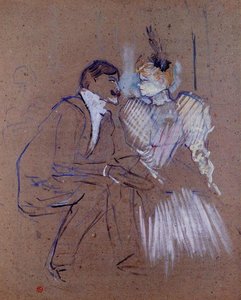


Biografia dell'artista
Henri de Toulouse-Lautrec: A Parisian Visionary
Henri Marie Raymond de Toulouse-Lautrec-Monfa, universally known as Toulouse-Lautrec (November 24, 1864 – September 9, 1901), stands as one of the most distinctive voices in late nineteenth-century French art. Born into a noble lineage descended from both the Counts of Toulouse and Odet de Foix, Vicomte de Lautrec, his childhood was marked by an unusual familial circumstance: his parents separated shortly after his birth, leaving him to be raised primarily by his maternal grandparents—a fact that profoundly shaped his worldview. Despite facing considerable physical challenges stemming from a congenital skeletal disorder – suspected to be pycnodysostosis though debated even today – Toulouse-Lautrec defied expectations and forged an extraordinary artistic path, becoming synonymous with the vibrant pulse of Montmartre and capturing its essence in unforgettable images.Early Influences & Artistic Training
Toulouse-Lautrec’s formative years were spent honing his artistic skills under the tutelage of Léon Bonnat and Fernand Cormon in Paris—institutions that instilled in him a foundational understanding of academic painting techniques. However, it was his encounter with Eugène Fromentin, a celebrated naturalist painter who championed the depiction of nature’s beauty, that truly ignited his passion for observation and artistic exploration. Fromentin encouraged Toulouse-Lautrec to venture beyond traditional subjects, urging him to embrace the world around him—a directive that would prove instrumental in shaping his distinctive style. Notably, Toulouse-Lautrec's fascination with Japanese woodblock prints – then gaining considerable popularity in Europe – profoundly impacted his aesthetic sensibilities. The bold compositions and flattened perspectives characteristic of Ukiyo-e art served as a catalyst for experimentation and challenged the conventions of Western artistic tradition.The Bohemian Embrace: Montmartre & Artistic Innovation
Toulouse-Lautrec’s artistic breakthrough occurred amidst the burgeoning bohemian culture of Montmartre—a district renowned for its artists, writers, musicians, and performers. Rejecting the rigid formalism of the Salon, he immersed himself in this dynamic milieu, documenting its sights and sounds with unparalleled sensitivity and stylistic daring. He eschewed idealized representations of beauty, instead portraying his subjects with unflinching honesty—capturing their vulnerabilities alongside their charisma. This approach is vividly exemplified in his iconic depictions of Moulin Rouge dancers, cabaret singers, and prostitutes—images that transcended mere documentation to become emblems of Parisian decadence and artistic freedom. Toulouse-Lautrec’s technique was revolutionary for its time. He skillfully employed line – often thick and expressive – to convey movement and emotion, creating compositions that pulsated with energy. His color palette, though frequently muted, possessed an arresting vibrancy—capturing the artificial glow of gaslight and the smoky atmosphere of Montmartre cafes. Lithography became his favored medium, allowing him to reproduce his images widely and disseminate them throughout Europe.Notable Works & Artistic Legacy
Toulouse-Lautrec’s oeuvre comprises a remarkable collection of paintings, prints, drawings, and decorative commissions—each imbued with an unmistakable stylistic signature. Among his most celebrated works are *La Blanchisseuse* (The Washerwoman), a poignant portrayal of female labor and vulnerability; *Moulin Rouge*, No. 1—a monumental canvas capturing the frenetic energy of Paris’s famed cabaret; *Paris Street Scene*, depicting a bustling cityscape bathed in twilight; and *Jane Avril*, a portrait of a celebrated dancer that embodies Toulouse-Lautrec's masterful command of line and color. His posters advertising performers like Jane Avril and Yvette Guilbert stand as masterpieces of graphic design—demonstrating his ability to transform visual elements into powerful expressions of artistic intent. Toulouse-Lautrec’s influence extended far beyond the confines of his own era, inspiring subsequent generations of artists who embraced experimentation and challenged conventional aesthetic norms. He remains a pivotal figure in the transition from Impressionism to modern art, solidifying his place as one of France's most enduring artistic icons—a testament to the transformative power of observation, empathy, and stylistic innovation. ## A Singular Vision: Toulouse-Lautrec’s Enduring Influence Despite facing considerable personal hardship – including debilitating alcoholism and syphilis – Toulouse-Lautrec persevered in his artistic pursuits until his untimely death at the age of 36 on September 9, 1901. His legacy transcends mere stylistic innovation; it embodies a profound engagement with human experience—a willingness to confront darkness alongside beauty—and an unwavering devotion to capturing the essence of a particular moment in time. He is considered one of the key Post-Impressionist painters alongside Cézanne, Van Gogh, Gauguin, and Seurat. His work continues to captivate audiences today, reminding us that art can illuminate the complexities of human existence with remarkable clarity and sensitivity—a testament to Toulouse-Lautrec’s enduring artistic vision.
comte henri marie raymond de toulouse-lautrec-monfa
1864 - 1901 , Francia
Informazioni rapide
- Artistic Movement Or Style: Post-Impressionism
- Artists Or Movements Influenced By This Artist:
- Paul Cézanne
- Vincent van Gogh
- Artists Who Influenced This Artist: ['Léon Bonnat']
- Date Of Birth: November 24, 1864
- Date Of Death: September 9, 1901
- Full Name: Henri Marie Raymond de Toulouse-Lautrec-Monfa
- Nationality: French
- Notable Artworks:
- La Blanchisseuse
- In the Wings at the Circus
- Woman in Bed — Waking
- Place Of Birth: Albi, France
Articoli correlati

Echoes of 1888: Artistic Responses to a Year of Transformation & Turmoil
Explore the artistic responses to the transformative year of 1888. Discover Post-Impressionism, Symbolism & artists like Toulouse-Lautrec and Munch. Expert insights for collectors.

Édouard Cortès: Il Poeta della Vita Parigina e l'Incanto della Belle Époque
Scopri Édouard Cortès, il 'Poeta di Parigi', e la sua straordinaria capacità di catturare l'incanto della Belle Époque. Analisi approfondita del suo stile unico e delle opere più celebri. Esplora la sua eredità artistica.

Chiaroscuro of the Belle Époque: Unveiling the Nocturnal Soul of Toulouse-Lautrec’s Paris
Immerse yourself in the vibrant nocturnal world of Toulouse-Lautrec. Explore the artistry behind his iconic depictions of Parisian nightlife, from Montmartre to the Moulin Rouge, and discover how to bring this Post-Impressionist mastery into your private collection.

Echoes of 1883: A Cultural & Artistic Reflection on a Pivotal Year
Explore the vibrant art & culture of 1883! Discover Post-Impressionist masters like Toulouse-Lautrec and Van Rysselberghe. Expert insights for collectors & enthusiasts at AllPaintingsStore.

Maurice Utrillo: Visione Poetica della Solitudine Parigina – Vita, Stile e Eredità
Esplora la vita e l'opera di Maurice Utrillo, il poeta della solitudine parigina. Scopri il suo stile unico, l'influenza sulla Scuola di Parigi e i suoi capolavori più iconici. Approfondimenti storici e artistici.