


 Anteprima in scala reale
 Invia
Invia Condividi
 Dettagli opera
 Guida
Guida

 Scarica
 Simili
 Radiografia
 Slideshow
 Statistiche
Raven Head


 Espandi i dettagli
Giclée / Stampe d'arte
Stampa giclée o su tela di qualità museale, con produzione rapida e diverse opzioni di finitura. ( Acquista il dipinto realizzato a mano Passa all'immagine digitale)




P118B €10

P118H €10

P118W €10

P438Z €10

P508JH €12

P508YH €12

P805H €10

P805Z €10

P919BZ €10

P919G €10

P919XJ €10

P959ZH €10

P968JZ €12

W106C €8

W218G €10

W218JH €8

W218Y €10

W307PJ €10

W316G €10

W316PJ €8

W316Y €10

W398PJ €8

W4111J €10

W500HY €15

W500JH €15

W692G €12

W849H €8

W940BG €15

W953PJ €8




Scegli tra le nostre dimensioni predefinite, che rispettano le proporzioni originali dell'opera d'arte.

Inserisci la larghezza e l'altezza desiderate, per adattarle alla tua cornice o alla tua parete. Una stampa può essere solo ritagliata, mai resa più grande dell'immagine originale; pertanto, un formato con una forma differente comporterà la perdita di una parte dell'opera. Ti invieremo un mockup digitale da approvare prima di procedere con la stampa. L'immagine mostrata in questa pagina non rappresenta il ritaglio reale — solo il mockup lo mostra.
Consegna in tutto il mondo () in 2 settimane invece delle normali 4/5 settimane. (26 Ottobre)

Spedizione espressa gratuita in tutto il mondo

Tela in lino di alta qualità

Assicurazione completa sulla spedizione

Garanzia di rimborso dei dazi doganali

Garanzia di fedeltà cromatica assoluta

Politica di reso entro 100 giorni (solo per difetti di fabbricazione)

Garanzia di rimborso al 100%

Offerta per acquisti multipli
 L'opzione vetro è disponibile solo per dimensioni inferiori a 110 cm

Raven Head
Giclée / Stampe d'arte
Dimensioni riproduzione
-


Prezzo finale calcolato
€ 56
A Parisian Rebel: The Life and Art of Édouard Manet
Édouard Manet’s journey from privileged upbringing to celebrated artist wasn't one of predetermined destiny but rather a defiant assertion of artistic vision against the constraints of Victorian society. Born in 1832 amidst the gilded halls of Paris, his father, Auguste Manet, was a respected judge—a position embodying stability and adherence to established norms—and envisioned for Édouard a future steeped in respectable professions like law or naval service. Yet, from early childhood, Manet possessed an unwavering passion for art, fueling clandestine explorations into artistic realms beyond the confines of his family’s expectations. This inherent inclination manifested itself at eleven when he commenced formal drawing lessons, marking the beginning of his artistic education—though briefly apprenticed to Thomas Couture, Manet swiftly recognized Couture's academic rigidity as antithetical to his creative spirit. This formative resistance served as a prelude to a lifelong crusade against artistic conventions. Unlike many of his contemporaries who sought to emulate the grandeur of the Old Masters, Manet relentlessly pursued a path distinct from tradition—one driven by an urgent desire to capture the pulse of modern Parisian life. He frequented the Louvre not merely for passive observation but for meticulous dissection, absorbing techniques pioneered by masters like Caravaggio and Velázquez – artists who understood how manipulating light and shadow could transform form and imbue paintings with profound emotional resonance. Manet’s fascination extended beyond mere stylistic imitation; he sought to unravel the underlying mechanisms of artistic expression, questioning accepted dogma and championing innovation. Manet's groundbreaking style—Realist-Impressionism—represented a radical departure from prevailing artistic trends. He eschewed idealized representations of beauty, opting instead for unflinching portrayals of everyday subjects – laborers, prostitutes, urban landscapes – rendered with loose brushstrokes and vibrant color palettes characteristic of Impressionism. This stylistic choice wasn’t simply aesthetic preference; it was a deliberate act of rebellion against academic formalism, which demanded meticulous detail and adherence to idealized forms. His canvases pulsed with immediacy—capturing fleeting moments of experience rather than striving for permanence or polished perfection. Consider “Olympia,” his controversial debut painting in 1863 – a nude reclining woman receiving money from a male physician. The unflinching gaze of Olympia challenged Victorian sensibilities regarding female sexuality and artistic nudity, sparking heated debate within the Parisian art world. The symbolism embedded within Manet’s oeuvre speaks volumes about his intellectual engagement with philosophical currents of his time. Influenced by Nietzsche's critique of morality and Wagnerian mythology—artists who questioned religious dogma and embraced expressive individualism—Manet infused his paintings with references to classical myths and biblical narratives, albeit interpreted through a lens of modern sensibility. These symbols weren’t merely decorative embellishments; they functioned as conduits for conveying complex ideas about human existence, desire, and the relationship between art and reality. For instance, in “The Picnic,” Manet subtly juxtaposes figures from different social strata—aristocrats and laborers—creating a visual commentary on societal hierarchies and the elusive nature of truth. Ultimately, Manet’s artistic legacy transcends stylistic innovation; it resides in his profound ability to evoke emotion and provoke contemplation. His paintings compel viewers to confront uncomfortable truths about human behavior and societal injustices—demanding engagement beyond mere aesthetic appreciation. Like Caravaggio before him, Manet wielded light and shadow as instruments of psychological drama, manipulating tonal variations to heighten emotional intensity and create a palpable sense of atmosphere. Viewing “A Bar at the Folies-Bergère” transports us into the glittering heart of Belle Époque Paris—a space brimming with sensual allure and social ambition—where Manet captures not just visual spectacle but also the intangible essence of human experience. His work continues to inspire artists and captivate audiences worldwide, cementing his place as one of the most influential figures in modern art history.Domande e risposte
Quante persone visualizzano "Raven Head"?
È disponibile una pagina Statistiche per "Raven Head", che illustra le visite mensili dell'opera e delle altre creazioni dell'artista, con dettagli relativi a paese e lingua.
I colori di "Raven Head" di Édouard Manet sono vivaci o tenui?
"Raven Head" di Édouard Manet presenta una saturazione di Subtle Color e un'intensità di Balanced.
Posso usare la realtà aumentata per vedere "Raven Head" di Édouard Manet nella mia stanza?
"Raven Head" dispone di un'anteprima in realtà aumentata: la pagina Anteprima in AR dell'opera ti permette di visualizzarla nel tuo spazio tramite un dispositivo compatibile.
Opere simili


Biografia dell'artista
vitae e carriera
Édouard Manet, pittore modernista francese, nacque il 23 gennaio 1832 a Parigi. Contrariamente alle sue radici aristocratiche e a un percorso navale predeterminato, Manet emerse come un audace pittore modernista francese le cui tele catturavano la vivacità della vita del XIX secolo. È ampiamente acclamato per il suo ruolo nel pionierismo dell'impressionismo, guidando l’arte dalle rappresentazioni realistiche a territori inesplorati.opere notevoli
Le prime opere capolavoro di Manet, Il pranzo sull'erba (Le déjeuner sur l’herbe) (1863) e Olimpia (1865), furono radicali, sfidando le norme artistiche e provocando indignazione tra i tradizionalisti. Queste opere provocatorie ottennero l'approvazione dei colleghi più lungimiranti, seminando i semi dell’impressionismo. * Il pranzo sull'erba (Le déjeuner sur l’herbe) (1863) - un dipinto che ha scatenato controversie sia da parte della critica che dell'Accademia di Belle Arti. * Olimpia (1865) - un'opera che ha causato grande scompiglio a causa della sua rappresentazione di una donna bianca nuda, accompagnata da una serva nera.musei e collezioni
Le opere di Manet si possono trovare in vari musei in tutto il mondo, tra cui: * Musée d’Orsay (Parigi, Francia) - sede di una vasta collezione dei dipinti di Manet, tra cui Olimpia. * Museo di Belle Arti (Boston, Stati Uniti) - presenta il Ritratto di Victorine Meurent, un'opera degna di nota nel suo percorso artistico.eredità e influenza
Lo stile innovativo di Manet, caratterizzato da pennellate ampie e veloci, illuminazione in studio e profondità limitata, è stato una grande influenza sui pittori futuri. La sua eredità può essere vista nelle opere di numerosi artisti che hanno seguito le sue orme.- Impressionismo: il suo lavoro pionieristico in questo stile lo ha reso un nome familiare tra gli appassionati d'arte.
- Realismo: il suo rifiuto degli approcci realistici tradizionali ha aperto la strada a una nuova generazione di artisti.
- Arte moderna: i contributi di Manet all’evoluzione dell’arte moderna sono innegabili, consolidando il suo posto nella storia dell'arte.
ulteriore lettura ed esplorazione
* Scopri di più sulla vita e sulle opere di Édouard Manet su AllPaintingsStore. * Esplora la collezione del Musée d’Orsay, che presenta una vasta gamma di dipinti di Manet, tra cui Olimpia, su AllPaintingsStore's pagina del museo.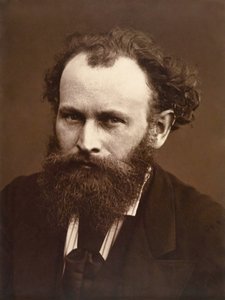
Édouard Manet
1832 - 1883 , Francia
Dettagli rapidi
- Artisti Influenti:
- Caravaggio
- Diego Velázquez
- Gustave Courbet
- Artisti Influenzati:
- Claude Monet
- Pierre-Auguste Renoir
- Edgar Degas
- Data Di Nascita: 23 gennaio 1832
- Luogo Di Nascita: Parigi, Francia
- Movimento Artistico: Impressionismo, Realismo
- Nazionalità: Francese
- Nome Completo: Édouard Manet
- Opere Notevoli:
- Le Déjeuner sur l'herbe
- Olympia
- Madame Manet a Bellevue
- Ritratto di Mery Laurent
Articoli correlati
Édouard Manet: I 25 Capolavori che Hanno Rivoluzionato l'Arte Moderna | AllPaintingsStore
Esplora i 25 capolavori di Édouard Manet, il rivoluzionario pittore impressionista. Scopri la storia, le tecniche e l'impatto culturale di opere iconiche come 'Le Déjeuner sur l'herbe' e 'Olympia'. Trova stampe artistiche di alta qualità su AllPaintingsStore.com.
Monochrome Visions: Exploring the Aesthetic & Historical Significance of Black & White Photography
Explore the rich history & artistic power of black and white photography. From early techniques to iconic masters like Ansel Adams, discover why monochrome continues to captivate art lovers today. Expert insights for collectors.

Bianco Sublime: I 10 Dipinti Più Famosi Dominati dal Colore Bianco | .it
Esplora i 10 dipinti più celebri dominati dal bianco, da Monet a Malevich. Scopri la storia, le tecniche e l'impatto di queste opere iconiche. Trova stampe su tela e riproduzioni d'arte di alta qualità per decorare casa con stile su .

Giclée Prints: Archival Quality & Aesthetic Nuances for the Discerning Collector
Explore the world of giclée prints with AllPaintingsStore. Learn about archival quality, aesthetic nuances & investment potential. Expert guidance for discerning art collectors seeking museum-quality reproductions and lasting value.

I 10 Dipinti Più Famosi Dominati dal Nero: Maestri e Storie d'Arte
Esplora i 10 dipinti più iconici dominati dal nero, da Caravaggio a Munch. Scopri storie, tecniche e il potere espressivo di artisti come Rembrandt e Goya. Trova stampe d'arte di alta qualità per la tua casa su .


