


 Anteprima in scala reale
 Invia
Invia Condividi
 Dettagli opera
 Guida
Guida

 Scarica
 Simili
 Radiografia
 Slideshow
 Q&A
Q&A Statistiche
File Cutters

- 31.0 x 47.0 cm


 Espandi i dettagli
Giclée / Stampe d'arte
Stampa giclée o su tela di qualità museale, con produzione rapida e diverse opzioni di finitura. ( Acquista il dipinto realizzato a mano Passa all'immagine digitale)




































Scegli tra le nostre dimensioni predefinite, che rispettano le proporzioni originali dell'opera d'arte.

Inserisci la larghezza e l'altezza desiderate, per adattarle alla tua cornice o alla tua parete. Una stampa può essere solo ritagliata, mai resa più grande dell'immagine originale; pertanto, un formato con una forma differente comporterà la perdita di una parte dell'opera. Ti invieremo un mockup digitale da approvare prima di procedere con la stampa. L'immagine mostrata in questa pagina non rappresenta il ritaglio reale — solo il mockup lo mostra.
Consegna in tutto il mondo () in 2 settimane invece delle normali 4/5 settimane. (1 Novembre)

Spedizione espressa gratuita in tutto il mondo

Tela in lino di alta qualità

Assicurazione completa sulla spedizione

Garanzia di rimborso dei dazi doganali

Garanzia di fedeltà cromatica assoluta

Politica di reso entro 100 giorni (solo per difetti di fabbricazione)

Garanzia di rimborso al 100%

Offerta per acquisti multipli
 L'opzione vetro è disponibile solo per dimensioni inferiori a 110 cm

File Cutters
Giclée / Stampe d'arte
Dimensioni riproduzione
-


Prezzo finale calcolato
€ 57
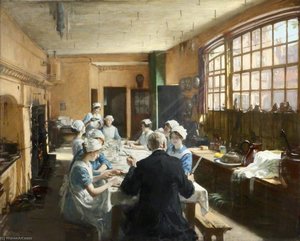
Industrial Setting and Women's Roles
The scene depicts a group of women seated at tables with sewing machines, engaged in the production of clothing items such as dresses. The atmosphere suggests an industrial setting where teamwork and collaboration are essential. This painting highlights the significant role women played in the workforce during this period, often working in factories and contributing to the war effort. Key aspects of the painting include the attention to detail in the depiction of the sewing machines and the factory environment. The women appear focused and engaged in their tasks, demonstrating the importance of their work. For more information on industrial-themed paintings, visit Otto Friedrich Wilhelm Lietz: Industry in the Visual Arts at the Grohmann Museum.Artist and Style
Edward Frederick Skinner was a notable artist known for his contributions to the representation of industrial scenes. His style often featured detailed depictions of machinery and factory settings, as seen in "File Cutters" and other works like Coiling and Setting Springs and Making Bessemer Steel. These paintings provide a glimpse into the industrial era, showcasing the evolution of manufacturing processes.- Visit Painting by 'Edward Frederick Skinner': File Cutters to explore more about this artwork.
- Learn about the American frontier and its impact on industrial development.
The "File Cutters" by Edward Frederick Skinner is a significant artwork that highlights the importance of women's roles in the industrial era. Its detailed depiction of factory life and machinery makes it a fascinating piece for art enthusiasts and historians alike.
Domande e risposte
In che modo lo stile di "File Cutters" si relaziona all'epoca del suo autore?
In "File Cutters" di Edward Frederick Skinner, il movimento Contemporary Realism incontra l'epoca XIX secolo.
Posso visualizzare "File Cutters" come una presentazione a schermo intero?
Puoi visualizzare "File Cutters" di Edward Frederick Skinner in formato slideshow nella pagina Slideshow dell'opera.
Come posso visualizzare un'anteprima di una riproduzione di "File Cutters" di Edward Frederick Skinner?
La pagina di Anteprima in ambiente di "File Cutters" ti permette di visualizzare un'anteprima dell'opera prima dell'ordine.
Opere simili




Biografia dell'artista
Il Cronista dell'Anima Industriale
Edward Frederick Skinner, un nome sinonimo della realtà cruda e senza filtri dell'apice industriale della Gran Bretagna, occupò uno spazio unico nel mondo dell'arte dei primi del Novecento. Nato a Londra nel 1865, Skinner emerse durante un'era definita da una rapida espansione tecnologica e da un profondo mutamento nel tessuto sociale della nazione. Mentre molti dei suoi contemporanei cercavano rifugio nella bellezza eterea di paesaggi idealizzati o nella grazia senza tempo di soggetti mitologici, Skinner rivolse il suo sguardo verso gli orizzonti carichi di fumo di fabbriche, mulini e officine. La sua opera funge da finestra viscerale su un'epoca di ferro e vapore, catturando l'impatto trasformativo dei macchinari sullo spirito umano e sul paesaggio fisico dell'Inghilterra.
Le sue fondamenta artistiche furono gettate nei prestigiosi corridoi della Slade School of Fine Art, dove ricevette un rigoroso addestramento sotto gli occhi attenti di maestri come Frederic Leighton e Joseph Hooker. Questa stirpe accademica gli conferì un comando meticoloso delle tecniche tradizionali e un impegno incrollabile verso la precisione. Fu proprio questa disciplina a permettergli di approcciarsi ai soggetti industriali non con una mera osservazione, ma con una profonda accuratezza anatomica e strutturale. Skinner non si limitava a dipingere macchine; egli ne comprendeva il peso, la consistenza e il modo in cui interagivano con la luce e con i lavoratori che le accudivano.
Una Visione Realista di Progresso e Lavoro
La vera essenza dell'opera di Skinner risiede nel suo rifiuto di romanticizzare le difficoltà della classe operaia. La sua svolta arrivò attraverso una serie di dipinti che documentavano il cuore pulsante dell'industria britannica. In opere come File Cutters, creata nel 1917, egli cattura la quieta intensità delle donne impegnate nella produzione in fabbrica. Attraverso la sua pennellata, il movimento ritmico delle macchine da cucire e le espressioni concentrate dei lavoratori diventano simboli di uno sforzo nazionale collettivo. Egli utilizzò la luce non per addolcire la durezza del pavimento della fabbrica, ma per illuminare la dignità che si trova nel lavoro estenuante.
La maestria compositiva di Skinner gli permise di tessere narrazioni complesse di produttività e ordine. In Forging Files, impiega un uso sofisticato di colori caldi e luci soffuse per creare un senso di familiarità all'interno dell'ambiente industriale, mantenendo tuttavia uno sguardo implacabile sui dettagli meccanici che definiscono l'epoca. La sua capacità di bilanciare la presenza monumentale dei macchinari pesanti con i delicati elementi umani dei suoi soggetti creò una tensione che rispecchiava i mutamenti sociali del suo tempo. Che stesse ritraendo il calore di una fucina o il caos organizzato di un'officina, le tele di Skinner agiscono come documenti storici, preservando l'atmosfera di un'era che veniva rapidamente rimodellata proprio dagli strumenti che egli dipingeva con tanto amore.
Guerra, Propaganda e un'Eredità Duratura
Con l'avvento delle ombre della Prima Guerra Mondiale sull'Europa, la missione artistica di Skinner assunse una dimensione nuova e più urgente. Il suo talento fu messo al servizio della documentazione e del morale nazionale, portando a commissioni da parte del Governo Britannico. Durante questo periodo, il suo lavoro divenne una componente essenziale di una concertata campagna di propaganda, illustrando il ruolo vitale delle fabbriche di munizioni, dei cantieri navali e della preparazione dei soldati. In dipinti come One of the Machine Shops, egli catturò la scala della produzione bellica, dove armamenti su larga scala e trasporti pesanti venivano integrati nel paesaggio quotidiano del lavoro.
L'importanza storica di Edward Frederick Skinner si estende ben oltre il valore estetico dei suoi dipinti a olio. Egli rimane una figura cruciale per comprendere l'identità visiva dell'Età Industriale. La sua eredità si ritrova nel modo in cui ha colmato il divario tra belle arti e documentazione sociale, elevando il pavimento della fabbrica allo status di soggetto degno dell'arte alta. Oggi, le sue opere, molte delle quali sono conservate in istituzioni come il Science Museum nel Regno Unito, continuano a offrire profonde intuizioni sull'evoluzione della produzione, sul mutamento del ruolo delle donne nella forza lavoro e sull'endurevole, complessa relazione tra l'umanità e le macchine che creiamo.

Edward Frederick Skinner
1865 - 1924 , Regno Unito
Dettagli rapidi
- Artistic Movement Or Style: Realismo
- Artists Or Movements Influenced By This Artist: ['Arts and Crafts Movement']
- Artists Who Influenced This Artist: ['William Morris']
- Date Of Birth: 1865
- Date Of Death: 1924
- Full Name: Edward Frederick Skinner
- Nationality: Britannico
- Notable Artworks:
- Factory Scene I
- Coal Mine Landscape
- Place Of Birth: Londra, Inghilterra
Articoli correlati

Arte Industriale: 10 Capolavori che Rivoluzionano l'Estetica e Decorano la Casa
Esplora 10 capolavori di Monet, Manet e altri maestri che catturano l'essenza dell'arte industriale. Scopri storie, tecniche e colori unici per decorare la tua casa con stampe su tela di alta qualità. AllPaintingsStore.com: arte collezione online.

I 25 capolavori di Edward Hopper: l'arte della solitudine
Esplora i 25 capolavori di Edward Hopper tra luce e solitudine. Scopri le opere iconiche su AllPaintingsStore.com.

The Enduring Muse: Women as Subject & Symbol in Art History
Explore the rich history of women in art – from iconic muses to groundbreaking artists. Discover feminist movements, global perspectives & reclaim female narratives with AllPaintingsStore.

Portrayals of Power & Perception: A Historical Survey of Women in Art
Explore the rich history of women in art – from iconic muses to groundbreaking artists. Discover feminist movements & reclaim female narratives with AllPaintingsStore. Expert insights for discerning collectors.

The Gritty Muse: Industrial Vibe as Defining Aesthetic in Modern Artwork
Explore the captivating world of industrial aesthetics in modern art. Discover key movements, influential artists & collecting insights at AllPaintingsStore.com – your source for museum-quality reproductions and expert art guidance.