- Home

- Stampa su tela
- Fernand Léger
- Forms in space

 Ordina la riproduzione Acquista download
 Invia
Invia
 Condividi
 Dettagli opera
 Aggiungi ai preferiti

 Scarica
 Simili
 Radiografia
 Slideshow
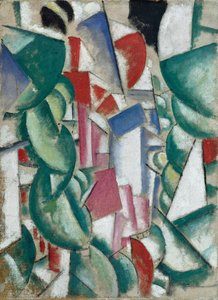
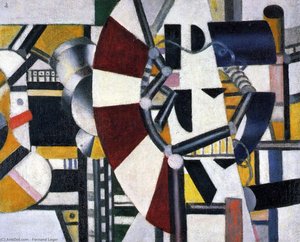
Forms in space
 Acrylic On Canvas
- WallArt
- Purist Cubism
 1950
1950- Modern
 92.0 x 73.0 cm
 Scopri di più
Giclée / Stampa d'arte
Stampa giclée o su tela di qualità museale, con produzione rapida e diverse opzioni di finitura.




P118B $10

P118H $10

P118W $10

P438Z $10

P508JH $12

P508YH $12

P805H $10

P805Z $10

P919BZ $10

P919G $10

P919XJ $10

P959ZH $10

P968JZ $12

W106C $8

W218G $10

W218JH $8

W218Y $10

W307PJ $10

W316G $10

W316PJ $8

W316Y $10

W398PJ $8

W4111J $10

W500HY $15

W500JH $15

W692G $12

W849H $8

W940BG $15

W953PJ $8




Scegli tra le nostre dimensioni predefinite, che rispettano le proporzioni originali dell'opera d'arte.

È possibile inserire dimensioni personalizzate per adattare l'opera a una cornice o a uno spazio specifico. Se la dimensione selezionata non corrisponde alle proporzioni dell'immagine originale, procederemo al ritaglio dell'opera o all'estensione dell'immagine con un bordo specchiato o a tinta unita. Un mockup digitale ti verrà inviato per approvazione prima dell'inizio della produzione.
Si prega di notare che l'anteprima a schermo non riflette il ritaglio o l'estensione effettivi. Solo il mockup mostrerà accuratamente la composizione finale.
Sebbene siano disponibili dimensioni personalizzate, si raccomanda di selezionare una dimensione dall'elenco predefinito per preservare le proporzioni originali.
Consegna in tutto il mondo () in 2 settimane invece delle normali 4/5 settimane. (22 Luglio)

Spedizione espressa gratuita in tutto il mondo

Tela in lino di alta qualità

Assicurazione completa sulla spedizione

Garanzia di rimborso dei dazi doganali

Garanzia di fedeltà cromatica

Politica di reso entro 60 giorni (solo per difetti)

Garanzia di rimborso al 100%

Sconto per acquisti multipli
 L'opzione vetro è disponibile solo per dimensioni inferiori a 110 cm

Forms in space
Giclée / Stampa d'arte
Dimensioni riproduzione
-


Prezzo totale finale
-
Descrizione dell'opera
Forms in Space: A Purist Vision of Modernity by Fernand Léger
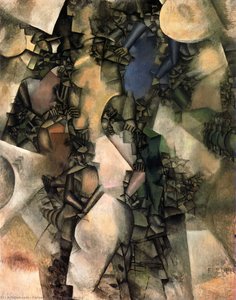
Fernand Léger’s “Forms in Space,” painted in 1950, is more than just a still life; it's a vibrant declaration of the machine age rendered through the distinctive lens of Purism. Measuring 92 x 73 cm, this artwork immediately draws the eye with its bold palette – assertive reds, cool blues, sunny yellows, verdant greens, and grounding blacks – all meticulously applied to construct a dynamic composition dominated by geometric shapes. The scene depicts a domestic interior, anchored by a chair, a clock, and an umbrella, objects imbued with a sense of purposeful functionality that speaks directly to Léger’s fascination with industrial forms.
- The Purist Aesthetic: Léger's work is inextricably linked to the Purist movement, a reaction against the perceived excesses of Impressionism and early Cubism. Purists sought to strip away unnecessary detail, focusing instead on fundamental geometric shapes – circles, squares, triangles – believing they represented the essence of modern life.
- A Celebration of Industry: Born in 1881 in Argentan, Normandy, Léger’s upbringing amidst agricultural labor profoundly shaped his artistic vision. He witnessed firsthand the rise of industrialization and embraced it as a source of inspiration, translating its rhythms and forms into his paintings. “Forms in Space” embodies this fascination with machinery and its impact on human experience.
- Human Presence: The inclusion of two figures – one on the left and another on the right – adds a crucial element to the composition. These individuals are not idealized representations but rather functional presences, further emphasizing Léger’s interest in the relationship between humanity and technology.
Technique and Materiality: A Masterclass in Controlled Abstraction
Léger's technique is characterized by a deliberate application of paint, often built up in thick layers – impasto – to create a tactile surface that emphasizes the three-dimensionality of his forms. The brushstrokes are visible, contributing to the painting’s energetic and somewhat rough quality. He employed a palette knife alongside brushes, further enhancing the textural effect and allowing for precise control over color placement. The use of bold, unmixed colors contributes significantly to the work's impact, reflecting Léger's desire to present a raw, unfiltered view of modern life. The canvas itself is primed with a robust gesso, ensuring the longevity and vibrancy of the pigments.
Symbolism and Interpretation: Beyond the Surface
While seemingly straightforward in its depiction, “Forms in Space” carries deeper symbolic weight. The geometric shapes represent not just physical objects but also the underlying structure of modern society – a world increasingly defined by logic, efficiency, and industrial production. The presence of the clock suggests the relentless march of time, while the umbrella symbolizes protection from the elements, both literal and metaphorical. Léger’s work can be interpreted as an optimistic vision of progress, albeit one tempered with a keen awareness of the potential disruptions caused by technological advancement.
Historical Context and Legacy
Painted in 1950, “Forms in Space” reflects the post-war landscape of Europe, where industrialization continued to reshape society. Léger’s work stands as a testament to his enduring influence on modern art, bridging the gap between abstraction and representation. His exploration of form and color paved the way for subsequent generations of artists, solidifying his place as one of the most important figures in 20th-century painting. This reproduction offers an exceptional opportunity to own a piece of art history, bringing Léger’s powerful vision into your space.
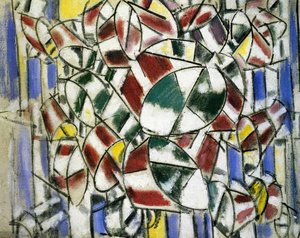


Biografia dell'artista
vitae e formazione
Fernand Léger, pittore, scultore e filmmaker francese, nacque il 4 febbraio 1881 ad Argentan, Orne, nella bassa Normandia. Suo padre allevava bovini e Léger iniziò la sua formazione come architetto nel 1897-1899. Successivamente si trasferì a Parigi nel 1900, sostenendosi con il lavoro di disegnatore architettonico.sviluppo artistico
Le prime opere di Léger furono influenzate dall'impressionismo, come visto in Le jardin de ma mère (Il giardino di mia madre) (1905). Dopo aver frequentato la scuola d'arte decorativa e l'Académie Julian, iniziò a lavorare seriamente come pittore a 25 anni. Il suo stile si evolse in una forma personale di cubismo, che i critici definirono "tubismo" per la sua enfasi su forme cilindriche.Cubismo e il gruppo dei Puteaux
Nel 1910, Léger espose al Salon d'automne insieme a Jean Metzinger e Henri Le Fauconnier. Entrò nel gruppo dei Puteaux, noto anche come la sezione d'or (la sezione aurea), insieme ad altri artisti come Francis Picabia e Marcel Duchamp.Guerra e la sua influenza sull'opera di Léger
Le esperienze di Léger nella Prima Guerra Mondiale ebbero un impatto significativo sulla sua opera. Durante il suo tempo al fronte, produsse schizzi di pezzi d'artiglieria, aerei e soldati. Il suo dipinto Soldier with a Pipe (1916) riflette questo periodo.Lavoro successivo e eredità
Il lavoro post-bellico di Léger, caratterizzato da forme meccaniche lisce, lo legò alla tradizione della pittura figurativa francese. I suoi paesaggi animati del 1921 mostrarono figure e animali in forme armoniose e razionalizzate.- visualizza le opere di Fernand Léger su AllPaintingsStore
- altro sul Fernand Léger su Wikipedia
- scopri il Musée National Fernand Légère (Francia) con AllPaintingsStore
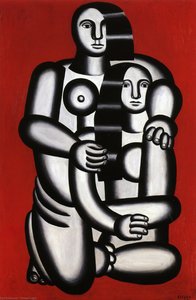
- La donna seduta (100 x 81 cm, tubismo)
- Elemento macchina (cubismo)

Fernand Léger
1881 - 1955 , Francia
Dati rapidi
- Artisti Influenti:
- Cézanne
- Impressionismo
- Artisti Influenzati: ['Pop Art']
- Data Di Nascita: 4 febbraio 1881
- Luogo Di Nascita: Argentan, Francia
- Movimento Artistico: Cubismo, Tubismo
- Nazionalità: Francese
- Nome Completo: Fernand Léger
- Opere Notevoli:
- La Grande Parata
- L'Elemento Macchina
- Donna Seduta
- The City
Articoli correlati

Kazimir Malevich: Le 25 Opere Iconiche che Hanno Rivoluzionato l'Arte Moderna | AllPaintingsStore
Esplora le 25 opere iconiche di Kazimir Malevich, pioniere del suprematismo e dell'arte astratta. Scopri la storia dietro 'Black Square', 'Bianco su bianco' e altre creazioni rivoluzionarie. Trova riproduzioni d'arte di alta qualità per decorare la tua casa su AllPaintingsStore.com.

Oltre l'Effimero: Le Riproduzioni d'Arte Dipinte a Mano come Paradigma di Lusso Sostenibile nell'Arredamento Contemporaneo
Scopri riproduzioni d'arte dipinte a mano di qualità museale. Artisti esperti, personalizzazione su misura e consulenza gratuita per arredare con stile e investire in bellezza senza tempo. AllPaintingsStore: lusso accessibile e autenticità garantita.

Beyond Form & Color: Geometric Abstraction's Evolution in 20th/21st Century Art
Explore the evolution of geometric abstraction from Cubism to contemporary art. Discover key artists like Malevich & Mondrian, investment insights, and expert collecting advice at AllPaintingsStore.

Astrazione Geometrica: 10 Capolavori che Hanno Definito un Movimento Artistico
Esplora i 10 capolavori dell'Astrazione Geometrica: Mondrian, Malevich e Kandinsky rivoluzionano l'arte moderna. Scopri la storia, i colori e le tecniche di questi movimenti iconici. Stampe d'arte di alta qualità su AllPaintingsStore.com!
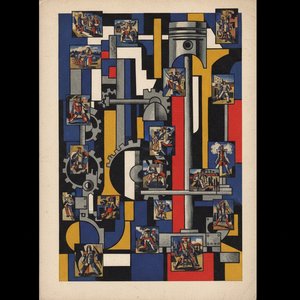
Fernand Léger: I 25 Capolavori che Hanno Definito l'Arte Moderna | AllPaintingsStore
Esplora i 25 capolavori di Fernand Léger, pioniere del cubismo e del tubismo. Scopri la storia, le tecniche e l'impatto dell'arte moderna francese. Stampe d'arte e riproduzioni su AllPaintingsStore.com.