


 Anteprima in scala reale
 Condividi
 Condividi
 Dettagli

 Scarica immagine
 Articoli simili
 Radiografia
 Slideshow
Laughing Boy


 Leggi tutto
Giclée / Stampe d'arte
Stampa giclée o su tela di qualità museale, con produzione rapida e diverse opzioni di finitura. ( Ordina la riproduzione dipinta a mano Acquista download)




P118B $10

P118H $10

P118W $10

P438Z $10

P508JH $12

P508YH $12

P805H $10

P805Z $10

P919BZ $10

P919G $10

P919XJ $10

P959ZH $10

P968JZ $12

W106C $8

W218G $10

W218JH $8

W218Y $10

W307PJ $10

W316G $10

W316PJ $8

W316Y $10

W398PJ $8

W4111J $10

W500HY $15

W500JH $15

W692G $12

W849H $8

W940BG $15

W953PJ $8




Scegli tra le nostre dimensioni predefinite, che rispettano le proporzioni originali dell'opera d'arte.

È possibile inserire dimensioni personalizzate per adattare l'opera a una cornice o a uno spazio specifico. Se la dimensione selezionata non corrisponde alle proporzioni dell'immagine originale, procederemo al ritaglio dell'opera o all'estensione dell'immagine con un bordo specchiato o a tinta unita. Un mockup digitale ti verrà inviato per approvazione prima dell'inizio della produzione.
Si prega di notare che l'anteprima a schermo non riflette il ritaglio o l'estensione effettivi. Solo il mockup mostrerà accuratamente la composizione finale.
Sebbene siano disponibili dimensioni personalizzate, si raccomanda di selezionare una dimensione dall'elenco predefinito per preservare le proporzioni originali.
Consegna in tutto il mondo () in 2 settimane invece delle normali 4/5 settimane. (19 Agosto)

Spedizione espressa gratuita in tutto il mondo

Tela in lino di alta qualità

Assicurazione completa sulla spedizione

Garanzia di rimborso dei dazi doganali

Garanzia di fedeltà cromatica dell'originale

Politica di reso entro 60 giorni (solo per difetti di fabbricazione)

Garanzia di rimborso al 100%

Sconto per acquisti multipli
 L'opzione vetro è disponibile solo per dimensioni inferiori a 110 cm

Laughing Boy
Giclée / Stampe d'arte
Dimensioni della riproduzione
-


Prezzo totale
$ 64
Descrizione del pezzo
A Moment of Unburdened Joy: Frans Hals’ “Laughing Boy”
Frans Hals' "Laughing Boy," painted around 1625, isn’t merely a portrait; it’s a distillation of youthful exuberance captured with an unprecedented immediacy. This small, circular canvas—a ‘tondo,’ as these intimate portraits are known—immediately draws the viewer in with its subject’s open-mouthed grin and wide, innocent eyes. It's a scene brimming with life, a fleeting moment frozen in time that speaks volumes about the spirit of childhood and the artist’s remarkable ability to convey personality through subtle brushstrokes.
The painting exists within the context of Hals’ innovative approach to portraiture during the Dutch Golden Age. He deliberately moved away from the stiff formality prevalent at the time, favoring a looser, more spontaneous style that prioritized capturing the subject's essence rather than adhering to rigid conventions. Hals was fascinated by the ‘tronie,’ a genre of informal character studies—often depicting young boys or girls—that allowed him to explore expressive gestures and fleeting emotions. “Laughing Boy” exemplifies this approach perfectly; it’s not a meticulously posed likeness, but a vibrant portrayal of a boy lost in his own world, radiating an infectious joy.
The Dance of the Brush: Technique and Style
Hals' distinctive technique is immediately apparent upon closer inspection. His brushwork isn’t blended or smoothed; instead, it’s visible, dynamic, and full of energy. He employed a ‘wet-in-wet’ method—applying paint while the previous layer was still wet—which creates soft edges and luminous effects. This technique contributes significantly to the painting's sense of immediacy and spontaneity. Notice how the brushstrokes follow the contours of the boy’s face, capturing the play of light and shadow with remarkable sensitivity.
The color palette is restrained yet effective. The predominantly white shirt provides a bright backdrop for the boy’s youthful features, while subtle variations in tone suggest the texture of his skin and clothing. Hals masterfully uses highlights to draw attention to the boy's face, emphasizing his open mouth and sparkling eyes – the very source of the painting’s captivating charm. The lack of background detail further focuses our attention on the subject, intensifying the feeling of intimacy.
Symbolism and Interpretation
While seemingly simple, “Laughing Boy” is rich in symbolic potential. The boy's laughter isn’t just a display of happiness; it represents freedom, innocence, and a carefree spirit—qualities highly valued during the turbulent times of the Dutch Republic. Some art historians have suggested that the soap bubble floating above his head – a detail often overlooked – symbolizes fleeting beauty and the ephemeral nature of childhood joy. It's a visual reminder that these moments are precious and should be cherished.
The circular format itself is significant. Tondos were popular in Hals’ time, offering a sense of intimacy and immediacy. They also allowed him to experiment with composition and create a visually engaging portrait. The round shape mirrors the boy's face, further emphasizing his youthful appearance and creating a harmonious whole.
A Timeless Echo: Emotional Impact
"Laughing Boy" transcends its historical context and continues to resonate with viewers today because of its profound emotional impact. It’s a painting that evokes feelings of warmth, nostalgia, and pure joy. The boy's genuine smile is infectious, inviting us to share in his carefree spirit. It serves as a poignant reminder of the simple pleasures of life—a moment of unburdened happiness captured forever on canvas.
Whether viewed in person or reproduced, “Laughing Boy” remains a testament to Frans Hals’ genius and a timeless celebration of childhood innocence. It's more than just a portrait; it’s an invitation to rediscover the joy within ourselves.
Opere correlate
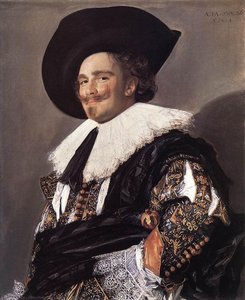


Biografia dell'artista
Frans Hals: Life and Legacy
Frans Hals the Elder, born in Antwerp around 1582, stands as a cornerstone of Dutch Golden Age painting – an era defined by artistic brilliance and cultural dynamism. His family’s relocation to Haarlem shortly after his birth marked a pivotal moment, shielding him from the turbulent religious tensions gripping Belgium at the time. Precise details concerning his formative years remain elusive, yet scholarly consensus suggests he joined the Haarlem Guild of St. Luke—a bastion of artistic prestige—where foundational instruction undoubtedly shaped his burgeoning talent.Artistic Development and Style
Hals distinguished himself through an approach radically divergent from prevailing artistic conventions. Rejecting the idealized portraits favored by contemporaries, he championed a style characterized by spontaneity and dynamism. His brushwork was deliberately loose and visible, eschewing meticulous blending to create an arresting immediacy—a technique that foreshadowed the revolutionary currents of Impressionism. This stylistic innovation wasn’t merely aesthetic; it represented a profound reimagining of how artists captured human experience.- Loose Brushwork: Hals' signature style involved applying paint in free, energetic strokes, prioritizing texture and capturing fleeting expressions with remarkable accuracy.
- Capturing Personality: He possessed an unparalleled ability to convey the character and emotions of his subjects—a hallmark that distinguishes him from many of his peers.
- Genre Scenes: Expanding beyond portraiture, Hals ventured into genre painting, depicting scenes of everyday life with vibrant realism and capturing the spirit of Haarlem society.
Major Works and Achievements
Throughout his prolific career, Hals produced a substantial oeuvre encompassing individual portraits, monumental group portraits (a field he fundamentally reshaped), and captivating landscapes—primarily genre paintings. Among his most celebrated masterpieces are:- The Laughing Cavalier (1624): Arguably his magnum opus, this portrait encapsulates Hals’ mastery of capturing a fleeting smile—a testament to his observational skill and artistic intuition.
- Portrait of a Man with a Black Hat (c. 1635): Demonstrating exceptional textural rendering and psychological insight, this piece exemplifies Hals' ability to convey subtle nuances of character.
- Regents of the St. Elisabeth Hospital (1641): A complex composition showcasing Hals’ compositional prowess—he skillfully integrated multiple figures into a single frame while maintaining visual harmony.
- Malle Babbe (c. 1633-1635): An unconventional portrait depicting an elderly woman with remarkable realism and psychological depth, challenging conventional notions of beauty and portraying vulnerability with sensitivity.
Influences and Legacy
Hals’ artistic vision drew inspiration from a constellation of predecessors—primarily Flemish masters like Anthony van Dyck and Pieter Versteyn—who championed similar stylistic liberties. However, Hals transcended mere imitation; he forged his own distinctive path, establishing himself as a pioneer of psychological portraiture and influencing generations of artists who followed him. His legacy extends beyond individual artworks: he fundamentally altered the trajectory of painting itself, advocating for spontaneity and capturing the essence of human emotion—principles that continue to resonate within contemporary artistic practice. Hals’ enduring fame rests upon his ability to imbue his canvases with life—a feat achieved through his revolutionary technique and unwavering commitment to portraying the human condition authentically.Historical Significance
Frans Hals lived during the zenith of Dutch prosperity – the Golden Age – a period marked by burgeoning commerce, intellectual curiosity, and artistic innovation. His paintings reflect the values of this era: humanist ideals, civic pride, and an appreciation for the beauty inherent in ordinary life. He died peacefully in Haarlem in 1666, leaving behind an unparalleled artistic legacy—one that continues to inspire admiration and scholarly debate centuries later. Today, Hals’ works reside in prestigious institutions worldwide – including the Frans Hals Museum in Haarlem – serving as enduring symbols of Dutch artistic excellence and a testament to the transformative power of artistic vision.
Frans Hals
1582 - 1666 , Belgio
Informazioni rapide
- Artistic Movement Or Style: Dutch Golden Age painting, Baroque
- Artists Who Influenced This Artist:
- Nicolaes Pieterszoon Berchem
- Cornelis Hendrickszoon Vroom
- Date Of Birth: 1582
- Full Name: Frans Hals the Elder
- Nationality: Dutch
- Notable Artworks:
- The Laughing Cavalier
- Portrait of a Man with a black hat
- Regents of the St. Elisabeth Hospital
- Place Of Birth: Antwerp, Belgium
Articoli correlati

Frans Hals e l'Età dell'Oro Olandese: Innovazione, Intimità e la Rivoluzione del Ritratto
Esplora la rivoluzionaria arte di Frans Hals e l'Età dell'Oro Olandese. Approfondimenti sulla tecnica, l'intimità dei ritratti e il contesto storico. Scopri i capolavori e lasciati ispirare!
I 10 Capolavori del Barocco Olandese che Hanno Definito un'Epoca | AllPaintingsStore
Esplora i 10 capolavori del Barocco olandese con AllPaintingsStore. Scopri Rembrandt, Vermeer e altri maestri. Quadri antichi, luce intensa e storie affascinanti per decorare la tua casa con arte di qualità museale. Esplora la collezione online!
I 10 Capolavori dell'Età d'Oro Olandese: Arte, Storia e Stile per la Tua Casa
Esplora i 10 capolavori dell'Età d'Oro Olandese con ! Rembrandt, Vermeer e altri maestri rivivono in dipinti iconici. Scopri storia, tecnica e colori di opere senza tempo per arredare la tua casa con arte di qualità museale. Esplora la collezione online!

Golden Light & Dutch Skies: The Timeless Magic of Dutch Golden Age Landscapes
Discover the breathtaking beauty of Dutch Golden Age landscapes. Explore the mastery of light, chiaroscuro, and 17th-century realism through an expert art history lens, celebrating the enduring legacy of the Dutch Masters for discerning collectors and art lovers.

Illuminating Innovation: Exploring the Dutch Golden Age of Painting
Explore the Dutch Golden Age of painting with AllPaintingsStore. Discover Rembrandt, Vermeer & other Masters. Learn about key characteristics, iconic artworks, and lasting influence. Expert insights for collectors & enthusiasts.



