Ordina la riproduzione Acquista download
 Invia
Invia
 Condividi
 Dettagli opera
 Aggiungi ai preferiti

 Scarica
 Simili
 Radiografia
 Slideshow
Dark


 Scopri di più
Giclée / Stampa d'arte
Stampa giclée o su tela di qualità museale, con produzione rapida e diverse opzioni di finitura.




P118B $10

P118H $10

P118W $10

P438Z $10

P508JH $12

P508YH $12

P805H $10

P805Z $10

P919BZ $10

P919G $10

P919XJ $10

P959ZH $10

P968JZ $12

W106C $8

W218G $10

W218JH $8

W218Y $10

W307PJ $10

W316G $10

W316PJ $8

W316Y $10

W398PJ $8

W4111J $10

W500HY $15

W500JH $15

W692G $12

W849H $8

W940BG $15

W953PJ $8




Scegli tra le nostre dimensioni predefinite, che rispettano le proporzioni originali dell'opera d'arte.

È possibile inserire dimensioni personalizzate per adattare l'opera a una cornice o a uno spazio specifico. Se la dimensione selezionata non corrisponde alle proporzioni dell'immagine originale, procederemo al ritaglio dell'opera o all'estensione dell'immagine con un bordo specchiato o a tinta unita. Un mockup digitale ti verrà inviato per approvazione prima dell'inizio della produzione.
Si prega di notare che l'anteprima a schermo non riflette il ritaglio o l'estensione effettivi. Solo il mockup mostrerà accuratamente la composizione finale.
Sebbene siano disponibili dimensioni personalizzate, si raccomanda di selezionare una dimensione dall'elenco predefinito per preservare le proporzioni originali.
Consegna in tutto il mondo () in 2 settimane invece delle normali 4/5 settimane. (21 Luglio)

Spedizione espressa gratuita in tutto il mondo

Tela in lino di alta qualità

Assicurazione completa sulla spedizione

Garanzia di rimborso dei dazi doganali

Garanzia di fedeltà cromatica

Politica di reso entro 60 giorni (solo per difetti)

Garanzia di rimborso al 100%

Sconto per acquisti multipli
 L'opzione vetro è disponibile solo per dimensioni inferiori a 110 cm

Dark
Giclée / Stampa d'arte
Dimensioni riproduzione
-


Prezzo totale finale
-
Descrizione dell'opera
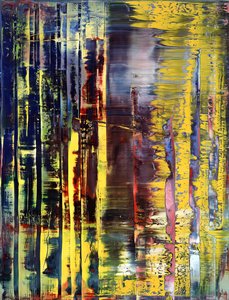
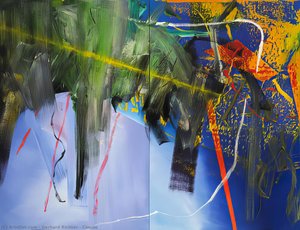
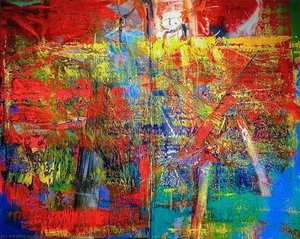
A Study in Controlled Chaos: Exploring Gerhard Richter’s “Dark”
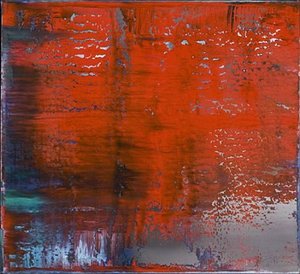
Gerhard Richter's "Dark," painted in 1968, is not merely an abstract composition; it’s a carefully constructed meditation on memory, displacement, and the very nature of perception. This close-up view reveals a canvas saturated with vibrant hues – bold reds and oranges battling against cooler blues – all rendered through Richter's signature technique of layered brushstrokes and subtly blurred surfaces. The painting immediately evokes a sense of unease, a feeling amplified by the deliberate ambiguity at its core. It’s a work born from a specific historical moment: Germany in the turbulent years following World War II, a nation grappling with the aftermath of unimaginable destruction and profound moral questions.
- Abstract Expressionism Revisited: While firmly rooted in the abstract expressionist movement, Richter's approach transcends simple imitation. He doesn’t employ the raw emotionality often associated with artists like Pollock; instead, he channels a more controlled, almost clinical energy into his work.
- Technique and Texture: The painting’s surface is a complex tapestry of applied paint – thick impasto in areas contrasted by thinner washes. Richter's use of glazing techniques creates an illusion of depth and luminosity, while the deliberate blurring introduces an element of uncertainty, mirroring the fragmented nature of memory itself.
The Weight of History
Richter’s personal history profoundly informs “Dark.” Born in Dresden in 1932, he experienced firsthand the instability and trauma of a nation divided. His childhood was shaped by displacement – his family repeatedly relocated during the war – an experience that instilled within him a deep-seated sense of disorientation. This biographical context is crucial to understanding the painting’s emotional resonance. The intense colors, particularly the reds and oranges, can be interpreted as echoes of the fires and destruction that ravaged Germany during the conflict, while the blues represent a yearning for peace and stability – a desire perhaps never fully realized.
The blurred areas within the composition are not accidental; they actively disrupt our ability to grasp a definitive image. This technique subtly suggests the fallibility of memory, the way in which experiences can be distorted or obscured over time. Richter masterfully utilizes this ambiguity to invite viewers into a dialogue with the work, prompting them to confront their own interpretations and emotional responses.
Symbolism and Emotional Impact
"Dark" resists easy categorization or definitive interpretation. The title itself suggests a preoccupation with shadow – not just literal darkness, but also the hidden aspects of human experience. The painting’s power lies in its ability to evoke a profound sense of melancholy and introspection. It's a work that demands attention, inviting viewers to contemplate themes of loss, uncertainty, and the enduring impact of historical trauma.
- Color as Emotion: Richter’s masterful use of color is central to the painting’s emotional impact. The vibrant reds and oranges convey passion, intensity, and perhaps even a hint of danger, while the blues offer a counterpoint of calm and reflection.
- The Blur – A Key Element: The blurred areas are not simply stylistic choices; they represent the subjective nature of perception and the difficulty of accessing objective truth.
A Masterpiece of Controlled Ambiguity
Gerhard Richter’s “Dark” is a testament to his extraordinary skill as an artist and his profound understanding of human psychology. This painting, created in 1968, remains a powerful example of abstract expressionism's ability to convey complex emotions and ideas through the manipulation of color, texture, and form. A hand-painted reproduction offers a unique opportunity to experience this captivating artwork firsthand, bringing Richter’s vision into your space and inviting contemplation for years to come.
Opere simili


Biografia dell'artista
**primi anni di vita ed educazione**
Gerhard Richter, un rinomato artista visivo tedesco, è nato il 9 febbraio 1932 a Hospital Dresden-Neustadt, Dresda, Sassonia. È cresciuto a Reichenau, Basso Silisia (ora Bogatynia, Polonia), e Waltersdorf (Zittauer Gebirge), nella campagna superiore della Lusazia. Il padre di Richter, Horst Richter, era uno studente di matematica e fisica all'Technische Hochschule di Dresda.**carriera artistica**
Richter ha iniziato il suo percorso artistico come apprendista pittore di cartelli pubblicitari e in seguito ha studiato alla Accademia delle belle arti di Dresda. Le sue opere iniziali sono state influenzate dagli stili di Picasso e Jean Arp, come si evince dai suoi dipinti astratti e fotorealistici. Nel 1957, Richter ha lavorato come tirocinante esperto all'accademia, accettando commissioni per lo stato dell'allora Germania Est.**opere notevoli e risultati**
* Abstratto (2012) ha stabilito un record di prezzo d'asta per un dipinto di un artista vivente a 34 milioni di dollari (£21 milioni). * Domplatz, Mailand (Piazza del Duomo, Milano) (1968) è stato venduto per 37,1 milioni di dollari (£24,4 milioni) a New York. * Abstratto (2015) è stato venduto per 44,52 milioni di dollari (£30,4 milioni) all'asta contemporanea di Sotheby's.**stile artistico e movimento**
Le opere di Richter sono caratterizzate dal loro eclettismo, che fonde stili astratti e fotorealistici. Insieme a Sigmar Polke, ha introdotto il termine Kapitalistischer Realismus (Realismo Capitalistico), uno stile anti-arte che appropria la sintassi pittorica della pubblicità.**vita privata**
Richter si è sposato con Marianne Eufinger nel 1957 e ha avuto una figlia. In seguito si è sposato con Isa Genzken nel 1982 e Sabine Moritz nel 1995, con cui ha avuto due figli e una figlia. **Nota:** questo articolo si basa sulle informazioni fornite e potrebbe non essere una biografia completa. Per informazioni più dettagliate, visitare le fonti collegate.
Gerhard Richter
1932 - , Germania
Dati rapidi
- Artisti Influenti:
- Pablo Picasso
- Jean Arp
- Data Di Nascita: 9 febbraio 1932
- Influenza Artistica: Arte contemporanea tedesca
- Luogo Di Nascita: Dresda, Germania
- Movimento Artistico:
- Espressionismo astratto
- Fotorealismo
- Nazionalità: Tedesca
- Nome Completo: Gerhard Richter
- Opere Notevoli:
- Abstraktes Bild (2012)
- Domplatz, Milano (1968)
- Nuvole
- S. con Bambino
Articoli correlati

Kazimir Malevich: Le 25 Opere Iconiche che Hanno Rivoluzionato l'Arte Moderna | AllPaintingsStore
Esplora le 25 opere iconiche di Kazimir Malevich, pioniere del suprematismo e dell'arte astratta. Scopri la storia dietro 'Black Square', 'Bianco su bianco' e altre creazioni rivoluzionarie. Trova riproduzioni d'arte di alta qualità per decorare la tua casa su AllPaintingsStore.com.

Caput Mortuum nell'Arte: I 10 Capolavori Più Affascinanti da Ricreare in Casa
Esplora i 10 dipinti più iconici dominati dal 'caput mortuum', tonalità di terra e colori caldi. Scopri la storia di Rembrandt, Caravaggio e altri maestri. Trova riproduzioni artistiche di alta qualità per la tua casa su .
Jorge José Castillo Casalderrey: A Spanish Abstract Expressionist's Evolving Vision
Explore the captivating world of Jorge José Castillo Casalderrey, a leading Spanish Abstract Expressionist. Discover his unique style, market value & legacy. Expert insights for discerning collectors.
Henri Matisse: I 25 Capolavori Essenziali per Amare l'Arte e Decorare con Stile
Esplora i 25 capolavori di Henri Matisse, il maestro del fauvismo e dei colori vivaci. Scopri la storia, lo stile unico e l'impatto culturale di ogni dipinto. Trova riproduzioni arte di alta qualità per decorare casa tua su AllPaintingsStore.com.
Espressionismo Pittorico: 10 Capolavori Che Hanno Definito un Movimento Artistico
Esplora i 10 capolavori dell'Espressionismo Pittorico con AllPaintingsStore.com! Scopri Munch, Kirchner e altri artisti iconici, le loro tecniche e l'impatto emotivo dei colori. Trova riproduzioni di alta qualità per la tua casa. Esplora la collezione online!