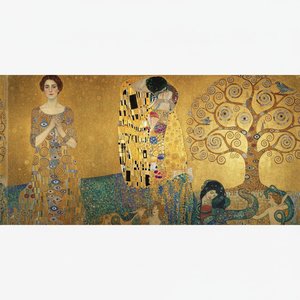
1895. Acrilico su tela, 60.0 x 44.0 cm. Kunstmuseum.

§ 1Catalogue data

- 60.0 x 44.0 cm


§ 2Abstract
Descrizione del reperto
Gustav Klimt's "Amore" è un capolavoro simbolista che celebra l'amore attraverso colori vibranti e motivi intricati, ispirato dalla filosofia aristotelica e dalla visione religiosa.
 Espandi i dettagli
Biografia dell'artista
Esplora Gustav Klimt (1862-1918): icona simbolo austriaca del Simbolismo e dell'Art Nouveau della Secessione Viennese. Scopri la sua fase dorata, i ritratti sensuali e le opere maestose decorative come 'Il Bacio'.
§ 3Commentary
Love
Gustav Klimt, an Austrian artist renowned for his contributions to the Symbolism movement, created a captivating piece titled Love. This painting, measuring 60 x 44 cm and executed in oil on canvas, is housed at the Kunstmuseum in St. Gallen, Switzerland.The Artistic Context of "Love"
Symbolist painting emerged as a reaction to the naturalism of realist and impressionist trends. It emphasized subjectivity and the depiction of the occult and irrational. Gustav Klimt's work is a prime example of this style, characterized by its dreamlike quality and mysticism. Symbolist painters rejected the objective observation championed by Impressionists, instead prioritizing inner experience and psychological exploration—a deliberate departure from the prevailing artistic currents of their time. Klimt’s vision aligns perfectly with this ethos, reflecting a profound interest in mythology, folklore, and esoteric beliefs.Key Elements of "Love"
- Composition: The painting features a man and woman standing close to each other with their faces touching. The woman appears to be kissing the man on his cheek. This intimate pose immediately establishes a connection between the figures, conveying tenderness and vulnerability. Klimt skillfully utilizes geometric shapes—primarily circles and squares—to create a balanced yet dynamic visual arrangement. - Surrounding Figures: Several angels are depicted watching over the couple, adding a sense of protection and divine approval. These angelic beings represent spiritual guardianship and reinforce the painting’s overarching theme of sacred love. Their stylized forms contribute to the artwork's ethereal atmosphere. - Background: A backdrop featuring pink flowers creates a romantic ambiance. The delicate blossoms symbolize beauty, passion, and fertility—elements integral to the depiction of romance. Klimt’s meticulous attention to detail in rendering these floral motifs underscores his mastery of artistic technique.Symbolism in "Love"
The painting is rich in symbolism. The couple represents love and affection, while the angels signify divine intervention or blessing. The flowers in the background symbolize romance and beauty. Klimt's use of gold leaf—a hallmark of his style—further elevates the artwork’s symbolic significance, representing purity, enlightenment, and spiritual transcendence. This opulent material underscores the painting’s aspiration to capture something beyond mere earthly experience.Artistic Style
Gustav Klimt's style in Love reflects his engagement with Symbolism. He employs vibrant colors and intricate patterns—particularly gold leaf—to convey a sense of mysticism and dreaminess, characteristic of the Symbolist movement. The artist’s technique is characterized by layering multiple coats of paint to achieve textural depth and luminosity—a deliberate departure from Impressionistic brushstrokes. Klimt's meticulous craftsmanship ensures that every element contributes to the overall visual impact.Relevance to Art History
Symbolist painting was influenced by various artistic movements, including Pre-Raphaelitism and Neo-Impressionism. It also paved the way for Expressionism in the early 20th century. Gustav Klimt's work, particularly Love, is a significant contribution to this art historical context. His pioneering use of decorative elements—particularly gold leaf—challenged conventional artistic norms and profoundly impacted subsequent generations of artists. Klimt’s legacy continues to inspire contemporary creatives who seek to explore themes of spirituality and emotion with boldness and innovation.Domande e risposte
Quale tavolozza e quale emozione si incontrano in "Amore"?
"Amore" di Gustav Klimt unisce una tavolozza Toni della terra a un tono Misterioso.
I colori di "Amore" appaiono intensi o delicati?
"Amore" di Gustav Klimt presenta un'intensità cromatica Equilibrato.
In quale stanza si consiglia di collocare "Amore" di Gustav Klimt, considerando i suoi colori?
Grazie alla sua palette Toni della terra, si consiglia di inserire "Amore" di Gustav Klimt in un/una Lobby d'hotel: sono proprio i suoi colori a ispirare questo suggerimento.


 Passa alle stampe


 Per opere d'arte o riproduzioni con un lato superiore a 105 cm (circa 41 pollici), la cornice verrà spedita in forma di kit smontato. Questo metodo garantisce una consegna sicura e previene danni durante il trasporto.