


 Anteprima in scala reale
 Condividi
 Condividi
 Dettagli
 Guida stampabile

 Scarica
 Articoli simili
 Radiografia
 Slideshow
 Statistiche
The Third-class Carriage
 Acrylic On Canvas
- WallArt
- Realism
 1865
1865- 19th Century
 65.0 x 90.0 cm
 Galleria Nazionale del Canada
 Leggi tutto
Giclée / Stampe d'arte
Stampa giclée o su tela di qualità museale, con produzione rapida e diverse opzioni di finitura. ( Ordina la riproduzione dipinta a mano Passa all'immagine digitale)




P118B €10

P118H €10

P118W €10

P438Z €10

P508JH €12

P508YH €12

P805H €10

P805Z €10

P919BZ €10

P919G €10

P919XJ €10

P959ZH €10

P968JZ €12

W106C €8

W218G €10

W218JH €8

W218Y €10

W307PJ €10

W316G €10

W316PJ €8

W316Y €10

W398PJ €8

W4111J €10

W500HY €15

W500JH €15

W692G €12

W849H €8

W940BG €15

W953PJ €8




Scegli tra le nostre dimensioni predefinite, che rispettano le proporzioni originali dell'opera d'arte.

Inserisci la larghezza e l'altezza desiderate, per adattarle alla tua cornice o alla tua parete. Una stampa può essere solo ritagliata, mai resa più grande dell'immagine originale; pertanto, un formato con una forma differente comporterà la perdita di una parte dell'opera. Ti invieremo un mockup digitale da approvare prima di procedere con la stampa. L'immagine mostrata in questa pagina non rappresenta il ritaglio reale — solo il mockup lo mostra.
Consegna in tutto il mondo () in 2 settimane invece delle normali 4/5 settimane. (23 Ottobre)

Spedizione espressa gratuita in tutto il mondo

Tela in lino di alta qualità

Assicurazione completa sulla spedizione

Garanzia di rimborso dei dazi doganali

Garanzia di perfetta fedeltà cromatica

Politica di reso entro 100 giorni (solo per difetti di fabbricazione)

Garanzia di rimborso al 100%

Sconto per acquisti multipli
 L'opzione vetro è disponibile solo per dimensioni inferiori a 110 cm

The Third-class Carriage
Giclée / Stampe d'arte
Dimensioni della riproduzione
-


Prezzo totale
€ 56
Honoré Daumier’s ‘The Third-Class Carriage’: A Chronicle of Urban Life
Honoré Daumier's 1865 painting, “The Third-Class Carriage,” is more than a simple depiction of a train journey; it’s a poignant snapshot of mid-19th century French society, rendered with the artist’s characteristic blend of realism and social commentary. Measuring 65 x 90 cm, this black and white composition immediately draws the viewer into the cramped confines of a third-class railway car, capturing a moment of everyday life that speaks volumes about class divisions and the burgeoning urbanization of France during the Second Empire.
- Subject Matter: The scene meticulously portrays passengers in a third-class train carriage. The focus is on the ordinary individuals – their postures, expressions, and belongings – revealing a slice of life rarely afforded attention in formal portraiture.
- Composition: Daumier’s masterful use of perspective creates a sense of claustrophobia, emphasizing the density of the space and the close proximity of the travelers. The arrangement of luggage—suitcases, handbags, and personal effects—adds to the feeling of lived-in authenticity.
Daumier's Artistic Style and Technique
Daumier’s style is immediately recognizable through his meticulous draftsmanship and a deliberate avoidance of idealized beauty. He was deeply influenced by artists like Rubens, particularly in his use of dramatic lighting (chiaroscuro) to sculpt forms and create mood. In “The Third-Class Carriage,” this influence is evident in the strong contrasts between light and shadow, which highlight the textures of the benches, luggage, and clothing. The artist’s technique relies on precise lines and detailed observation, reflecting his commitment to capturing reality with unflinching honesty. His work was often characterized by a rough, almost sketch-like quality, contributing to its raw emotional impact.
Historical Context: A Nation in Transition
Painted in 1865, “The Third-Class Carriage” reflects the significant social and political changes occurring in France during this period. The rapid growth of Paris and other industrial centers led to a massive influx of rural populations seeking work and opportunity – often finding themselves crammed into overcrowded, poorly maintained train cars like the one depicted here. Daumier’s work aligns with the broader trend of Realist art, which sought to depict everyday life without romanticizing or idealizing it. The painting subtly critiques the social inequalities inherent in this transition, offering a glimpse into the lives of those marginalized by industrialization and urbanization.
Symbolism and Emotional Impact
Beyond its documentary value, “The Third-Class Carriage” possesses a powerful symbolic resonance. The presence of a woman holding a baby amidst the bustling crowd evokes themes of family, vulnerability, and the challenges faced by working-class families. The scattered luggage represents not just possessions but also dreams, aspirations, and the burdens carried on journeys – both literal and metaphorical. The overall mood is one of quiet observation, inviting viewers to contemplate the lives of these anonymous individuals and consider their place within a rapidly changing society. This artwork’s enduring appeal lies in its ability to capture a fleeting moment of human experience with remarkable sensitivity and artistic skill.
Domande e risposte
In quale anno e all'interno di quale movimento è stata realizzata "The Third-class Carriage"?
"The Third-class Carriage" di Honoré Daumier risale al 1865 e appartiene al Realism.
Quale emozione trasmette l'opera del Realism "The Third-class Carriage"?
L'emozione Melancholic di "The Third-class Carriage" accompagna il suo stile Realism.
Per quale motivo lo stato del copyright di "The Third-class Carriage" è questo?
"The Third-class Carriage" di Honoré Daumier è di di pubblico dominio - il suo copyright è scaduto. I termini del copyright si calcolano a partire dalla morte dell'artista, e Honoré Daumier è deceduto nel 1879.
Opere correlate


Biografia dell'artista
La Vita e l'Opera di Honoré Daumier
Honoré Victorin Daumier, nato a Marsiglia il 26 febbraio 1808 e morto a Parigi il 10 o 11 dicembre 1879, è stato un artista francese prolifico, noto per le sue caricature satiriche, i suoi dipinti e le sue sculture. La sua opera offre uno spaccato vivido della vita sociale e politica in Francia durante il XIX secolo.
Primi Anni e Formazione
Daumier nacque in una famiglia modesta; suo padre era un poeta e glasiatore. Trascorse la sua infanzia a Marsiglia, per poi trasferirsi con la famiglia a Parigi nel 1814. Iniziò presto a lavorare come garzone presso uno studio di notaio, ma trovò il tempo per dedicarsi al disegno. Studiò con Alexandre Lenoir e frequentò l'Académie Suisse, dove affinò le sue capacità artistiche. Si appassionò alla scultura classica e all’opera di Rubens e Tiziano.
Carriera Artistica e Impegno Politico
Daumier iniziò la sua carriera artistica producendo illustrazioni e caricature anonime per diverse pubblicazioni. Nel 1830, dopo la Rivoluzione di Luglio, divenne un collaboratore regolare de *La Caricature*, un giornale satirico che gli offrì una piattaforma per esprimere le sue opinioni politiche. Le sue opere, spesso critiche nei confronti della monarchia di Luigi Filippo e dell'aristocrazia, lo resero popolare ma anche controverso.
- Lithografie Politiche: Daumier utilizzò la litografia come strumento potente per criticare il potere costituito, affrontando temi come la corruzione giudiziaria, l’inefficienza del governo e le disuguaglianze sociali.
- Imprigionamento: Nel 1832, fu imprigionato per sei mesi a causa di una caricatura particolarmente offensiva nei confronti del re, *Gargantua*. Questo evento non lo fermò, anzi, rafforzò il suo impegno politico e artistico.
- Periodo Post-Imprigionamento: Dopo la sua liberazione, Daumier continuò a produrre opere satiriche, ma con un approccio più sottile per evitare ulteriori problemi legali. Si concentrò maggiormente sulla rappresentazione della vita quotidiana parigina e dei suoi personaggi.
Stile Artistico e Temi
Lo stile di Daumier è caratterizzato da una combinazione unica di realismo, caricatura e critica sociale. I suoi dipinti e le sue litografie sono notevoli per la loro capacità di catturare l'essenza della vita parigina del XIX secolo, con particolare attenzione alle classi lavoratrici e ai marginali.
- Realismo: Daumier si sforzò di rappresentare la realtà in modo accurato e senza idealizzazioni.
- Caricatura: Utilizzò l'esagerazione e la deformazione per satirizzare i personaggi e le istituzioni sociali.
- Temi Sociali: Le sue opere affrontano temi come la povertà, l’ingiustizia sociale, la corruzione politica e la condizione umana in generale.
Opere Principali e Eredità
Daumier ha lasciato un'eredità artistica vasta e significativa. Tra le sue opere più importanti si ricordano:
- Rue Transnonain, 15 aprile 1834: Un’opera potente che raffigura la repressione violenta di una rivolta popolare a Parigi.
- Les Gens de Justice: Una serie di litografie satiriche che prendono in giro il sistema giudiziario francese.
- Le Marchand d'ondes: Una caricatura pungente dei giornalisti e della stampa scandalistica.
- Don Quichotte et Sancho Panza: Un dipinto ispirato al romanzo di Cervantes, che esplora temi come l’illusione e la realtà.
Nonostante non abbia ricevuto un ampio riconoscimento durante la sua vita, Daumier è oggi considerato uno dei più grandi artisti francesi del XIX secolo. La sua opera ha influenzato profondamente numerosi pittori impressionisti e post-impressionisti, come Degas, Manet e Toulouse-Lautrec. La sua capacità di combinare l'arte con un forte impegno sociale lo rende ancora oggi un artista rilevante e stimolante.

Honoré Daumier
1808 - 1879 , Francia
Informazioni rapide
- Artisti Influenti:
- Alexandre Lenoir
- Charlet
- Artisti Influenzati:
- Impressionisti
- Postimpressionisti
- Data Di Nascita: 26 febbraio 1808
- Luogo Di Nascita: Marsiglia, Francia
- Movimento Artistico: Realismo
- Nazionalità: Francese
- Nome Completo: Honoré Daumier
- Opere Notevoli:
- Rue Transnonain, 15 aprile 1834
- Les Gens de Justice
- Nous voulons Barabbas (Ecce Homo)
Articoli correlati
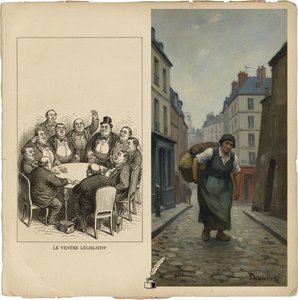
Honoré Daumier: Social Commentary & Artistic Innovation in 19th-Century France
Explore the life & work of Honoré Daumier, a master of 19th-century French realism and satire. Discover his powerful lithographs, paintings, and sculptures critiquing society – and his lasting influence on modern art.
I Maestri del Nero: I 10 Dipinti Più Famosi Dominati dall'Avorio Scuro |
Esplora i 10 dipinti più iconici dominati dal nero avorio! Da Rembrandt a Goya, scopri la storia, le tecniche e l'impatto di capolavori senza tempo. Trova riproduzioni d'arte di alta qualità per decorare casa con .

I 10 Dipinti Più Famosi Dominati dal Nero: Maestri e Storie d'Arte
Esplora i 10 dipinti più iconici dominati dal nero, da Caravaggio a Munch. Scopri storie, tecniche e il potere espressivo di artisti come Rembrandt e Goya. Trova stampe d'arte di alta qualità per la tua casa su .

I 10 Capolavori Più Famosi Dominati dal Nero Lampada: Arte e Decorazioni Raffinate
Esplora i 10 dipinti più iconici dominati dal nero lampada! Scopri la storia di Rembrandt, Caravaggio e altri maestri. Trova riproduzioni d'arte di alta qualità per decorare casa con stile su .
I 10 Dipinti Più Famosi Dominati dal Nero Mars: Arte e Decorazioni di Lusso
Esplora i 10 dipinti più iconici dominati dal nero Mars Black. Scopri la storia, gli artisti e il simbolismo di capolavori oscuri. Trova riproduzioni d'arte di lusso per decorare casa su .


