Garanzia soddisfatti o rimborsati · 100 giorni Spedizione gratuita in tutto il mondo
449.564opere d'arte 30.613artisti 4.660musei 32Lingue
Voce di catalogo

Numero 12, 1949

Olio su tela.

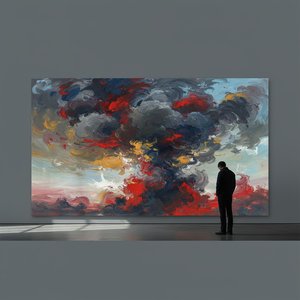
Fig. 1. Jackson Pollock, Numero 12, 1949. Mostrato come la riproduzione specificata: , .

§ 1Dati del catalogo

§ 2Astratto

Descrizione del reperto

Esplora 'Numero 12, 1949' di Jackson Pollock, un dipinto a gocciolatura fondamentale che incarna l'Espressionismo Astratto e l'arte del Color Field. Assisti al caos dinamico e alla tecnica innovativa.

Biografia dell'artista

Scopri Jackson Pollock (1912-1956), il rivoluzionario artista dell'Espressionismo Astratto e della tecnica del dripping! Esplora i suoi capolavori iconici e l'energia creativa che hanno cambiato la storia dell'arte moderna.

§ 3Commento

A Universe Within: Decoding Jackson Pollock’s “Number 12, 1949”

Jackson Pollock's "Number 12, 1949" isn't simply a painting; it’s an event frozen in time – a visual record of energy, gesture, and the burgeoning anxieties of the post-war American psyche. This monumental work stands as a cornerstone of Abstract Expressionism, a movement that irrevocably altered the course of 20th-century art. It represents a pivotal moment in Pollock's artistic evolution, marking the definitive adoption of his revolutionary drip technique and solidifying his place among the titans of modern painting.

The Birth of Action Painting

Pollock’s groundbreaking method—often termed “drip painting”—involved abandoning traditional easel painting in favor of working on an unprimed canvas laid directly on the floor. He eschewed brushes, instead employing sticks, hardened brushes, and even syringes to *fling*, *pour*, and *splatter* paint onto the surface. This wasn’t about depicting a subject; it was about the act of painting itself – the physical manifestation of inner turmoil and creative impulse. “Number 12, 1949” exemplifies this process perfectly. The canvas becomes an arena for action, a space where Pollock's movements are directly translated into visual form. This radical departure from conventional artistic practices signaled a profound shift in how artists approached their craft, prioritizing spontaneity and emotional expression over meticulous representation.

Deconstructing the Composition

At first glance, the painting appears chaotic – a tangled web of lines and forms in shades of black, white, yellow, and brown. However, closer inspection reveals a surprising degree of control and balance. The density of paint varies across the canvas, creating areas of intense visual activity alongside quieter, more contemplative spaces. There’s no focal point in the traditional sense; instead, the eye is invited to wander, discovering new patterns and relationships with each viewing. The layering of paint creates a remarkable sense of depth, despite the fundamentally two-dimensional nature of the work. Consider the deliberate placement of horizontal bands of color—a subtle counterpoint to the swirling vertical lines—suggesting an underlying structure that governs the apparent randomness of the composition.

Historical Context & Artistic Influences

Emerging in the aftermath of World War II, Abstract Expressionism reflected a profound shift in artistic sensibilities. Artists sought to move beyond representation and explore the realm of pure emotion and subjective experience. Pollock was deeply influenced by Surrealist automatism—a technique aimed at unlocking the subconscious mind—as well as Native American sand painting traditions. These influences informed his preoccupation with primal forces and universal symbols, mirroring a broader cultural fascination with mythology and spirituality. Furthermore, the burgeoning interest in psychoanalysis, particularly the work of Carl Jung, contributed to the movement’s exploration of archetypes and collective unconsciousness. The painting's formal vocabulary—particularly its expansive scale and textural richness—anticipates elements of Color Field painting, demonstrating Pollock’s willingness to experiment with new visual languages.

Symbolism & Emotional Resonance

While Pollock resisted explicit interpretations of his work, “Number 12, 1949” evokes a range of powerful emotions – anxiety, energy, freedom, and even a sense of existential angst. The tangled lines can be seen as representing the complexities of the human psyche, while the dynamic interplay of light and dark suggests a constant struggle between opposing forces. The painting isn’t about *what* it depicts, but rather *how* it makes you feel. It invites contemplation on themes of vulnerability, resilience, and the transformative potential of artistic creation. Its enduring appeal lies in its ability to challenge our perceptions and engage with art on a deeply personal level—a testament to Pollock's unwavering commitment to conveying emotion through pure visual form.

Integrating “Number 12, 1949” into Your Space

  • For the Collector: A statement piece that anchors any modern or contemporary collection. Its scale demands attention and sparks conversation.
  • For the Interior Designer: Its neutral palette allows for versatility, complementing a range of color schemes. The dynamic composition adds energy to minimalist spaces while providing a compelling counterpoint to more traditional interiors.
  • Emotional Impact: Ideal for spaces intended for contemplation or creative work, fostering an atmosphere of innovation and introspection.
Photo Description: --Overall Impression-- The artwork is an abstract expressionist painting dominated by chaotic yet controlled splatters and drips of paint across a pale beige background. It presents a dense network of lines and shapes, creating a sense of energetic movement and visual complexity. There’s no discernible subject matter in the traditional sense; instead, it evokes feelings of dynamism, anxiety, and perhaps even a sense of existential angst. The technique is heavily reliant on gestural painting – applying paint with force and spontaneity. Texture is incredibly prominent due to the varied application of paint, ranging from thick impasto areas to thin washes. Lighting appears flat and diffused, lacking strong shadows or highlights, contributing to the overall flatness of the composition. Perspective is absent; it’s a purely two-dimensional representation. Depth is suggested through variations in color density and layering but remains largely illusory. The style aligns with abstract expressionism, particularly influenced by Jackson Pollock's drip technique. The use of lines is predominantly linear and directional, creating a web-like structure that dominates the composition. Shapes are primarily amorphous blobs and streaks, rather than defined forms. Color palette consists of muted yellows, browns, blacks, and whites. The painting’s emotional impact is unsettling yet captivating, reflecting an internal turmoil or intense creative energy. Size: Unknown Date: Unknown

Domande e risposte

Quale armonia cromatica esprime "Numero 12, 1949" di Jackson Pollock?

L'armonia cromatica di "Numero 12, 1949" è descritta come Strong Color Unity.

A quale stile appartiene "Numero 12, 1949"?

"Numero 12, 1949" di Jackson Pollock appartiene al movimento Espressionismo Astratto. Questo movimento fornisce il contesto stilistico dell'opera.

In quale ambiente si consiglia di collocare "Numero 12, 1949" di Jackson Pollock?

"Numero 12, 1949" di Jackson Pollock è consigliato per un/una Zona giorno. Questo suggerimento si basa sul soggetto, sui colori e sull'atmosfera dell'opera.

§ 4L'artista

Jackson Pollock

Jackson Pollock

1912 - 1956, Stati Uniti d'America

Informazioni rapide su Jackson Pollock

  • Artistic Movement Or Style: Abstract Expressionismo
  • Artists Who Influenced This Artist:
    • José Clemente Orozco
    • Thomas Hart Benton
  • Date Of Birth: 28 gennaio 1912
  • Date Of Death: 11 agosto 1956
  • Full Name: Paul Jackson Pollock
  • Nationality: American
  • Notable Artworks:
    • Numero Uno, 1950 (Lavanda Nebulosa)
    • Uno: Numero 31, 1950
    • Blu Poles: Numero 11, 1952
    • Convergenza
  • Place Of Birth: Cody, Wyoming

Biografia dell'artista

Early Life and the Seeds of Innovation

Paul Jackson Pollock, born in Cody, Wyoming, in 1912, was a restless spirit from the outset. His early life was marked by frequent relocation as his father pursued work as a land surveyor across the vast landscapes of the American West. This itinerant existence instilled in young Pollock a deep connection to the natural world and an exposure to diverse cultures, particularly through encounters with Native American art during those surveying trips – impressions that would subtly permeate his artistic vision later in life.

Pollock’s formal artistic training began at the Manual Arts High School in Los Angeles, followed by studies at the Art Students League of New York under the tutelage of Thomas Hart Benton. Benton, a prominent figure in the Regionalist movement, emphasized rhythmic composition and narrative themes rooted in American life. While Pollock initially absorbed these lessons, his inherent inclination leaned toward more abstract explorations. He was also profoundly impacted by Mexican muralists like José Clemente Orozco, whose powerful depictions of social struggle resonated deeply with him. These early influences laid a foundation, but it was the burgeoning world of Surrealism that truly unlocked Pollock’s artistic potential.

The Birth of Action Painting and a Revolutionary Technique

The 1930s saw Pollock experimenting with various techniques, seeking alternatives to traditional brushwork. He began pouring paint, exploring its fluidity and unpredictable nature. However, it was around 1947 that his artistic trajectory underwent a radical transformation. Abandoning the easel altogether, Pollock laid canvases directly on the floor, initiating what would become known as his “drip painting” technique.

This wasn’t merely about applying paint; it was about embodying the act of creation itself. Pollock's canvases became arenas for physical expression, capturing the immediacy of his gestures and emotions. The resulting paintings are characterized by their “all-over” composition – a lack of central focus that invites the viewer to explore the entire surface as a unified field of energy. Intricate networks of lines and colors intertwine, creating a visual complexity that is both captivating and challenging. He employed unconventional tools—sticks, knives, even syringes—to manipulate the paint in unpredictable ways, further emphasizing the spontaneous nature of his process.

This innovative approach positioned Pollock as a central figure in the burgeoning Abstract Expressionist movement, which emerged in post-World War II New York City. Abstract Expressionism prioritized spontaneous gesture, large scale, and non-representational imagery, reflecting a broader cultural shift away from traditional artistic conventions. His marriage to fellow artist Lee Krasner was also pivotal; she provided unwavering emotional support and actively encouraged his artistic development, recognizing the groundbreaking nature of his work.

Iconic Works and Lasting Legacy

Pollock’s most celebrated works—such as Number 1, 1950 (Lavender Mist), One: Number 31, 1950, Blue Poles: Number 11, 1952, and Convergence—are testaments to his revolutionary technique. These paintings are not simply images; they are records of a performance, imbued with the artist’s physical presence and emotional intensity. The dynamic energy that emanates from these canvases is palpable, drawing viewers into a world of pure abstraction.

His style transcends mere aesthetics; it's an exploration of process over product. Pollock sought to capture the immediacy of his actions and emotions on canvas, rejecting traditional notions of composition and representation. He delved into Jungian psychology, exploring archetypes and the subconscious in his art, seeking to tap into universal symbols and primal energies.

Pollock’s impact on the history of art is immeasurable. He fundamentally altered the way artists approached painting, breaking free from easel-based methods and embracing a more performative approach. His work helped solidify New York City's position as a global center for modern art, shifting the focus away from European dominance. His influence can be seen in the work of countless artists who followed, including those associated with Color Field painting and later forms of abstract expressionism.

Though initially met with mixed reviews—some critics dismissed his work as chaotic or lacking skill—Pollock’s reputation grew steadily after his untimely death in 1956 at the age of 44. Today, he is universally recognized as one of the most important and influential artists of the 20th century, a visionary who dared to challenge conventions and redefine the boundaries of artistic expression.

§ 5Opere correlate

§ 6Domande

Informazioni rapide

  • Notable elements or techniques: Drip painting
  • Subject or theme: Arte astratta
  • Movement: Espressionismo Astratto
  • Medium: Olio su carta
  • Dimensions: 78.8 x 57.1 cm.
  • Title: Number 12, 1949

§ 7Cita questa voce

AllPaintingsStore.com, “Jackson Pollock, Numero 12, 1949”, https://allpaintingsstore.com/it/art/jackson-pollock-numero-12-1949-8EWJX8-it/ArtistReproduction/ (consultato il 7 Ottobre 2026).

§ 8La riproduzione

Riproduzione a olio fatta a mano

Olio su tela dipinto a mano nelle tue dimensioni e con la tua cornice, realizzato su ordinazione dai nostri artisti. ( Passa alle stampe Passa all'immagine digitale)

È specificato a margine del foglio d'ordine; lo stato attuale di tale foglio è il seguente.

Numero 12, 1949

Tecnica di riproduzione

Dimensioni riproduzione

-

Artisti di alto livello

Maggiore dettaglio, finezza e tempi di produzione dedicati

-

Cornice per riproduzione

-

-

Per opere d'arte o riproduzioni con un lato superiore a 105 cm (circa 41 pollici), la cornice verrà spedita in forma di kit smontato. Questo metodo garantisce una consegna sicura e previene danni durante il trasporto.

Montaggio professionale richiesto - non è un prodotto fai-da-te.
Il kit deve essere assemblato e la tela tesa da un esperto cornice professionista, utilizzando colla per legno (non inclusa), una pinza per tendere la tela e morsetti per mantenere i listelli in squadra durante l'asciugatura della colla. Un montaggio errato o una tensione non uniforme della tela possono danneggiare permanentemente l'opera d'arte e non sono coperti dalla nostra garanzia.

  • Tutte le barre in legno massello sono incluse, tagliate con precisione alle dimensioni corrette.

  • Da assemblare con le viti fornite e con la colla per legno per gli incastri degli angoli, che non è inclusa e dovrà essere reperita dal vostro corniceio.

  • Sono necessari strumenti professionali non inclusi: una pinza tendicanvas (tenditore) e dei morsetti per mantenere i listelli in squadra durante l'asciugatura della colla.

Importante:
Gli incastri d'angolo richiedono colla per legno, i listelli devono essere mantenuti in posizione con dei morsetti finché la colla non è completamente asciutta, e il tensionamento della tela sulla cornice assemblata richiede una pinza per tendere la tela. Nessuno di questi strumenti è incluso nel kit. Si prega di consultare un incorniciatore professionista esperto prima di ordinare questa misura.

Didascalia

-

-

Vernice protettiva

Vernice lucida (esalta i colori, protegge da luce e umidità)

-

Personalizza la mia opera

Esempi di personalizzazione: sostituire il volto con una foto del cliente; aggiungere un animale domestico (ad esempio, sostituire un gatto con un cane); inserire un messaggio nascosto nello sfondo; cambiare il paesaggio o gli elementi dello sfondo.

-

Consegna rapida

Consegna in tutto il mondo () in 3/4 settimane anziché nelle normali 5 settimane. (4 Novembre). Nessun compromesso sulla qualità.

-

Spedizione espressa

Spedizione in tutto il mondo () in 5 settimane. (11 Novembre).

Spedizione inclusa

Prezzo finale calcolato

€ 229

Incluso in ogni ordine

  • Spedizione espressa gratuita in tutto il mondo
  • Tela in lino di alta qualità
  • Assicurazione completa sulla spedizione
  • Garanzia di rimborso dei dazi doganali
  • Garanzia di fedeltà cromatica assoluta
  • Politica di reso entro 100 giorni (solo per difetti di fabbricazione)
  • Garanzia di rimborso al 100%
  • Offerta per acquisti multipli
Modulo d'ordine