Condividi
 Condividi
 Dettagli

 Scarica immagine
 Articoli simili
 Slideshow
Overbury Hall, Suffolk

 Leggi tutto
Giclée / Stampe d'arte
Stampa giclée o su tela di qualità museale, con produzione rapida e diverse opzioni di finitura. ( Passa alla versione dipinta a mano Passa all'immagine)




































Scegli tra le nostre dimensioni predefinite, che rispettano le proporzioni originali dell'opera d'arte.

È possibile inserire dimensioni personalizzate per adattare l'opera a una cornice o a uno spazio specifico. Se la dimensione selezionata non corrisponde alle proporzioni dell'immagine originale, procederemo al ritaglio dell'opera o all'estensione dell'immagine con un bordo specchiato o a tinta unita. Un mockup digitale ti verrà inviato per approvazione prima dell'inizio della produzione.
Si prega di notare che l'anteprima a schermo non riflette il ritaglio o l'estensione effettivi. Solo il mockup mostrerà accuratamente la composizione finale.
Sebbene siano disponibili dimensioni personalizzate, si raccomanda di selezionare una dimensione dall'elenco predefinito per preservare le proporzioni originali.
Consegna in tutto il mondo () in 2 settimane invece delle normali 4/5 settimane. (8 Agosto)

Spedizione espressa gratuita in tutto il mondo

Tela in lino di alta qualità

Assicurazione completa sulla spedizione

Garanzia di rimborso dei dazi doganali

Garanzia di fedeltà cromatica dell'originale

Politica di reso entro 60 giorni (solo per difetti di fabbricazione)

Garanzia di rimborso al 100%

Sconto per acquisti multipli
 L'opzione vetro è disponibile solo per dimensioni inferiori a 110 cm

Overbury Hall, Suffolk
Giclée / Stampe d'arte
Dimensioni della riproduzione
-


Prezzo totale
$ 65
Descrizione del pezzo
A Suffolk Vision: John Constable’s Overbury Hall
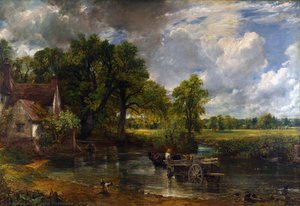
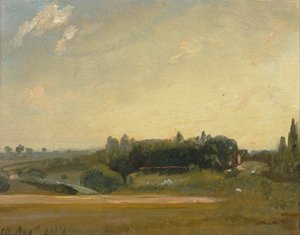
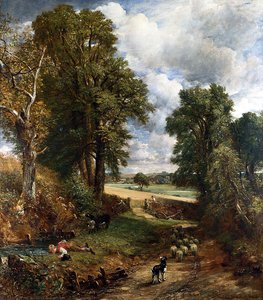
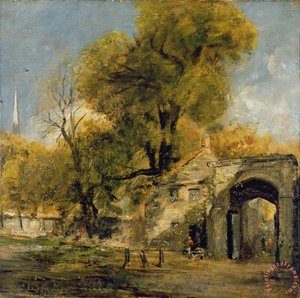
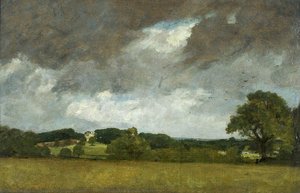
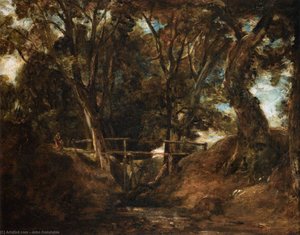
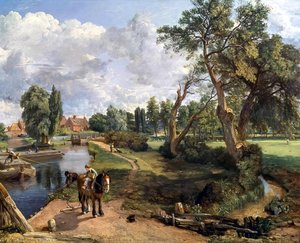
John Constable's “Overbury Hall, Suffolk,” painted in 1815, isn’t merely a depiction of an old building; it’s a carefully constructed meditation on light, texture, and the enduring spirit of rural England. This remarkable pencil drawing, now housed within the Victoria & Albert Museum’s Prints & Drawings Study Room, offers a poignant glimpse into a bygone era – a time when the rhythms of agricultural life intertwined seamlessly with the beauty of the natural world. The scene unfolds in a quiet corner of Suffolk, where Overbury Hall, a modest yet dignified structure, stands nestled amongst rolling fields and a meandering stream. It’s a landscape imbued with a sense of melancholy and timelessness, reflecting Constable's deep connection to his native county.
Constable’s genius lies not just in his technical skill – the meticulous rendering of weathered wood, the subtle gradations of tone achieved through masterful hatching and cross-hatching – but also in his ability to evoke atmosphere. The drawing is dominated by a soft, diffused light, casting long shadows that suggest both the stillness of the afternoon and the passage of time. This atmospheric quality is further enhanced by Constable’s use of perspective; he employs a flattened approach, characteristic of topographical drawings popular at the time, creating an illusion of depth through carefully placed lines and variations in detail. The composition itself is deliberately balanced, with the building anchoring the scene while the surrounding landscape provides a sense of spaciousness and tranquility.
The Painter’s Palette: Technique and Style
Executed entirely in pencil on paper, “Overbury Hall” exemplifies Constable's distinctive style – a blend of meticulous observation and expressive brushwork. He employed a technique known as ‘hatching,’ where parallel lines are drawn closely together to create tonal variations, effectively simulating the texture of wood and stone. Cross-hatching, achieved by layering these hatched lines at an angle, adds further depth and richness to the surface. Notice how Constable meticulously captures the rough grain of the building’s timbers, the unevenness of the fields, and the delicate ripples in the water – each detail rendered with a remarkable degree of sensitivity.
The drawing's overall effect is one of quiet contemplation. The lines are not sharply defined; instead, they possess a fluidity that mirrors the natural world itself. This approach reflects Constable’s belief that painting should be an honest representation of nature, capturing its essence rather than simply imitating its appearance. He was deeply influenced by the works of Claude Lorrain and other Old Masters, but he ultimately developed his own unique style – one characterized by a profound understanding of light, color, and texture.
A Window into Suffolk’s Past
The subject itself, Overbury Hall, is a significant element within the drawing's narrative. While the exact location of the hall remains somewhat debated—scholarly research suggests it may be Overbury Court in Tewkesbury, Worcestershire—it represents a quintessential example of rural architecture from the early 18th century. The building’s modest size and weathered appearance speak to its long history and connection to the land. It's a structure that has witnessed generations of farmers and laborers, silently observing the changing seasons and the ebb and flow of life in Suffolk.
The inclusion of livestock – cows grazing peacefully in the foreground – further reinforces this sense of rural tradition. They are not merely decorative elements; they are integral to the landscape, representing the economic heart of the region. The scene as a whole evokes a feeling of nostalgia for a simpler time—a time when life was closely tied to the rhythms of nature and the land provided sustenance and livelihood.
Symbolism and Emotional Resonance
Beyond its purely representational qualities, “Overbury Hall” is rich in symbolism. The drawing’s muted palette and melancholic atmosphere suggest a sense of loss—the decline of rural life, the fading of traditional ways, and the inevitable passage of time. Yet, there's also an underlying feeling of resilience – a quiet dignity that endures despite the challenges faced by those who inhabit this landscape. Constable’s masterful use of light and shadow creates a powerful emotional resonance, inviting viewers to contemplate the beauty and fragility of the natural world.
Reproductions of “Overbury Hall” offer an exceptional opportunity to bring this evocative scene into your home or office. Whether you're drawn to its historical significance, its artistic merit, or simply its captivating atmosphere, this drawing is a timeless testament to John Constable’s genius and his profound love for the English countryside.


Biografia dell'artista
**primi anni di vita e difficoltà**
john constable, un artista britannico rinomato, nacque il 23 giugno 1776 a East Bergholt, Suffolk. I suoi primi anni furono segnati da un profondo legame con la natura, che sarebbe poi diventata la cifra distintiva del suo stile artistico. Nonostante abbia affrontato numerose sfide nel mercato dell'arte inglese, l'incrollabile dedizione alla sua arte ha aperto la strada a un'eredità che va ben oltre il suo tempo.**stile artistico e influenza**
L'approccio distintivo di constable alla pittura paesaggistica, caratterizzato dall'enfasi sulla bellezza naturale e sulla profondità emotiva, ha segnato uno spostamento significativo nel genere. La sua influenza è stata particolarmente profonda in Francia, dove ha svolto un ruolo chiave nella formazione della scuola di Barbizon dei pittori. Questa scuola, nota per il suo focus sul realismo e sulla natura, ha tratto ispirazione diretta dalle tecniche e dai temi di constable.- netley abbey (olio su tela), una testimonianza della sua abilità nel catturare l'essenza dei paesaggi naturali.
- the judges walk, hampstead (romanticismo, olio), che mostra la sua capacità di infondere tocchi personali nel suo lavoro.
- a view on the stour near dedham (129 x 188 cm, romanticismo, olio su tela), un esempio primario della sua influenza sul genere del paesaggio.
**eredità e ricordo**
Oggi, john constable è ricordato non solo come pittore di paesaggi ma anche come pioniere che ha aperto nuove possibilità per l'espressione emotiva nell'arte. Il suo impatto profondo sul corso della pittura del paesaggio nel XIX secolo e oltre è innegabile. punti chiave:** * influente nello sviluppo della scuola di Barbizon in Francia * ha pionierato un nuovo approccio alla pittura del paesaggio, concentrandosi sulla bellezza naturale e sulla profondità emotiva * ha lottato per il riconoscimento nel mercato dell'arte inglese durante la sua vita- esplora altre opere di constable su https://AllPaintingsStore.com/@/john-constable
- scopri i capolavori del museo di Blake (Regno Unito) su https://AllPaintingsStore.com/@@/d3bux7
- impara di più sulla scuola di Barbizon e la sua influenza sulla pittura del paesaggio su https://en.wikipedia.org/wiki/barbizon_school
**conclusione**
L'eredità di john constable è una testimonianza del potere trasformativo dell'arte. La sua influenza sulla pittura del paesaggio, sia nel suo tempo che al di là, serve da promemoria dell'impatto profondo che un singolo artista può avere sul mondo.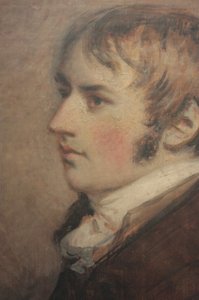
John Constable
1776 - 1837 , Regno Unito
Informazioni rapide
- Artisti Influenti:
- Claude Lorrain
- Jacob van Ruisdael
- Artisti Influenzati: ['Scuola di Barbizon']
- Data Di Nascita: 23 giugno 1776
- Luogo Di Nascita: East Bergholt, Regno Unito
- Movimento Artistico: Romanticismo
- Nazionalità: Britannico
- Nome Completo: John Constable
- Opere Notevoli:
- Netley Abbey
- The Hay Wain
- Salisbury Cathedral
Articoli correlati
John Varley I: Intimate Observation & the British Romantic Landscape
Explore the serene landscapes of John Varley I, a key figure in British Romanticism. Discover his unique watercolour style, collaboration with William Blake & lasting artistic legacy. Learn about collecting Varley's work.

Evoking Arcadia: A Historical & Aesthetic Exploration of Rural Landscape Art
Explore the rich history of pastoral landscape art, from classical Arcadia to Impressionism & beyond. Discover key artists, movements, and how to collect serene rural scenes for your home. Expert insights at AllPaintingsStore.

Brian Hatton: A Study in Early 20th-Century British Landscape Painting & Rural Identity
Explore the captivating landscapes & portraits of Brian Hatton (1887-1916), a promising British artist lost too soon. Discover his unique style, Herefordshire roots, and lasting legacy in early 20th-century art.

John Frederick Lewis: Orientalismo, Dettaglio e Pittura di Genere nell'Arte Britannica del XIX Secolo
Esplora l'opera di John Frederick Lewis, maestro dell'Orientalismo vittoriano. Analisi dettagliata del suo stile unico, il realismo pittorico e l'influenza sulla pittura britannica del XIX secolo.

Philip Connard: A Study in British Impressionism & the Evocation of Rural England
Explore the captivating world of Philip Connard (1875-1958), a leading British Impressionist painter renowned for his decorative landscapes and wartime artistry. Discover his life, legacy & available artworks at AllPaintingsStore.