Anteprima in scala reale
 Invia
Invia Condividi
 Dettagli opera
 Guida
Guida

 Scarica
 Simili
 Radiografia
 Slideshow
 Domande e risposte
 Statistiche
Painter

- 41.0 x 32.0 cm


 Espandi i dettagli
Giclée / Stampe d'arte
Stampa giclée o su tela di qualità museale, con produzione rapida e diverse opzioni di finitura. ( Acquista il dipinto realizzato a mano Passa all'immagine digitale)




P118B €10

P118H €10

P118W €10

P438Z €10

P508JH €12

P508YH €12

P805H €10

P805Z €10

P919BZ €10

P919G €10

P919XJ €10

P959ZH €10

P968JZ €12

W106C €8

W218G €10

W218JH €8

W218Y €10

W307PJ €10

W316G €10

W316PJ €8

W316Y €10

W398PJ €8

W4111J €10

W500HY €15

W500JH €15

W692G €12

W849H €8

W940BG €15

W953PJ €8




Scegli tra le nostre dimensioni predefinite, che rispettano le proporzioni originali dell'opera d'arte.

Inserisci la larghezza e l'altezza desiderate, per adattarle alla tua cornice o alla tua parete. Una stampa può essere solo ritagliata, mai resa più grande dell'immagine originale; pertanto, un formato con una forma differente comporterà la perdita di una parte dell'opera. Ti invieremo un mockup digitale da approvare prima di procedere con la stampa. L'immagine mostrata in questa pagina non rappresenta il ritaglio reale — solo il mockup lo mostra.
Consegna in tutto il mondo () in 2 settimane invece delle normali 4/5 settimane. (4 Novembre)

Spedizione espressa gratuita in tutto il mondo

Tela in lino di alta qualità

Assicurazione completa sulla spedizione

Garanzia di rimborso dei dazi doganali

Garanzia di fedeltà cromatica assoluta

Politica di reso entro 100 giorni (solo per difetti di fabbricazione)

Garanzia di rimborso al 100%

Offerta per acquisti multipli
 L'opzione vetro è disponibile solo per dimensioni inferiori a 110 cm

Painter
Giclée / Stampe d'arte
Dimensioni riproduzione
-


Prezzo finale calcolato
€ 58
A Window into the Soul of Paris: The Intimacy of Boilly’s Vision
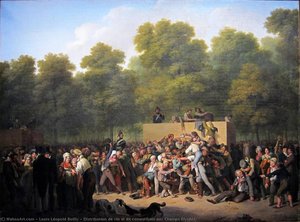
In the quiet corners of late eighteenth-century France, where the grandeur of the monarchy began to yield to the subtle shifts of a changing society, Louis Léopold Boilly captured a world of profound domestic grace. His masterpiece, Painter (often referred to as A Painter’s Studio), completed in 1785, serves as more than just a portrait; it is an evocative portal into the private lives of the Parisian bourgeoisie. The scene unfolds with a tender, almost whispered intimacy, presenting a woman and child enveloped in a moment of shared quietude. As she sits poised in her chair, lost in the pages of a book, her child gazates outward, perhaps caught by a flicker of light or a passing thought, creating a beautiful tension between internal reflection and external curiosity.
The composition is masterfully orchestrated to draw the viewer into this cozy sanctuary. Surrounded by the artifacts of a cultured life—scattered books, a delicate vase, and the steady presence of a dining table—the subjects are anchored within a meticulously rendered domestic interior. The soft, diffused light that bathes the room suggests the gentle glow of a Parisian afternoon, casting subtle shadows that lend depth to the figures and texture to the objects. This careful arrangement of elements does not merely decorate the space; it tells a story of stability, intellect, and the nurturing warmth of the home.
Mastery of Detail and the Art of Illusion
Boilly was a virtuoso of technique, a painter whose hands possessed the rare ability to deceive the eye through the mastery of trompe-l’oeil. In this work, his commitment to Neoclassical accuracy is nothing short of breathtaking. Every brushstroke serves the purpose of realism, from the smooth, pale porcelain of the woman's skin to the tactile quality of the scattered papers and books. His palette, though restrained, possesses a luminous quality that breathes life into the muted tones of the studio, allowing for precise gradations of color that mimic the natural play of light.
For the discerning collector or interior designer, the technical brilliance of this piece offers a profound sense of luxury and sophistication. The way Boilly handles texture—the weight of a fabric, the hardness of a clock on the wall, the delicate curve of a ceramic bowl—creates a sensory experience that transcends the flat surface of the canvas. This level of detail ensures that the painting remains captivating from any distance, offering new discoveries upon every close inspection. It is a work that demands attention through its quiet excellence rather than through loud, chaotic movement.
A Legacy of Elegance for the Modern Interior
Beyond its historical significance, Painter carries an emotional resonance that remains timeless. It evokes a sense of nostalgia for a period of refined elegance and the celebration of everyday virtues. The painting embodies a peacefulness that is increasingly rare in our modern, frenetic world, making it an ideal centerpiece for spaces designed for contemplation, reading, or quiet conversation. Whether placed in a sun-drenched library or a sophisticated contemporary living room, this reproduction brings with it an aura of cultured tranquility.
Integrating such a high-quality reproduction into a curated collection allows one to honor the legacy of French portraiture while adding a layer of narrative depth to a room's decor. It is an investment in atmosphere—a way to surround oneself with the soft light and enduring grace of Boilly’s Paris. For those who seek art that speaks of both historical weight and aesthetic lightness, this piece stands as a testament to the beauty found in the most delicate observations of life.
Domande e risposte
Che livello di saturazione hanno i colori di "Painter" di Louis Léopold Boilly?
"Painter" di Louis Léopold Boilly presenta una saturazione Muted.
In che modo i colori di "Painter" di Louis Léopold Boilly si riflettono nel suo impatto emotivo?
In "Painter", i colori di Earthy accompagnano una sensazione Calm.
"Painter" di Louis Léopold Boilly utilizza forti contrasti o armonie delicate?
L'analisi cromatica di "Painter" di Louis Léopold Boilly rivela un Bold contrasto e una Balanced Harmony armonia.
Opere simili


Biografia dell'artista
Louis Léopold Boilly: Una Vita Dedicata al Ritratto e alla Società Parigina
- Nato: 5 luglio 1761, La Bassée, Francia
- Morto: 4 gennaio 1845, Parigi, Francia
Primi Anni di Vita e Sviluppo Artistico
- Il percorso artistico di Boilly iniziò presto; produsse opere fin da quando aveva dodici anni. In gran parte autodidatta, la sua formazione iniziale includeva la pittura trompe-l'oeil sotto Dominique Doncre.
- Il suo talento fu riconosciuto dagli agostiniani di Douai nel 1774, portando a un invito del vescovo di Arras. Questo periodo vide la creazione di oltre trecento piccoli ritratti.
- I primi lavori spesso presentavano soggetti amorosi e moraleggianti, dimostrando una crescente abilità nel catturare somiglianze e dettagli.
Stile Artistico e Opere Chiave
- Stile: Lo stile di Boilly è caratterizzato da meticolosa attenzione ai dettagli, colorazione accurata e un focus sulla rappresentazione della vita quotidiana nella borghesia francese. Combinava abilmente ritrattistica e scene di genere.
- Evoluzione: Dopo il 1794, le sue composizioni divennero più affollate, riflettendo la vivace scena sociale di Parigi. I suoi ritratti ottennero ampio riconoscimento, con oltre 5.000 dipinti realizzati durante la sua carriera.
- Opere Notabili:
- Il Dono del Corteggiatore – Un'opera giovanile che mostra temi amorosi e meticolosa attenzione ai dettagli.
- Trionfo di Marat – Un’opera patriottica creata per evitare condanne durante il Terrore.
- L'Arrivo di un Cocchio Postale nel Cortile delle Messaggerie – Una vibrante rappresentazione della vita parigina e dei trasporti.
- Illusioni Ottiche: Boilly era affascinato dall’ottica, come dimostrato da opere come *Un Trompe-l'œil*, che introdusse il termine per descrivere la sua tecnica di creare immagini realistiche che imitano oggetti tridimensionali.
Riconoscimenti e Eredità
- Successo al Salon: Boilly ricevette una medaglia dal Salon di Parigi nel 1804, consolidando la sua reputazione di artista abile.
- Onorificenze: Fu decorato come Cavaliere della Legion d'Onore nel 1833, riconoscendo i suoi contributi all’arte francese.
- Influenza Familiare: Suo figlio, Alphonse Boilly, divenne un incisore professionista e si formò a New York con Asher Brown Durand.
- Significato Storico: L'opera di Boilly fornisce preziose informazioni sui costumi sociali, la moda e la vita quotidiana della borghesia francese durante un periodo di significativo sconvolgimento politico. È ricordato come uno dei ritrattisti e pittori di genere più celebrati della Francia.
Collezioni Museali
- Musée des Beaux Arts, Lille: Ospita Trionfo di Marat tra altre opere.
- Museo del Louvre: Presenta selezioni dall'ampia opera di Boilly.
- National Gallery of Art (Washington D.C.): Possiede diversi dipinti tra cui *Autoritratto*, *Les Amateurs de Tableaux* e *Il Pubblico nel Salon del Louvre, che Osserva il Dipinto del "Sacre"*.
- Getty Museum: Ospita una collezione delle opere di Boilly.

Louis Léopold Boilly
1761 - 1845 , Francia
Dettagli rapidi
- Artistic Movement Or Style: Pittura di genere, Ritrattismo
- Artists Who Influenced This Artist:
- Gabriel Metsu
- Willem van Mieris
- Gerard ter Borch
- Date Of Birth: 5 luglio 1761
- Date Of Death: 4 gennaio 1845
- Full Name: Louis Léopold Boilly
- Nationality: Francese
- Notable Artworks:
- Il regalo del corteggiatore
- Trionfo di Marat
- Arrivo di un cocchio postale
- Place Of Birth: La Bassée, Francia
Articoli correlati

L'Incanto dell'Olio su Tavola: Scoprire la Forza e la Luce dei Grandi Maestri
Scopri la forza della pittura su tavola e le tecniche dei maestri tra luce e impasto. Immergiti nella storia dell'arte con noi.

The Enduring Power of Painting: A Historical & Contemporary Exploration of Form and Emotion
Explore the rich history & enduring techniques of oil painting with AllPaintingsStore. Discover masterpieces, learn about art collecting, and find authentic handmade reproductions crafted by skilled artists.

L'Eredità Duratura della Pittura a Olio: Tecnica, Storia e Pratica Contemporanea
Esplora la storia affascinante e le tecniche della pittura a olio. Scopri come i maestri hanno creato capolavori senza tempo e come questa arte vive oggi. : riproduzioni di alta qualità e consulenza esperta.

L’Essenza dell’Olio su Tela: Storia, Tecnica e l'Incorruttibile Bellezza dei Grandi Maestri
Scopri i segreti tecnici e la storia della pittura a olio tra maestria e scienza. Approfondisci l'arte dei grandi maestri ora.

The Enduring Legacy of Oil on Canvas: Technique, History & Aesthetic Impact
Explore the rich history & techniques of oil painting – from Renaissance masters to Impressionism. Discover pigments, layering methods, and why this timeless medium endures. Expert insights for artists & art enthusiasts.