- Home

- Stampa su tela
- Max Ernst
- Fleur violette

 Preview
 Ordina la riproduzione Acquista download
 Invia
Invia
 Condividi
 Dettagli opera
 Aggiungi ai preferiti

 Scarica
 Simili
 Radiografia
 Slideshow
Fleur violette


 Scopri di più
Giclée / Stampa d'arte
Stampa giclée o su tela di qualità museale, con produzione rapida e diverse opzioni di finitura.




P118B $10

P118H $10

P118W $10

P438Z $10

P508JH $12

P508YH $12

P805H $10

P805Z $10

P919BZ $10

P919G $10

P919XJ $10

P959ZH $10

P968JZ $12

W106C $8

W218G $10

W218JH $8

W218Y $10

W307PJ $10

W316G $10

W316PJ $8

W316Y $10

W398PJ $8

W4111J $10

W500HY $15

W500JH $15

W692G $12

W849H $8

W940BG $15

W953PJ $8




Scegli tra le nostre dimensioni predefinite, che rispettano le proporzioni originali dell'opera d'arte.

È possibile inserire dimensioni personalizzate per adattare l'opera a una cornice o a uno spazio specifico. Se la dimensione selezionata non corrisponde alle proporzioni dell'immagine originale, procederemo al ritaglio dell'opera o all'estensione dell'immagine con un bordo specchiato o a tinta unita. Un mockup digitale ti verrà inviato per approvazione prima dell'inizio della produzione.
Si prega di notare che l'anteprima a schermo non riflette il ritaglio o l'estensione effettivi. Solo il mockup mostrerà accuratamente la composizione finale.
Sebbene siano disponibili dimensioni personalizzate, si raccomanda di selezionare una dimensione dall'elenco predefinito per preservare le proporzioni originali.
Consegna in tutto il mondo () in 2 settimane invece delle normali 4/5 settimane. (26 Luglio)

Spedizione espressa gratuita in tutto il mondo

Tela in lino di alta qualità

Assicurazione completa sulla spedizione

Garanzia di rimborso dei dazi doganali

Garanzia di fedeltà cromatica

Politica di reso entro 60 giorni (solo per difetti)

Garanzia di rimborso al 100%

Sconto per acquisti multipli
 L'opzione vetro è disponibile solo per dimensioni inferiori a 110 cm

Fleur violette
Giclée / Stampa d'arte
Dimensioni riproduzione
-


Prezzo totale finale
-
Descrizione dell'opera
A Descent into Chromatic Discord: Unpacking Max Ernst’s “Fleur violette”
Max Ernst's "Fleur violette" presents a captivating enigma, a visual puzzle that immediately draws the viewer into its unsettling yet undeniably compelling world. This seemingly simple composition – a dominant blue circle punctuated by bursts of yellow and red – is far more than just an exercise in color; it’s a potent distillation of Dadaist principles, reflecting Ernst's profound skepticism towards reason and his exploration of the subconscious mind. The painting’s raw energy and deliberate disruption of traditional artistic conventions speak to a period of intense social and political upheaval, mirroring the anxieties and uncertainties that defined the early 20th century.
- Subject Matter: While ostensibly depicting a flower – “fleur” in French – the work transcends any literal representation. The blue circle acts as an anchor, a void perhaps, while the vibrant colors suggest a chaotic bloom, a distorted and unsettling natural form.
- Style & Technique: Executed in oil on canvas, "Fleur violette" embodies Ernst’s signature approach to painting. He employed techniques borrowed from various sources – including collage, frottage (rubbing), and decalcomania – layering textures and creating a sense of visual friction. The deliberate roughness of the paint application contributes to the work's unsettling atmosphere.
- Dadaist Roots: As a key figure in the Dada movement, Ernst rejected academic art traditions and embraced irrationality, chance, and anti-art sentiments. “Fleur violette” perfectly embodies this ethos, challenging viewers to confront their own preconceptions about beauty and representation.
Decoding the Symbolism: A Journey into the Unconscious
The specific colors employed in "Fleur violette" are laden with symbolic weight. Blue, often associated with melancholy, spirituality, and the infinite, dominates the composition, creating a sense of isolation or perhaps even dread. The jarring bursts of yellow – representing energy, intellect, and sometimes deceit – clash violently with the blue, while red evokes passion, danger, and primal instincts. These colors aren’t blended harmoniously; they are deliberately juxtaposed to create visual tension and disrupt any attempt at rational interpretation.
- The Circle: The central circle can be interpreted as a symbol of wholeness or containment, but within the context of the painting, it feels more like an empty space, a void that demands attention.
- Color Dynamics: Ernst’s use of color is not merely decorative; it's a deliberate attempt to evoke emotional responses and tap into the viewer’s subconscious. The colors seem to vibrate with an internal energy, reflecting the artist’s own psychological turmoil.
Historical Context & Max Ernst’s Vision
Created during a period of immense social and political change – marked by World War I and the rise of Dadaism – “Fleur violette” reflects Ernst's disillusionment with Western civilization. Born in 1891, Ernst witnessed firsthand the horrors of war and the breakdown of traditional values. His artistic practice became a means of expressing his anxieties and challenging the status quo. Ernst’s intellectual background, encompassing philosophy, psychology, and psychiatry, profoundly shaped his work, leading him to explore themes of dreams, memory, and the irrational.
- Early 20th Century Influences: The painting resonates with the broader artistic currents of the time, including Expressionism and Surrealism, reflecting Ernst’s ongoing experimentation with different styles.
- A Rejection of Representation: “Fleur violette” exemplifies Ernst's commitment to rejecting traditional representational art in favor of exploring subjective experience and psychological states.
Emotional Impact & Artistic Value
"Fleur violette" is a powerfully evocative work that continues to fascinate and challenge viewers today. Its unsettling composition, bold use of color, and Dadaist sensibilities create an atmosphere of unease and disorientation. This reproduction captures the essence of Ernst’s artistic vision, offering a tangible connection to one of the most important figures in 20th-century art. It's a piece that invites contemplation, prompting viewers to question their perceptions of reality and explore the depths of the human psyche.


Biografia dell'artista
Max Ernst: Una Vita nel Surrealismo
Primi Anni di Vita ed Educazione
- Nato il: 1° aprile 1891, a Brühl, Germania.
- Il padre di Ernst, Philipp Ernst, era un insegnante dei sordi e pittore dilettante, favorendo fin dalla giovane età l'interesse di Max per l'arte.
- Ha studiato filosofia, storia dell’arte, letteratura, psicologia e psichiatria all’Università di Bonn dal 1909.
- Questo background accademico diversificato ha profondamente influenzato le sue successive esplorazioni artistiche.
Sviluppo Artistico e Influenze
- Un momento cruciale è stata l’esposizione Sonderbund a Colonia (1912), dove ha incontrato opere di Pablo Picasso, Vincent van Gogh, e Paul Gauguin.
- Nel 1914 ha conosciuto Hans Arp, iniziando un’amicizia che dura tutta la vita e che ha segnato significativamente il suo percorso artistico.
- La Prima Guerra Mondiale ha avuto un profondo impatto su Ernst; le sue esperienze come soldato hanno portato a disillusione e una visione critica della società.
- È stato influenzato dalle opere di Sigmund Freud, esplorando temi della mente inconscia nella sua arte.
Dada & Surrealismo
- Ernst è diventato una figura chiave del gruppo Dada di Colonia dopo la Prima Guerra Mondiale, rifiutando le convenzioni artistiche tradizionali.
- Ha pionierizzato tecniche innovative come frottage (sfregamento di matite su superfici testurizzate) e grattage (raschiatura della pittura per rivelare gli strati sottostanti).
- Negli anni ’20 è entrato nel movimento Surrealista a Parigi, collaborando con artisti come Paul Éluard.
- Il suo lavoro di questo periodo ha esplorato immagini oniriche e temi psicologici.
Opere Principali e Tecniche
- Frottage: Una tecnica utilizzata per creare texture e immagini inaspettate, esemplificata in molte delle sue opere.
- Collage: Ernst ha spesso impiegato il collage, combinando elementi disparati per creare composizioni surrealiste.
- Opere Notevoli:
- La Città Intera
- Euclides
- Di Questo Nessuno Dovrà Sapere
- Foresta e Colomba
- I suoi dipinti spesso presentano immagini simboliche, tra cui uccelli (in particolare il suo alter ego Loplop), paesaggi e giustapposizioni inquietanti.
Vita Successiva & Eredità
- Ernst si è trasferito negli Stati Uniti durante la Seconda Guerra Mondiale, continuando a dipingere ed sperimentare nuove tecniche.
- È tornato in Francia dopo la guerra e è rimasto attivo fino alla sua morte il 1° aprile 1976, a Parigi.
- Significato Storico: I contributi di Max Ernst a Dada e Surrealismo sono stati rivoluzionari. Ha sfidato le norme artistiche, ha esplorato la mente inconscia e ha inventato tecniche innovative che continuano a ispirare gli artisti oggi.
- Resta uno dei personaggi più importanti e influenti del 20° secolo d’arte.

Max Ernst
1891 - 1976 , Germania
Dati rapidi
- Artisti Che Hanno Influenzato Questo Artista:
- Pablo Picasso
- Vincent van Gogh
- Paul Gauguin
- Sigmund Freud
- Data Di Morte: 1 aprile 1976
- Data Di Nascita: 1 aprile 1891
- Luogo Di Nascita: Brühl, Germania
- Movimento Artistico: Dada e Surrealismo
- Nazionalità: Tedesca
- Nome Completo: Max Ernst
- Opere Notevoli:
- La Città Intera
- Euclides
- Foresta e Colomba
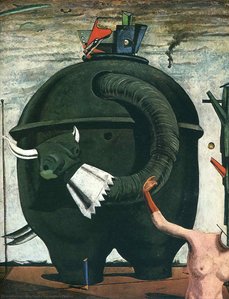
- L'Elefante di Celebes
Articoli correlati

The Allure of Azure: Exploring the Symbolic & Aesthetic Depths of Blue in Art History
Explore the rich history of blue in art! Discover its symbolism, from ancient pigments to modern masterpieces by Kandinsky & Seurat. Uncover the psychological impact and cultural meanings behind this captivating hue.

Azure Visions: Exploring Representations of the Blue Dress in Western Art History
Explore the rich history of the blue dress in Western art! Discover its symbolism, from Renaissance masterpieces to modern interpretations by artists like Martin & Schiele. Uncover cultural meanings and artistic techniques.

Chromatic Narratives: Exploring the Psychological & Cultural Significance of Color in Art History
Explore the fascinating relationship between color & emotion in art history. Discover how master artists used color to evoke feelings & cultural meanings, plus expert collecting insights.
Max Ernst: I 25 Capolavori che Rivoluzionarono l'Arte Moderna | AllPaintingsStore
Esplora i 25 capolavori di Max Ernst, pioniere del Surrealismo. Scopri la storia, le tecniche e il simbolismo dietro ogni opera iconica. Trova riproduzioni arte su tela di alta qualità per decorare casa con AllPaintingsStore.com.
Joan Miró: I 25 Capolavori che Rivoluzionano l'Arte Moderna | AllPaintingsStore
Esplora i 25 capolavori di Joan Miró, pittore surrealista catalano. Scopri la storia, il simbolismo e le tecniche dietro opere iconiche come 'La Fattoria'. Stampe d'arte e riproduzioni su AllPaintingsStore.com per arredare con stile.