


 Anteprima in scala reale
 Invia
Invia Condividi
 Dettagli opera
 Guida
Guida

 Scarica
 Simili
 Radiografia
 Slideshow
 Q&A
Q&A Statistiche
Composition N. 1 con rosso e blu


 Espandi i dettagli
Giclée / Stampe d'arte
Stampa giclée o su tela di qualità museale, con produzione rapida e diverse opzioni di finitura. ( Acquista il dipinto realizzato a mano Passa all'immagine digitale)




P118B €10

P118H €10

P118W €10

P438Z €10

P508JH €12

P508YH €12

P805H €10

P805Z €10

P919BZ €10

P919G €10

P919XJ €10

P959ZH €10

P968JZ €12

W106C €8

W218G €10

W218JH €8

W218Y €10

W307PJ €10

W316G €10

W316PJ €8

W316Y €10

W398PJ €8

W4111J €10

W500HY €15

W500JH €15

W692G €12

W849H €8

W940BG €15

W953PJ €8




Scegli tra le nostre dimensioni predefinite, che rispettano le proporzioni originali dell'opera d'arte.

Inserisci la larghezza e l'altezza desiderate, per adattarle alla tua cornice o alla tua parete. Una stampa può essere solo ritagliata, mai resa più grande dell'immagine originale; pertanto, un formato con una forma differente comporterà la perdita di una parte dell'opera. Ti invieremo un mockup digitale da approvare prima di procedere con la stampa. L'immagine mostrata in questa pagina non rappresenta il ritaglio reale — solo il mockup lo mostra.
Consegna in tutto il mondo () in 2 settimane invece delle normali 4/5 settimane. (31 Ottobre)

Spedizione espressa gratuita in tutto il mondo

Tela in lino di alta qualità

Assicurazione completa sulla spedizione

Garanzia di rimborso dei dazi doganali

Garanzia di fedeltà cromatica assoluta

Politica di reso entro 100 giorni (solo per difetti di fabbricazione)

Garanzia di rimborso al 100%

Offerta per acquisti multipli
 L'opzione vetro è disponibile solo per dimensioni inferiori a 110 cm

Composition N. 1 con rosso e blu
Giclée / Stampe d'arte
Dimensioni riproduzione
-


Prezzo finale calcolato
€ 57
Composition N. 1 with Red and Blue: A Symphony of Geometric Harmony
Piet Mondrian’s *Composition N. 1 with Red and Blue*, painted in 1931, transcends mere visual arrangement; it embodies a profound philosophical quest for spiritual equilibrium through the radical simplification of artistic expression. Emerging from a period marked by intense experimentation within the burgeoning avant-garde movement, this seminal work solidified Mondrian’s unwavering commitment to Neoplasticism – a doctrine he championed alongside Theo van Doesburg and which fundamentally reshaped the landscape of 20th-century art. The canvas presents a meticulously calibrated grid of black lines delineating squares and rectangles filled with primary colors—red, yellow, and blue—alongside expanses of white and gray. This deceptively austere composition belies an intellectual depth that continues to fascinate scholars and artists alike. It’s not simply about what is depicted but rather about the deliberate excision of extraneous elements, leaving only the essential forms to resonate with pure visual force. The impact is immediate: a sense of order, balance, and serene contemplation washes over the viewer—a testament to Mondrian's belief that art could serve as a conduit for accessing universal truths.- Historical Context: The painting was created during the height of the Weimar Republic in Germany, a period characterized by artistic ferment and intellectual debate surrounding Expressionism and Surrealism. However, Mondrian consciously distanced himself from these movements, prioritizing his own rigorously defined aesthetic principles.
- Style & Technique: Mondrian’s approach to painting involved stripping down visual language to its most fundamental components—horizontal and vertical lines, primary colors, and neutral tones—a technique rooted in the belief that this simplification would liberate art from the constraints of representational illusion. He employed oil paint on canvas with painstaking precision, applying thin layers of pigment to achieve maximum luminosity and clarity.
- Color Palette: The restricted palette of red, yellow, and blue is deliberately chosen to evoke a sense of spiritual harmony—a core tenet of Neoplasticism. Mondrian believed that these colors represented dynamic forces interacting within an overarching framework of order, mirroring the cosmos itself.
- Symbolism: The black gridlines symbolize the underlying structure of reality, representing the immutable laws governing existence. The white spaces are equally crucial, embodying potentiality and allowing the composition to breathe—a visual metaphor for transcendence and spiritual aspiration.
From Dutch Landscapes to Universal Forms: Mondrian’s Artistic Evolution
Before embracing Neoplasticism, Mondrian honed his skills in landscape painting, influenced by the Hague School and Impressionism. Works like *The Red Mill* demonstrate this formative period, showcasing a naturalistic style that gradually yielded to experimentation with Pointillism and Fauvism—each approach offering a distinct perspective on color and form. However, Mondrian wasn’t satisfied merely mimicking nature; he sought to uncover the hidden harmonies underlying it. This quest for simplification drove him away from representational art and toward pure abstraction—a decisive break that established him as one of the pioneers of modern artistic thought. The influence of Cubism was undeniable during this phase, prompting him to deconstruct objects into geometric components—a process that ultimately paved the way for his groundbreaking stylistic innovations.- Early Influences: Mondrian’s initial training encompassed traditional Dutch landscape painting techniques, reflecting the aesthetic sensibilities of his time.
- Cubist Experimentation: Exposure to Cubism challenged Mondrian's preconceptions about representation and encouraged him to explore new compositional strategies.
- The Birth of Neoplasticism: By the mid-1920s, Mondrian had fully developed his signature style—Neoplasticism—a philosophical system predicated on the conviction that art could transcend materiality and express universal truths.
A Lasting Legacy: Beyond the Canvas – De Stijl’s Influence
Mondrian's artistic vision extended far beyond the confines of painting, profoundly impacting architecture, furniture design, and graphic arts—a testament to his enduring influence on the visual culture of the 20th century. The principles of De Stijl, founded by Mondrian and Theo van Doesburg, championed geometric forms and primary colors as instruments for achieving aesthetic harmony and spiritual enlightenment. This movement sought to liberate art from the shackles of illusionism and to forge a new path toward universal beauty—a legacy that continues to inspire designers and artists today. Owning a reproduction of *Composition N. 1 with Red and Blue* isn’t merely acquiring an artwork; it's embracing a fragment of this visionary aesthetic, inviting contemplation on the relationship between form and color and reaffirming the enduring quest for order and balance in our surroundings.Domande e risposte
Qual è la collocazione storica di "Composition N. 1 con rosso e blu"?
"Composition N. 1 con rosso e blu" di Piet Mondrian appartiene al movimento Neoplasticism, all'interno del periodo Età Moderna. Insieme, conferiscono all'opera il suo posto nella storia dell'arte.
"Composition N. 1 con rosso e blu" è disponibile come stampa d'arte di alta qualità?
Per ordinare una stampa di "Composition N. 1 con rosso e blu" di Piet Mondrian, ti basta cercarla nella sua pagina dedicata Stampa Fine Art: una stampa fine art su tela di cotone o carta canvas d'archivio.
A quale corrente artistica appartiene "Composition N. 1 con rosso e blu" di Piet Mondrian?
Il movimento associato a "Composition N. 1 con rosso e blu" di Piet Mondrian è Neoplasticism. Questa classificazione colloca l'opera tra artisti e opere d'arte correlati.
Opere simili


Biografia dell'artista
**primi anni di vita e carriera nei Paesi Bassi (1872-1911)**
pieter cornelis mondriaan, noto dopo il 1911 come piet mondrian, era un pittore e teorico dell'arte olandese nato il 7 marzo 1872 ad Amersfoort, nei Paesi Bassi. Iniziò la sua carriera come insegnante di istruzione primaria mentre praticava la pittura, inizialmente nello stile impressionista olandese della scuola di Haarlem.- Le sue opere giovanili, caratterizzate da paesaggi naturalistici, possono essere viste in dipinti come the red mill e trees in moonrise, esposte al kunstmuseum den haag.
- La ricerca di mondrian per uno stile personale lo portò a esplorare vari movimenti artistici, tra cui il puntinismo e il fauvismo.
- La sua prima mostra nel 1893 segnò l'inizio della sua carriera prolifica.
**l'evoluzione dello stile di mondrian**
da figurativo all'astratto la direzione artistica di mondrian si è spostata verso uno stile sempre più astratto, culminando in una forma non rappresentativa che chiamò neoplasticismo. Questa 'arte plastica pura' mirava a creare 'bellezza universale', limitando il suo vocabolario formale ai colori primari (rosso, blu e giallo), ai valori (nero, bianco e grigio) e alle direzioni (orizzontali e verticali).- Esempi di questo stile possono essere visti in dipinti come composition with yellow patch (46 x 46 cm, neoplasticismo, olio su tela).
- Il lavoro di mondrian ha avuto un'enorme influenza sull'arte del XX secolo, influenzando non solo la pittura astratta ma anche il design, l'architettura e la moda.
**eredità e influenza**
l'eredità di mondrian si estende oltre il suo lavoro stesso, influenzando stili e movimenti importanti come la pittura a campo colorato, l'espressionismo astratto e il minimalismo. Lo storico dell'arte stephen bayley ha notato che mondrian è diventato un totem per tutto ciò che il modernismo voleva essere.- Esplora altri lavori di mondrian su AllPaintingsStore.com.
- Impara sul movimento de stijl e sulla sua influenza sull'arte moderna su wikipedia.
- Scopri altri artisti influenti come vincent van gogh e il loro impatto sul mondo dell'arte.
**opere chiave ed esposizioni**
* piet mondrian: apple blossom (cubismo) (visualizza su AllPaintingsStore.com) * piet mondrian: still life with vase of spices ii (cubismo) (visualizza su AllPaintingsStore.com) * piet mondrian: passionflower (73 x 48 cm, kunstmuseum den haag, post impressionism, watercolor) (visualizza su AllPaintingsStore.com)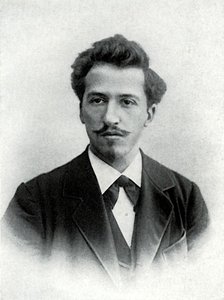
Piet Mondrian
1872 - 1944 , Paesi Bassi
Dettagli rapidi
- Artisti Influenti:
- Hague School
- Impressionismo
- Pointillism
- Fauvismo
- Cubismo
- Artisti Influenzati:
- Color Field painting
- Abstract Expressionism
- Minimalismo
- Data Di Nascita: 7 marzo 1872
- Luogo Di Nascita: Amersfoort, Paesi Bassi
- Movimento Artistico: De Stijl, Neoplasticismo
- Nazionalità: Olandese
- Nome Completo: Piet Mondrian
- Opere Notevoli:
- Composition with Red, Yellow and Blue
- Broadway Boogie Woogie
- Tableau no. 2 Composition no. V
- Rhythm of Black Lines
Articoli correlati

Neoplasticism Explained: A Professional Guide to Geometric Abstraction and Primary Color for Modern Interior Design
Master the use of Neoplasticism in hospitality design. Learn how Piet Mondrian’s geometric forms and primary colors create order and modern sophistication. Expert guidance on sourcing high-quality, large-scale abstract reproductions for professional hotel and corporate interiors.


