Anteprima in scala reale
 Invia
Invia Condividi
 Dettagli opera
 Guida
Guida

 Scarica
 Simili
 Radiografia
 Slideshow
 Statistiche
Prime Mover (Astronomia)


 Espandi i dettagli
Giclée / Stampe d'arte
Stampa giclée o su tela di qualità museale, con produzione rapida e diverse opzioni di finitura. ( Acquista il dipinto realizzato a mano Passa all'immagine digitale)




P118B €10

P118H €10

P118W €10

P438Z €10

P508JH €12

P508YH €12

P805H €10

P805Z €10

P919BZ €10

P919G €10

P919XJ €10

P959ZH €10

P968JZ €12

W106C €8

W218G €10

W218JH €8

W218Y €10

W307PJ €10

W316G €10

W316PJ €8

W316Y €10

W398PJ €8

W4111J €10

W500HY €15

W500JH €15

W692G €12

W849H €8

W940BG €15

W953PJ €8




Scegli tra le nostre dimensioni predefinite, che rispettano le proporzioni originali dell'opera d'arte.

Inserisci la larghezza e l'altezza desiderate, per adattarle alla tua cornice o alla tua parete. Una stampa può essere solo ritagliata, mai resa più grande dell'immagine originale; pertanto, un formato con una forma differente comporterà la perdita di una parte dell'opera. Ti invieremo un mockup digitale da approvare prima di procedere con la stampa. L'immagine mostrata in questa pagina non rappresenta il ritaglio reale — solo il mockup lo mostra.
Consegna in tutto il mondo () in 2 settimane invece delle normali 4/5 settimane. (26 Ottobre)

Spedizione espressa gratuita in tutto il mondo

Tela in lino di alta qualità

Assicurazione completa sulla spedizione

Garanzia di rimborso dei dazi doganali

Garanzia di fedeltà cromatica assoluta

Politica di reso entro 100 giorni (solo per difetti di fabbricazione)

Garanzia di rimborso al 100%

Offerta per acquisti multipli
 L'opzione vetro è disponibile solo per dimensioni inferiori a 110 cm

Prime Mover (Astronomia)
Giclée / Stampe d'arte
Dimensioni riproduzione
-


Prezzo finale calcolato
€ 56
Introduction
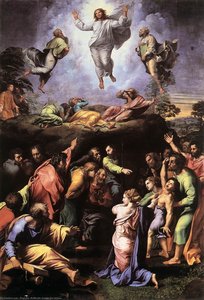
This article delves into Raphael’s masterpiece, Prime Mover (Astronomy), a cornerstone of Renaissance art and an exemplary demonstration of Raphael’s mastery over oil on canvas. Painted during his prolific Roman period—specifically between 1509 and 1511—this fresco resides within the Stanza della Segnatura, one of Michelangelo's ambitious architectural projects commissioned by Pope Julius II to adorn the Vatican Palace. More than just a visually stunning depiction of cosmological concepts, Prime Mover (Astronomy) embodies the humanist ideals of observation and rational inquiry that characterized the era—a testament to Raphael’s artistic genius.Artist: Raphael (Raffaello Sanzio Da Urbino)
Born in Urbino in 1483, Raffaello Sanzio da Urbino emerged as one of the foremost painters of his generation, inheriting a rich artistic tradition from his father Giovanni Santi—a court painter to Federico da Montefeltro. This upbringing instilled in Raphael a profound appreciation for beauty and precision, shaping his distinctive style. He honed his skills under Pietro Perugino’s tutelage before relocating to Florence in 1504, where he absorbed the influences of Leonardo da Vinci and Michelangelo—artists who would become his peers and rivals. Raphael's unwavering commitment to anatomical accuracy combined with a masterful command of perspective created images that captivated audiences and cemented his reputation as “the Angelic Raphael.” His artistic vision transcended mere imitation; he sought to elevate art into a vehicle for philosophical contemplation, mirroring the humanist spirit of the Renaissance.Title: Prime Mover (Astronomy)
Prime Mover (Astronomy) depicts the mythological Mount Parnassus—the abode of Apollo—where he is surrounded by nine muses representing various disciplines of art and literature. This scene serves as an allegory for creation itself, reflecting Aristotle’s concept of the unmoved mover—the first cause of all motion—a philosophical cornerstone of Renaissance thought. Raphael skillfully portrays Apollo as a radiant figure radiating intellect and serenity, while the muses are depicted in dynamic poses, symbolizing inspiration and creativity. The composition is meticulously balanced, emphasizing harmony and order—characteristics that define Raphael’s artistic aesthetic.Media: Oil on Canvas
Raphael's choice of oil paint on canvas was revolutionary for its time. Unlike tempera—the dominant medium for frescoes—oil allowed for greater luminosity and tonal subtlety, enabling artists to achieve unparalleled realism. The layering technique employed by Raphael—known as *sfumato*—created soft transitions between colors and forms, blurring outlines and enhancing the illusion of depth. This meticulous attention to detail reflects Raphael’s dedication to capturing the essence of his subjects with breathtaking accuracy—a hallmark of Renaissance painting. Furthermore, the durability of oil paint ensured that Prime Mover (Astronomy) would endure for centuries to come, preserving its beauty and conveying Raphael’s artistic legacy.Style: Renaissance
Renaissance art flourished in Italy from the mid-14th century onward, fueled by a revival of classical learning and values—a reaction against medieval dogma and superstition. Artists embraced humanist ideals emphasizing human dignity and reason, rejecting scholastic abstraction for naturalistic representation. Raphael’s style embodies these principles perfectly—characterized by clarity of form, harmonious proportions, and masterful use of perspective. He drew inspiration from ancient Greek sculpture and architecture, striving to emulate the idealized beauty of classical art. Raphael's influence extended far beyond his own lifetime, shaping artistic tastes throughout Europe and establishing him as one of the most revered figures in Western art history. His legacy continues to inspire artists today—a testament to the enduring power of Renaissance creativity.To explore a stunning reproduction of Prime Mover (Astronomy) and discover the transformative beauty of Renaissance art, visit Prime Mover (Astronomy).
Domande e risposte
Raffaello, autore di "Prime Mover (Astronomia)", è conosciuto con altri nomi?
Raffaello è noto anche con il nome di Raffaello Sanzio da Urbino.
In che modo tecnica e movimento si fondono in "Prime Mover (Astronomia)"?
"Prime Mover (Astronomia)" è realizzata in Olio su tela, nello stile Renaissance.
Che tipo di opera è "Prime Mover (Astronomia)"?
Nel catalogo, "Prime Mover (Astronomia)" di Raffaello è classificato come Opere da parete. La categoria permette di trovare opere simili.
Opere simili
![Stanze Vaticane - Il Fuoco Nel Borgo (dettaglio) [01] — Raffaello, High Renaissance](/media/artworks/images-thumb/76/f6/76f6220ba33c4e1d9790e47ace4c7148.jpg)
![Stanze Vaticane - La Liberazione Di San Pietro (dettaglio) [02] — Raffaello, High Renaissance](/media/artworks/images-thumb/37/67/376727508005fdf6aba941d2691713fd.jpg)

![Stanze Vaticane - La Liberazione Di San Pietro (dettaglio) [01] — Raffaello, Alto Rinascimento](/media/artworks/images-thumb/56/b1/56b164228e527303d62222f1b9e9aa13.jpg)
![Stanze Vaticane – La Messa Di Bolsena (dettaglio) [01] — Raffaello, Alto Rinascimento](/media/artworks/images-thumb/8d/99/8d998e18ce3c0281eaf2360a52026685.jpg)
![Stanze Vaticane - La Disputa (dettaglio) [04] — Raffaello, Alto Rinascimento](/media/artworks/images-thumb/61/3a/613a0d8856c9e3f8abc146897892a0d2.jpg)


![Stanze Vaticane - La Disputa (dettaglio) [02] — Raffaello, Alto Rinascimento](/media/artworks/images-thumb/55/c5/55c5db1a88764a9697fe9eb0ea9d43c9.jpg)
![Stanze Vaticane - Il Parnaso (dettaglio) [07] — Raffaello, High Renaissance](/media/artworks/images-thumb/3c/a1/3ca1620e84d3f2fe4e94d9bb954e0eca.jpg)

Biografia dell'artista
**primi anni di vita e formazione**
Raphael (Raffaello Sanzio da Urbino), un rinomato pittore e architetto italiano, nacque tra il 28 marzo e il 6 aprile 1483, nella piccola ma culturalmente significativa città di Urbino. Suo padre, Giovanni Santi, era un pittore di corte per il duca, offrendo a Raffaello un'esposizione precoce al mondo dell’arte. Dopo la morte del padre all'età di undici anni, Raffaello probabilmente gestì l'officina familiare, consolidando ulteriormente le sue fondamenta artistiche.**carriera artistica e influenze**
Il percorso artistico di Raffaello può essere suddiviso in tre fasi distinte, ciascuna caratterizzata da uno stile unico:- primi anni a Umbriglia: caratterizzati dall'influenza del padre e dall'atmosfera culturale di Urbino.
- periodo fiorentino (1504-1508): assorbendo le tradizioni artistiche di Firenze, che hanno profondamente influenzato il suo stile.
- periodo romano (1508-1520): lavorando per due papi e i loro associati, producendo alcune delle sue opere più celebrate, tra cui La scuola di Atene nella stanza della segnatura Vaticana.
**opere notevoli e eredità**
Alcune delle opere più importanti di Raffaello includono:- Il giudizio di Solemano (visualizza su AllPaintingsStore)
- La Madonna di Esterhazy (visualizza su AllPaintingsStore)
- Stanze Vaticane - Vista della stanza della segnatura (visualizza su AllPaintingsStore)
- S. Sebastiano (visualizza su AllPaintingsStore)
- La donna velata (visualizza su AllPaintingsStore)
**influenza e eredità**
L'influenza di Raffaello sull'arte è profonda, con le sue opere che costituiscono un pilastro del Rinascimento maturo. Il suo stile sereno e armonioso è stato un modello per la pittura neoclassica, come notato da l' storico dell'arte Johann Joachim Winckelmann. Nonostante l'influenza successiva dello stile di Michelangelo, Raffaello rimane uno degli artisti più celebrati della storia. visualizza il profilo di Raffaello su AllPaintingsStore
Raffaello
1483 - 1520 , Italia
Dettagli rapidi
- Artisti Influenti:
- Giovanni Santi
- Pietro Perugino
- Leonardo da Vinci
- Michelangelo
- Artisti Influenzati: ['Neoclassicismo']
- Data Di Morte: 6 aprile 1520
- Data Di Nascita: 28 marzo 1483
- Luogo Di Nascita: Urbino, Italia
- Movimento Artistico: Rinascimento maturo
- Nazionalità: Italiana
- Nome Completo: Raffaello Sanzio da Urbino
- Opere Notevoli:
- La Scuola di Atene
- Madonna Solly
- Madonna del Cardellino
- Le Tre Grazie
- La Messa a Bolsena
Articoli correlati
Raffaello Sanzio: I 25 Capolavori Immortali dell'Arte Rinascimentale | AllPaintingsStore
Esplora i 25 capolavori immortali di Raffaello Sanzio, il maestro del Rinascimento italiano. Scopri la storia, le tecniche e l'emozione dietro dipinti iconici come 'La Scuola di Atene'. Trova riproduzioni d'arte di alta qualità per decorare casa tua su AllPaintingsStore.com.

The Enduring Power of Painting: A Historical & Contemporary Exploration of Form and Emotion
Explore the rich history & enduring techniques of oil painting with AllPaintingsStore. Discover masterpieces, learn about art collecting, and find authentic handmade reproductions crafted by skilled artists.

The Timeless Charm of Oil on Board: Reimagining Texture and Light through the Impressionist Lens
Discover the profound intimacy of oil on panel. Explore how Impressionist masters used rigid supports to capture light, texture, and impasto depth through exquisite, handmade oil reproductions for discerning collectors.

The Enduring Legacy of Oil on Canvas: Technique, History & Aesthetic Impact
Explore the rich history & techniques of oil painting – from Renaissance masters to Impressionism. Discover pigments, layering methods, and why this timeless medium endures. Expert insights for artists & art enthusiasts.

Oil on Canvas: A Historical & Technical Exploration of a Timeless Artistic Medium
Explore the rich history & enduring techniques of oil painting on canvas. Discover the science behind its longevity, conservation practices, and contemporary relevance. Expert insights for art enthusiasts.