


 Anteprima in scala reale
 Invia
Invia Condividi
 Dettagli opera
 Guida
Guida

 Scarica
 Simili
 Radiografia
 Slideshow
 Domande e risposte
 Statistiche
Trees

- 38.0 x 27.0 cm


 Espandi i dettagli
Giclée / Stampe d'arte
Stampa giclée o su tela di qualità museale, con produzione rapida e diverse opzioni di finitura. ( Acquista il dipinto realizzato a mano Passa all'immagine digitale)




P118B €10

P118H €10

P118W €10

P438Z €10

P508JH €12

P508YH €12

P805H €10

P805Z €10

P919BZ €10

P919G €10

P919XJ €10

P959ZH €10

P968JZ €12

W106C €8

W218G €10

W218JH €8

W218Y €10

W307PJ €10

W316G €10

W316PJ €8

W316Y €10

W398PJ €8

W4111J €10

W500HY €15

W500JH €15

W692G €12

W849H €8

W940BG €15

W953PJ €8




Scegli tra le nostre dimensioni predefinite, che rispettano le proporzioni originali dell'opera d'arte.

Inserisci la larghezza e l'altezza desiderate, per adattarle alla tua cornice o alla tua parete. Una stampa può essere solo ritagliata, mai resa più grande dell'immagine originale; pertanto, un formato con una forma differente comporterà la perdita di una parte dell'opera. Ti invieremo un mockup digitale da approvare prima di procedere con la stampa. L'immagine mostrata in questa pagina non rappresenta il ritaglio reale — solo il mockup lo mostra.
Consegna in tutto il mondo () in 2 settimane invece delle normali 4/5 settimane. (5 Novembre)

Spedizione espressa gratuita in tutto il mondo

Tela in lino di alta qualità

Assicurazione completa sulla spedizione

Garanzia di rimborso dei dazi doganali

Garanzia di fedeltà cromatica assoluta

Politica di reso entro 100 giorni (solo per difetti di fabbricazione)

Garanzia di rimborso al 100%

Offerta per acquisti multipli
 L'opzione vetro è disponibile solo per dimensioni inferiori a 110 cm

Trees
Giclée / Stampe d'arte
Dimensioni riproduzione
-


Prezzo finale calcolato
€ 58
A Verdant Embrace: Exploring Thomas Stuart Smith's "Trees"
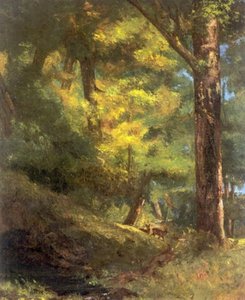
To gaze upon Thomas Stuart Smith’s "Trees" is to step through an unseen portal into a moment of profound natural tranquility. This painting is far more than a mere depiction of foliage; it is a carefully composed meditation on the enduring relationship between humanity and the wild, untamed beauty of nature. The scene unfolds within a lush woodland setting, where every leaf seems imbued with the deep, saturated green of life itself. Smith masterfully captures the layered depth of a forest—the immediate intimacy of foreground branches contrasts beautifully with the hazy mystery of trees receding into the background.
The Harmony of Figure and Flora
What elevates this piece beyond simple landscape painting is the subtle inclusion of human presence. Scattered within the verdant tapestry are two figures, positioned thoughtfully to guide the viewer's eye through the composition. They do not dominate the scene; rather, they inhabit it. Their quiet contemplation amidst the towering woods suggests a moment paused—a breath taken by wanderers who have found solace in nature’s embrace. This juxtaposition speaks volumes about the Romantic ideal: man finding his place, and perhaps even his soul, within the grandeur of the natural world. It invites us to consider our own moments of respite.
Technique and the Romantic Gaze
Smith's technique here reveals a painter deeply attuned to both scientific observation and emotional resonance. While the structure is rooted in detailed landscape rendering—the varied textures of bark, the overlapping planes of leaves—there is an undeniable sweep of Romantic idealism guiding the brushwork. The atmosphere itself feels palpable; one can almost hear the rustle of unseen creatures or feel the cool dampness rising from the forest floor. For those who appreciate art that balances meticulous detail with emotional scope, this work offers a perfect study in atmospheric perspective and naturalistic color harmony.
Symbolism of the Woods
Throughout art history, the woods have served as potent symbols—a place of mystery, rebirth, and introspection. In "Trees," the dense foliage acts as both a shelter and a veil, suggesting secrets held just out of sight. The journey into this painted forest mirrors an internal journey; the figures appear to be on a path toward understanding or peace. It is a visual poem about finding clarity away from the clamor of industrialized life, echoing the intellectual currents that shaped Victorian sensibilities while retaining a timeless, pastoral yearning.
Bringing the Woodland Home
For collectors and designers seeking an artwork that whispers serenity into a modern space, this reproduction offers unparalleled depth. The dimensions of 38 x 27 cm allow it to function beautifully as a focal point—whether placed above a console table or nestled within a gallery grouping. Owning "Trees" is not just acquiring art; it is curating an atmosphere of enduring calm, allowing the viewer to reconnect with that primal, restorative feeling found only deep within the heart of nature.
Domande e risposte
È possibile visualizzare un'anteprima di "Trees" di Thomas Stuart Smith prima dell'ordine?
La pagina di Anteprima in ambiente di "Trees" ti permette di visualizzare un'anteprima dell'opera prima dell'ordine.
Che atmosfera saprebbe conferire a una stanza una riproduzione di "Trees" di Thomas Stuart Smith?
"Trees" di Thomas Stuart Smith emana un'atmosfera Serene ed è ideale per un Lounge. Il mood rappresenta l'emozione che l'opera dona allo spazio circostante.
Quali stati d'animo ed emozioni si fondono in "Trees"?
L'atmosfera che traspare da "Trees" di Thomas Stuart Smith è Serene, e il suo tono emotivo è Tranquil.
Opere simili



Biografia dell'artista
La Silenziosa Grandezza di Thomas Stuart Smith
Thomas Stuart Smith (1815–1869) rimane una figura singolare ed evocativa nel mosaico della storia dell'arte scozzese, un pittore che possedeva la rara capacità di congiungere le vertiginose vette emotive del Romanticismo con la tenera e radicata intimità dell'osservazione quotidiana. Nato in una vita plasmata da circostanze non convenzionali — come nipote illegittimo di Alexander Smith, la cui tenuta a Glassingall, vicino a Dunblaten, offriva uno sfondo di prestigio intellettuale e terriero — i primi anni di Smith furono caratterizzati da una respiro cosmopolita. I suoi viaggi formativi in Francia e il successivo ritorno in Inghilterra gli permisero di assorbire le correnti mutevoli dell'estetica europea, coltivando una prospettiva che era tanto legata all'indagine scientifica quanto alla passione artistica.
La sua vita e la sua opera erano profondamente immerse nell'atmosfera trasformativa dell'era vittoriana. Mentre molti dei suoi contemporanei cercavano di catturare i monumentali mutamenti dell'industrializzazione attraverso narrazioni eroiche, Smith rivolse il suo sguardo verso l'interno e verso il focolare domestico. Egli trovò un significato profondo nelle sottili sfumature della quotidianità, ritraendo interni gallesi immersi in una luce morbida e diffusa e cucine traboccanti dalle vibranti trame di prodotti freschi. Le sue tele fungevano da finestre sull'esperienza umana, dove la profondità psicologica di un ritratto era altrettanto significativa del peso atmosferico di un paesaggio.
Una Sintesi tra Realismo e Romanticismo
La brillantezza della tecnica di Smith risiede nella sua magistrale sintesi di movimenti apparentemente opposti. Fu profondamente toccato dalla Confraternita Preraffaellita, traendo ispirazione dalla meticolosa accuratezza botanica e dalla precisione atmosferica sostenute da maestri come John Everett Millais e
Eppure, sotto questo strato di meticoloso realismo, batteva un cuore intriso di Romanticismo. Smith non si limitava a documentare la realtà; cercava di evocare uno stato d'animo. Attraverso sperimentazioni innovative con la luce e la prospettiva, infuse le sue scene con un senso di nostalgia ed emozione sublime. La sua opera oscilla spesso tra i seguenti elementi:
- L'Intimo: Un focus sui momenti silenziosi e non osservati della vita quotidiana e sulla critica sociale.
- L'Atmosferico: L'uso della luce per creare un senso di profondità temporale e risonanza emotiva.
- L'Osservativo: Una rigorosa dedizione alle trame e alle verità botaniche del mondo naturale.
Eredità e Spirito Filantropico
Oltre ai suoi contributi alla tela, Thomas Stuart Smith ha lasciato un segno indelebile nel panorama culturale della Scozia attraverso il suo impegno per l'istruzione e la preservazione dell'arte. La sua eredità è percepibile in modo forse più tangibile attraverso il suo ruolo di fondatore della Stirling Smith Art Gallery and Museum. Questo atto di filantropia ha garantito che la bellezza che egli cercava di catturare rimanesse accessibile alle generazioni future, cementando il suo nome non solo come creatore di immagini, ma come custode del patrimonio culturale.
Nella storia dell'arte del XIX secolo, Smith si erge come un ponte tra epoche. Egli ha navigato la transizione dalle visioni grandiose e idealizzate dell'inizio del secolo verso quel realismo più concreto e socialmente consapevole che avrebbe definito gran parte del tardo periodo vittoriano. La sua capacità di trovare l'straordinario nell'ordinario continua a risuonare, ricordandoci che le verità più profonde si trovano spesso negli angoli più silenziosi della nostra esistenza.

Thomas Stuart Smith
1815 - 1869 , Scozia
Dettagli rapidi
- Artistic Movement Or Style: Romanticismo
- Date Of Birth: 1815
- Date Of Death: 1869
- Full Name: Thomas Stuart Smith
- Nationality: Scozzese
- Notable Artworks:
- Sun through the Mist
- Opera nella cucina
- Place Of Birth: Scotland
Articoli correlati
I 10 Dipinti Più Famosi Dominati dal Verde Salvia: Arte e Decorazioni Raffinate
Esplora i 10 dipinti più iconici dominati dal verde salvia! Scopri le storie di Monet, Renoir e altri maestri impressionisti. Trova riproduzioni d'arte di alta qualità per la tua casa su .

I 25 capolavori di John Constable: la poesia della natura inglese
Scopri i 25 capolavori di John Constable e il Romanticismo inglese. Esplora la collezione su AllPaintingsStore.com.

Nature’s Sanctuary: Curating Enchanting Forest Artworks to Transform Your Home into a Serene Woodland Retreat
Transform your home into a serene woodland retreat with enchanting forest artworks. Discover museum-quality oil reproductions and custom landscape commissions designed to bring the peaceful beauty of nature indoors.

Verdant Visions: Exploring the Symbolism & Aesthetic Impact of Green in Art History
Explore the rich history & symbolism of green in art! Discover iconic paintings, techniques, and how to bring verdant harmony into your home with AllPaintingsStore's expert guide.

I 10 Capolavori del Paesaggio Romantico: Arte, Storia e Decorazioni di Lusso
Esplora i 10 capolavori del Paesaggio Romantico con AllPaintingsStore.com! Caspar David Friedrich, Turner e altri maestri: storia, tecnica e colori che definiscono un'epoca. Trova riproduzioni d'arte di lusso per la tua casa. Scopri la collezione completa online!