Garanzia soddisfatti o rimborsati · 100 giorni Spedizione gratuita in tutto il mondo
449.564opere d'arte 30.613artisti 4.660musei 32Lingue
Voce di catalogo

Crowning with Thorns

1572. Acrilico, 280.0 x 181.0 cm. Pinacoteca dell'Antica.

Fig. 1. Tiziano Vecellio, Crowning with Thorns, 1572. Mostrato come la riproduzione specificata: , .

§ 1Dati del catalogo

Dimensioni
280.0 x 181.0 cm

§ 2Astratto

Descrizione del reperto

Titian’s haunting ‘Crowning with Thorns,’ painted in 1572, showcases Venetian Baroque’s dramatic chiaroscuro and profound spiritual contemplation. This monumental portrait captures Christ's suffering, rendered with luminous color and sfumato technique by the Renaissance titan, inviting viewers to explore its timeless beauty.

Biografia dell'artista

Tiziano Vecellio, il gigante della pittura veneziana e del Rinascimento italiano, rivoluzionò l'uso del colore con opere immortali come Venere Urbino e la Scuola Grande dei Maestri.

§ 3Commento

A Portrait Steeped in Sorrow and Divine Majesty: Exploring Titian’s “Crowning with Thorns”

Titian Vecellio's "Crowning with Thorns," painted in 1572, transcends mere visual representation; it embodies the very essence of Venetian Baroque artistry and delves into profound theological contemplation. This monumental canvas—measuring 280 x 181 cm—captures a scene brimming with solemn grandeur, meticulously crafted by Titian’s workshop to echo the stylistic conventions favored by his contemporaries, particularly Michelangelo and Sansovino. The artwork immediately draws the eye with its masterful use of chiaroscuro, employing dramatic contrasts between light and shadow to heighten emotional intensity and sculpt the figures within a darkened interior space—likely envisioned as a symbolic representation of purgatory or penitence.
  • Subject Matter: The composition centers around a woman depicted in repose, positioned prominently amidst a landscape backdrop reminiscent of Venetian topographical views. Her serene countenance is juxtaposed with the weighty presence of thorns encircling her head—a direct allusion to the biblical Passion narrative and specifically Christ’s crowning with thorns prior to his crucifixion.
  • Style & Technique: Titian's signature style—characterized by luminous color palettes and an unparalleled ability to render texture—is vividly apparent. The artist skillfully employs oil paint on canvas, layering pigments with painstaking precision to achieve breathtaking realism while simultaneously conveying a palpable sense of spiritual solemnity. Note the subtle gradations of tone within the drapery folds, demonstrating Titian’s mastery of sfumato – a technique perfected by Leonardo da Vinci—that softens edges and creates an ethereal atmosphere.
The painting's historical context is inextricably linked to the burgeoning religious fervor of the Elizabethan era. Commissioned during a period marked by intense spiritual debate and artistic ambition, “Crowning with Thorns” reflects the humanist preoccupation with mortality and divine grace prevalent in Venetian art circles. Symbolically, the thorns represent suffering endured for redemption—a poignant reminder of Christ’s sacrifice and humanity's yearning for salvation. The woman’s posture exudes tranquility despite the surrounding darkness, suggesting inner fortitude and acceptance of fate – a theme frequently explored by Renaissance artists to convey moral virtue and spiritual contemplation.
  • Symbolism: Beyond its biblical references, “Crowning with Thorns” speaks to broader concepts of humility and piety. The woman’s gaze directs upwards, symbolizing aspiration towards God—a gesture that underscores the painting's overarching message of faith and divine compassion.
Ultimately, Titian’s "Crowning with Thorns" resonates deeply with viewers due to its ability to evoke profound emotion. The artist achieves this through masterful manipulation of color and form, creating an image that is both aesthetically captivating and intellectually stimulating. It serves as a testament to Titian's enduring legacy—a beacon of Venetian artistic excellence that continues to inspire admiration and contemplation centuries after its creation. Its reproduction offers collectors and interior designers alike the opportunity to experience the sublime beauty and spiritual depth of this iconic masterpiece.

Domande e risposte

A quale artista è attribuito "Crowning with Thorns"?

"Crowning with Thorns" è attribuito a Tiziano Vecellio.

In che anno è stata realizzata l'opera "Crowning with Thorns" di Tiziano Vecellio?

"Crowning with Thorns" di Tiziano Vecellio è stata creata nel 1572.

Con quali pseudonimi o nomi alternativi è conosciuto Tiziano Vecellio?

Altri nomi registrati per Tiziano Vecellio, autore di "Crowning with Thorns", includono Tiziano.
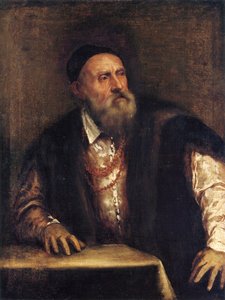
§ 4L'artista

Tiziano Vecellio

Tiziano Vecellio

1490 - 1576, Italia

Informazioni rapide su Tiziano Vecellio

  • Artistic Movement Or Style: Venetian painting
  • Artists Who Influenced This Artist:
    • Giovanni Bellini
    • Giorgione
  • Date Of Birth: c. 1490
  • Date Of Death: 1576
  • Full Name: Tiziano Vecellio
  • Nationality: Italian
  • Notable Artworks:
    • A Man with a Quilted Sleeve
    • The Visitation
    • Bearded Young Man
  • Place Of Birth: Pieve di Cadore, Italia

Biografia dell'artista

Tiziano Vecellio: The Venetian Titan

Tiziano Vecellio, universally known as Titian, stands as a monumental figure of the Italian Renaissance—perhaps its most celebrated colorist and a master who redefined the possibilities of oil painting. Born around 1490 in Pieve di Cadore, nestled amidst the dramatic landscapes of the Venetian Alps, his journey from humble beginnings to international acclaim is a testament to prodigious talent and an unwavering dedication to artistic innovation. The exact date of Titian’s birth remains elusive, debated by scholars, but contemporary sources and his early stylistic development suggest that he emerged into the world sometime between 1488 and 1490.

His father, Gregorio Vecellio, was a military man—a profession that instilled in young Tiziano a disciplined spirit and an appreciation for observation. Lucia, his mother, nurtured him with a love of beauty and fostered his artistic inclinations. Recognizing their sons’ potential, the family arranged for Tiziano and Francesco to apprentice under Sebastiano Zuccato, a renowned mosaicist—a decision that would irrevocably steer them toward a path of artistic excellence.

Venice at the turn of the 16th century was a vibrant hub of commerce, culture, and artistic ferment. Titian’s initial training took place within the workshop of Giovanni Bellini—the most influential painter in Venice at the time—where he absorbed the stylistic precepts of his elder mentor. This formative experience instilled in him a profound understanding of Venetian painting traditions and established the foundation for his own distinctive style.

A Meeting with Giorgione: The Seeds of Innovation

However, it was through contact with Giorgione—a fellow Venetian painter whose work possessed an ethereal poetic quality—that Titian truly embarked on his artistic odyssey. The two artists collaborated on several ambitious projects, including the decoration of the exterior walls of the Fondaco dei Tedeschi—a bustling trading post for German merchants—and their partnership cemented a bond that would shape the trajectory of Venetian art.

Giorgione’s influence is palpable in Titian’s early canvases—characterized by hazy atmospheric effects, muted colors, and an emphasis on capturing mood rather than precise detail. Paintings like *A Man with a Quilted Sleeve* exemplify this stylistic approach, demonstrating Titian’s burgeoning talent for portraiture while simultaneously reflecting Giorgione’s pioneering exploration of perceptual illusion.

From Pastel Dreams to Bold Luminosity

As Titian matured, he gradually distanced himself from Giorgione’s delicate aesthetic and embraced a bolder, more dramatic style—one marked by vibrant hues, expressive brushstrokes, and an unwavering commitment to conveying emotion. *The Visitation of Mary and Elizabeth*, now housed in the Accademia di Venezia, exemplifies this stylistic shift, showcasing Titian’s mastery of composition and color to create a scene brimming with psychological depth.

Throughout his prolific career, Titian consistently pushed the boundaries of artistic convention—experimenting with innovative techniques and exploring diverse subjects ranging from mythological narratives to religious iconography. His portraits became renowned for their uncanny realism—capturing not only physical likeness but also subtle nuances of character and emotion—establishing him as one of the foremost portraitists of his era.

A Legacy Illuminated

Titian’s artistic legacy extends far beyond his lifetime, profoundly influencing generations of painters who followed in his footsteps. His pioneering use of color—particularly his masterful manipulation of tonal harmonies—established a new paradigm for oil painting and inspired artists across Europe to embrace luminous palettes and expressive brushwork.

From Rubens to Rembrandt to Delacroix, Titian’s influence permeated the artistic landscape of the Baroque period and beyond. His paintings continue to captivate audiences today with their breathtaking beauty—a testament to his unparalleled skill as a colorist and a painter—solidifying his place among the titans of Western art history.

§ 5Opere correlate

§ 6Domande

§ 7Cita questa voce

AllPaintingsStore.com, “Tiziano Vecellio, Crowning with Thorns (1572)”, https://allpaintingsstore.com/it/art/titian-crowning-with-thorns-8Y2UCU-en/ArtistReproduction/ (consultato il 10 Ottobre 2026).

§ 8La riproduzione

Riproduzione a olio fatta a mano

Olio su tela dipinto a mano nelle tue dimensioni e con la tua cornice, realizzato su ordinazione dai nostri artisti. ( Passa alle stampe Passa all'immagine digitale)

È specificato a margine del foglio d'ordine; lo stato attuale di tale foglio è il seguente.

Crowning with Thorns

Tecnica di riproduzione

Dimensioni riproduzione

-

Artisti di alto livello

Maggiore dettaglio, finezza e tempi di produzione dedicati

-

Cornice per riproduzione

-

-

Per opere d'arte o riproduzioni con un lato superiore a 105 cm (circa 41 pollici), la cornice verrà spedita in forma di kit smontato. Questo metodo garantisce una consegna sicura e previene danni durante il trasporto.

Montaggio professionale richiesto - non è un prodotto fai-da-te.
Il kit deve essere assemblato e la tela tesa da un esperto cornice professionista, utilizzando colla per legno (non inclusa), una pinza per tendere la tela e morsetti per mantenere i listelli in squadra durante l'asciugatura della colla. Un montaggio errato o una tensione non uniforme della tela possono danneggiare permanentemente l'opera d'arte e non sono coperti dalla nostra garanzia.

  • Tutte le barre in legno massello sono incluse, tagliate con precisione alle dimensioni corrette.

  • Da assemblare con le viti fornite e con la colla per legno per gli incastri degli angoli, che non è inclusa e dovrà essere reperita dal vostro corniceio.

  • Sono necessari strumenti professionali non inclusi: una pinza tendicanvas (tenditore) e dei morsetti per mantenere i listelli in squadra durante l'asciugatura della colla.

Importante:
Gli incastri d'angolo richiedono colla per legno, i listelli devono essere mantenuti in posizione con dei morsetti finché la colla non è completamente asciutta, e il tensionamento della tela sulla cornice assemblata richiede una pinza per tendere la tela. Nessuno di questi strumenti è incluso nel kit. Si prega di consultare un incorniciatore professionista esperto prima di ordinare questa misura.

Didascalia

-

-

Vernice protettiva

Vernice lucida (esalta i colori, protegge da luce e umidità)

-

Personalizza la mia opera

Esempi di personalizzazione: sostituire il volto con una foto del cliente; aggiungere un animale domestico (ad esempio, sostituire un gatto con un cane); inserire un messaggio nascosto nello sfondo; cambiare il paesaggio o gli elementi dello sfondo.

-

Consegna rapida

Consegna in tutto il mondo () in 3/4 settimane anziché nelle normali 5 settimane. (7 Novembre). Nessun compromesso sulla qualità.

-

Spedizione espressa

Spedizione in tutto il mondo () in 5 settimane. (14 Novembre).

Spedizione inclusa

Prezzo finale calcolato

€ 230

Incluso in ogni ordine

  • Spedizione espressa gratuita in tutto il mondo
  • Tela in lino di alta qualità
  • Assicurazione completa sulla spedizione
  • Garanzia di rimborso dei dazi doganali
  • Garanzia di fedeltà cromatica assoluta
  • Politica di reso entro 100 giorni (solo per difetti di fabbricazione)
  • Garanzia di rimborso al 100%
  • Offerta per acquisti multipli
Modulo d'ordine