- Home

- Stampa su tela
- Tiziano Vecellio
- Pentecost

 Anteprima in scala reale
 Condividi
 Condividi
 Dettagli

 Scarica immagine
 Articoli simili
 Radiografia
 Slideshow
Pentecost


 Leggi tutto
Giclée / Stampe d'arte
Stampa giclée o su tela di qualità museale, con produzione rapida e diverse opzioni di finitura. ( Passa alla versione dipinta a mano Passa all'immagine)




P118B $10

P118H $10

P118W $10

P438Z $10

P508JH $12

P508YH $12

P805H $10

P805Z $10

P919BZ $10

P919G $10

P919XJ $10

P959ZH $10

P968JZ $12

W106C $8

W218G $10

W218JH $8

W218Y $10

W307PJ $10

W316G $10

W316PJ $8

W316Y $10

W398PJ $8

W4111J $10

W500HY $15

W500JH $15

W692G $12

W849H $8

W940BG $15

W953PJ $8




Scegli tra le nostre dimensioni predefinite, che rispettano le proporzioni originali dell'opera d'arte.

È possibile inserire dimensioni personalizzate per adattare l'opera a una cornice o a uno spazio specifico. Se la dimensione selezionata non corrisponde alle proporzioni dell'immagine originale, procederemo al ritaglio dell'opera o all'estensione dell'immagine con un bordo specchiato o a tinta unita. Un mockup digitale ti verrà inviato per approvazione prima dell'inizio della produzione.
Si prega di notare che l'anteprima a schermo non riflette il ritaglio o l'estensione effettivi. Solo il mockup mostrerà accuratamente la composizione finale.
Sebbene siano disponibili dimensioni personalizzate, si raccomanda di selezionare una dimensione dall'elenco predefinito per preservare le proporzioni originali.
Consegna in tutto il mondo () in 2 settimane invece delle normali 4/5 settimane. (1 Agosto)

Spedizione espressa gratuita in tutto il mondo

Tela in lino di alta qualità

Assicurazione completa sulla spedizione

Garanzia di rimborso dei dazi doganali

Garanzia di fedeltà cromatica dell'originale

Politica di reso entro 60 giorni (solo per difetti di fabbricazione)

Garanzia di rimborso al 100%

Sconto per acquisti multipli
 L'opzione vetro è disponibile solo per dimensioni inferiori a 110 cm

Pentecost
Giclée / Stampe d'arte
Dimensioni della riproduzione
-


Prezzo totale
$ 64
Descrizione del pezzo
A Symphony of Light and Faith: Exploring Titian’s Pentecost
Tiziano Vecellio, universally recognized as Titian, wasn't merely an artist; he was a transformative force within the Venetian Renaissance—a painter who elevated color to its highest expression and fundamentally reshaped the very language of oil painting. Born around 1490 in Pieve di Cadore, nestled amidst the breathtaking alpine scenery of Veneto, his life’s trajectory embodies unwavering artistic ambition and an unparalleled mastery of technique. While biographical details remain somewhat elusive, records indicate he was one of several children born to Gregorio Vecellio, a military officer, and Lucia—a familial circumstance that foreshadowed a destiny destined for extraordinary achievement. Recognizing their sons' innate talent, the Vecellio family strategically secured apprenticeships with accomplished artists in Venice—a decision that would propel young Titian and Francesco onto an artistic path of unparalleled significance. Venice during this pivotal period was a crucible of cultural dynamism, fueled by burgeoning trade routes and brimming with intellectual curiosity. This environment proved fertile ground for Titian’s artistic development, allowing him to hone his skills amidst the vibrant tapestry of Venetian art life. His early training encompassed fresco painting—a technique demanding meticulous precision and blending pigments directly onto wet plaster—providing him with invaluable experience in capturing texture and luminosity. However, it was his embrace of oil paint that truly cemented his legacy as a revolutionary innovator. Unlike tempera, which relied on brittle pigments and limited color palettes, oil offered artists unprecedented flexibility and depth of tonal range, enabling them to achieve effects previously unattainable.Composition and Technique: Mastering the Illusion of Depth
Titian’s “The Descent of the Holy Ghost,” completed in 1545, exemplifies his mastery of compositional principles and technical prowess. The painting depicts a scene from Christian scripture—the Pentecost—where the Holy Spirit descends upon the Apostles as fiery tongues of light illuminate the chapel interior. Titian skillfully employs pyramidal composition, anchoring the central figure – a woman draped in sumptuous robes – at its apex, drawing the viewer’s gaze upwards towards the radiant divine illumination. This upward thrust reinforces the spiritual grandeur of the event and underscores its importance within Christian iconography. Furthermore, Titian’s meticulous attention to detail is evident throughout the canvas. He painstakingly renders drapery folds with subtle gradations of color and texture, creating a convincing illusion of three-dimensionality that transcends mere representation. The artist's masterful use of chiaroscuro—the dramatic interplay between light and shadow—amplifies the emotional impact of the scene, highlighting the woman’s serene countenance and emphasizing the solemn reverence of the apostles.Symbolism: Light, Faith, and Divine Revelation
Beyond its technical brilliance, “The Descent of the Holy Ghost” resonates deeply with symbolic meaning. The radiant light emanating from above symbolizes divine grace and illumination—representing God's intervention in human affairs and illuminating the Apostles’ faith. The woman at the center embodies purity and piety, serving as a conduit for divine blessing. Her posture suggests prayerful contemplation, inviting viewers to contemplate the transformative power of spiritual devotion. The architectural setting—a chapel adorned with intricate coffered ceilings—further reinforces the sacred atmosphere, grounding the scene in Christian tradition and elevating it to a realm of transcendent beauty. The halos surrounding the Apostles’ heads signify their holiness and proclaim their status as messengers of God—affirming the central narrative of Pentecost as an event of profound theological significance.Emotional Impact: Capturing Sacred Reverence
Titian's ability to convey emotion is palpable in “The Descent of the Holy Ghost.” The painting captures a moment of sublime awe and reverence—a feeling conveyed through subtle gestures, facial expressions, and the luminous quality of the light itself. It’s not merely a depiction of an event; it’s an experience rendered visually—an invitation to contemplate the mysteries of faith and divine revelation. The warmth of the color palette contributes to the painting's emotional resonance, fostering a sense of tranquility and spiritual contemplation. Viewing this masterpiece evokes feelings of reverence and wonder—a testament to Titian’s unparalleled skill in translating theological concepts into visual splendor.A Legacy Enduring Through Reproduction
Today, reproductions of “The Descent of the Holy Ghost” continue to inspire artists and collectors alike. AllPaintingsStore.com offers exceptionally detailed prints that faithfully capture the painting's luminosity and textural richness—allowing admirers worldwide to experience Titian’s artistic genius firsthand. Explore more of Titian’s captivating oeuvre at AllPaintingsStore.com, where you can discover stunning reproductions of “Madonna and Child” and “Flora”—each piece embodying the artist’s unwavering commitment to capturing beauty and conveying profound spiritual emotion.Opere correlate




Biografia dell'artista
Tiziano Vecellio: The Venetian Titan
Tiziano Vecellio, universally known as Titian, stands as a monumental figure of the Italian Renaissance—perhaps its most celebrated colorist and a master who redefined the possibilities of oil painting. Born around 1490 in Pieve di Cadore, nestled amidst the dramatic landscapes of the Venetian Alps, his journey from humble beginnings to international acclaim is a testament to prodigious talent and an unwavering dedication to artistic innovation. The exact date of Titian’s birth remains elusive, debated by scholars, but contemporary sources and his early stylistic development suggest that he emerged into the world sometime between 1488 and 1490.
His father, Gregorio Vecellio, was a military man—a profession that instilled in young Tiziano a disciplined spirit and an appreciation for observation. Lucia, his mother, nurtured him with a love of beauty and fostered his artistic inclinations. Recognizing their sons’ potential, the family arranged for Tiziano and Francesco to apprentice under Sebastiano Zuccato, a renowned mosaicist—a decision that would irrevocably steer them toward a path of artistic excellence.
Venice at the turn of the 16th century was a vibrant hub of commerce, culture, and artistic ferment. Titian’s initial training took place within the workshop of Giovanni Bellini—the most influential painter in Venice at the time—where he absorbed the stylistic precepts of his elder mentor. This formative experience instilled in him a profound understanding of Venetian painting traditions and established the foundation for his own distinctive style.
A Meeting with Giorgione: The Seeds of Innovation
However, it was through contact with Giorgione—a fellow Venetian painter whose work possessed an ethereal poetic quality—that Titian truly embarked on his artistic odyssey. The two artists collaborated on several ambitious projects, including the decoration of the exterior walls of the Fondaco dei Tedeschi—a bustling trading post for German merchants—and their partnership cemented a bond that would shape the trajectory of Venetian art.
Giorgione’s influence is palpable in Titian’s early canvases—characterized by hazy atmospheric effects, muted colors, and an emphasis on capturing mood rather than precise detail. Paintings like *A Man with a Quilted Sleeve* exemplify this stylistic approach, demonstrating Titian’s burgeoning talent for portraiture while simultaneously reflecting Giorgione’s pioneering exploration of perceptual illusion.
From Pastel Dreams to Bold Luminosity
As Titian matured, he gradually distanced himself from Giorgione’s delicate aesthetic and embraced a bolder, more dramatic style—one marked by vibrant hues, expressive brushstrokes, and an unwavering commitment to conveying emotion. *The Visitation of Mary and Elizabeth*, now housed in the Accademia di Venezia, exemplifies this stylistic shift, showcasing Titian’s mastery of composition and color to create a scene brimming with psychological depth.
Throughout his prolific career, Titian consistently pushed the boundaries of artistic convention—experimenting with innovative techniques and exploring diverse subjects ranging from mythological narratives to religious iconography. His portraits became renowned for their uncanny realism—capturing not only physical likeness but also subtle nuances of character and emotion—establishing him as one of the foremost portraitists of his era.
A Legacy Illuminated
Titian’s artistic legacy extends far beyond his lifetime, profoundly influencing generations of painters who followed in his footsteps. His pioneering use of color—particularly his masterful manipulation of tonal harmonies—established a new paradigm for oil painting and inspired artists across Europe to embrace luminous palettes and expressive brushwork.
From Rubens to Rembrandt to Delacroix, Titian’s influence permeated the artistic landscape of the Baroque period and beyond. His paintings continue to captivate audiences today with their breathtaking beauty—a testament to his unparalleled skill as a colorist and a painter—solidifying his place among the titans of Western art history.
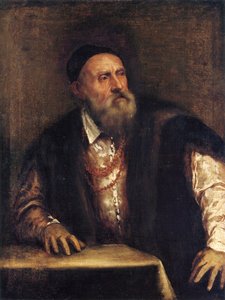
Tiziano Vecellio
1490 - 1576 , Italia
Informazioni rapide
- Artistic Movement Or Style: Venetian painting
- Artists Who Influenced This Artist:
- Giovanni Bellini
- Giorgione
- Date Of Birth: c. 1490
- Date Of Death: 1576
- Full Name: Tiziano Vecellio
- Nationality: Italian
- Notable Artworks:
- A Man with a Quilted Sleeve
- The Visitation
- Bearded Young Man
- Place Of Birth: Pieve di Cadore, Italia
Articoli correlati
I Capolavori dell'Alte Pinakothek: 25 Opere Indimenticabili per la Tua Casa
Esplora i 25 capolavori dell'Alte Pinakothek di Monaco! Scopri la storia, gli artisti (Leonardo, Raffaello, Rembrandt) e le emozioni dietro dipinti rinascimentali e barocchi iconici. Trova riproduzioni artistiche di alta qualità per decorare casa con AllPaintingsStore.com.

Botticelli: I 25 Capolavori Immortali dell'Arte Rinascimentale | AllPaintingsStore
Esplora i 25 capolavori di Sandro Botticelli, l'icona del Rinascimento italiano. Scopri la storia, il simbolismo e le tecniche dietro opere come 'La Nascita di Venere'. Stampe d'arte di alta qualità su AllPaintingsStore.com per decorare casa con bellezza senza tempo.
I 10 Capolavori del Rinascimento Iniziale che Hanno Definito l'Arte: Scopri i Maestri
Esplora i 10 capolavori del Rinascimento italiano: Leonardo, Michelangelo, Raffaello e altri maestri. Scopri la storia, il simbolismo e le tecniche di queste opere iconiche. Trova riproduzioni d'arte di alta qualità su !
I 25 Capolavori del Metropolitan Museum di New York: Arte, Storia e Decorazioni Raffinate
Esplora i 25 capolavori del Metropolitan Museum di New York! Scopri la storia, gli artisti (Van Gogh, Monet, Rembrandt) e le emozioni dietro dipinti iconici. Trova riproduzioni artistiche di alta qualità per decorare casa con stile su AllPaintingsStore.com.

I 10 Capolavori a Olio su Tavola che Hanno Rivoluzionato l'Arte | AllPaintingsStore
Esplora i 10 capolavori a olio su tavola che hanno segnato la storia dell'arte! Da Van Eyck a Monet, scopri le storie e le tecniche di artisti iconici. Trova riproduzioni di alta qualità per arredare con stile: colori, emozioni e bellezza senza tempo ti aspettano su AllPaintingsStore.com.