Garanzia soddisfatti o rimborsati · 100 giorni Spedizione gratuita in tutto il mondo
449.564opere d'arte 30.613artisti 4.660musei 32Lingue
Voce di catalogo

Pietà

Olio su tela.

Fig. 1. Tiziano Vecellio, Pietà. Mostrato come la riproduzione specificata: , .

§ 1Dati del catalogo

§ 2Astratto

Descrizione del reperto

Esplora la toccante 'Pietà' di Tiziano, un capolavoro del Rinascimento veneziano. Scopri pennellate audaci e profondità emotiva in questo dipinto iconico: una testimonianza del genio di Tiziano Vecellio.

Biografia dell'artista

Tiziano Vecellio, il gigante della pittura veneziana e del Rinascimento italiano, rivoluzionò l'uso del colore con opere immortali come Venere Urbino e la Scuola Grande dei Maestri.

§ 3Commento

A Vision of Sorrow and Grace

In the twilight of his illustrious career, Tiziano Vecellio, known eternally as Titian, delivered a profound testament to human suffering and divine compassion through his masterpiece, Pieta. Completed between 1575 and 1576, this monumental work serves as a cornerstone of the Venetian Baroque, capturing a moment of intense theological contemplation. The scene is not merely a depiction of death, but a complex dialogue between grief and grace. As we gaze upon the canvas, we find Mary Magdalene cradling the lifeless body of Christ, her sorrow palpable through the heavy, atmospheric textures that define Titian’s late style. Beside them stands Nicodemus—a figure widely believed to be a poignant self-portrait of the aging master himself—confronting the divine majesty and his own mortality with a quiet, somber dignity.

The composition is a marvel of structural harmony and emotional depth. Titian employs a triangular arrangement involving Mary Magdalene, the torso of Christ, and Nicodemus to provide a sense of stability amidst the surrounding chaos of grief. This geometric balance is subtly disrupted by the presence of Saint Helena, adding layers of familial and spiritual complexity to the narrative. The setting itself feels ancient and weathered, a partially ruined temple or tomb that evokes the passage of time and the decay of earthly glory. Through this architectural backdrop, Titian creates a sense of claustrophobia that draws the viewer into the intimate circle of mourners, making the experience of the painting feel deeply personal and inescapable.

The Mastery of Light and Color

To behold the Pieta is to witness the revolutionary evolution of Venetian technique. Moving away from the crisp, linear precision of the early Renaissance, Titian embraces a revolutionary approach characterized by atmospheric haze and thick, expressive impasto. The surface of the painting is alive with texture; the flesh of Christ and the rugged stone of the shrine are rendered with bold brushstrokes that catch the light, creating an illusion of three-dimensional presence. This technique, known as chiaroscuro, utilizes stark contrasts between deep shadows and luminous highlights to heighten the theatricality of the scene, casting a dramatic spotlight on the central tragedy.

The color palette is a masterclass in emotional resonance. Eschewing bright, distracting hues, Titian relies on a sophisticated arrangement of earthy browns, ochres, and deep reds, punctuated by subtle glints of gold and ethereal pale blues. These muted tones work in unison to evoke a sense of solemnity and mourning. The way the light seems to dissolve the edges of the figures into the surrounding gloom creates an otherworldly, spiritual atmosphere, as if the scene is emerging from a divine mist. For the collector or the interior designer, this painting offers more than just visual beauty; it provides a profound emotional anchor, bringing a sense of historical weight and contemplative stillness to any space.

An Enduring Legacy for the Discerning Collector

The Pieta remains one of the most moving achievements in Western art history. It is a work that speaks to the universal experience of loss while simultaneously pointing toward the hope of resurrection. Because it was one of Titian's final works—left unfinished at his death and completed with great care by Palma Giovane—it carries an inherent intimacy, a sense of a master pouring his final breaths into the canvas. This raw, unshielded emotion makes the piece incredibly captivating for those who appreciate art that transcends mere decoration to become a window into the human soul.

For those seeking to adorn a curated collection or a sophisticated interior with a high-quality reproduction, this work offers unparalleled inspiration. A hand-painted rendition of such a masterpiece allows the dramatic interplay of light and the rich, somber textures to breathe within a modern setting. It serves as a conversation piece that invites reflection, bringing the grandeur of the Venetian Baroque into the contemporary home and ensuring that the profound legacy of Titian continues to inspire awe for generations to come.

Domande e risposte

È disponibile una presentazione a diapositiva per "Pietà" di Tiziano Vecellio?

Il diaporama di "Pietà" è disponibile nella pagina Slideshow dell'opera.

Quale tonalità dominante caratterizza "Pietà" di Tiziano Vecellio?

Una tonalità Spettro dal verde al viola attraversa l'opera "Pietà" di Tiziano Vecellio.

È disponibile il download di "Pietà"?

È disponibile il download per "Pietà": la pagina Scarica l'opera dell'opera offre download di un'immagine digitale ad alta risoluzione.
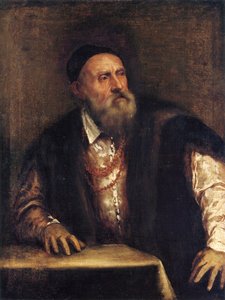
§ 4L'artista

Tiziano Vecellio

Tiziano Vecellio

1490 - 1576, Italia

Informazioni rapide su Tiziano Vecellio

  • Artistic Movement Or Style: Venetian painting
  • Artists Who Influenced This Artist:
    • Giovanni Bellini
    • Giorgione
  • Date Of Birth: c. 1490
  • Date Of Death: 1576
  • Full Name: Tiziano Vecellio
  • Nationality: Italian
  • Notable Artworks:
    • A Man with a Quilted Sleeve
    • The Visitation
    • Bearded Young Man
  • Place Of Birth: Pieve di Cadore, Italia

Biografia dell'artista

Tiziano Vecellio: The Venetian Titan

Tiziano Vecellio, universally known as Titian, stands as a monumental figure of the Italian Renaissance—perhaps its most celebrated colorist and a master who redefined the possibilities of oil painting. Born around 1490 in Pieve di Cadore, nestled amidst the dramatic landscapes of the Venetian Alps, his journey from humble beginnings to international acclaim is a testament to prodigious talent and an unwavering dedication to artistic innovation. The exact date of Titian’s birth remains elusive, debated by scholars, but contemporary sources and his early stylistic development suggest that he emerged into the world sometime between 1488 and 1490.

His father, Gregorio Vecellio, was a military man—a profession that instilled in young Tiziano a disciplined spirit and an appreciation for observation. Lucia, his mother, nurtured him with a love of beauty and fostered his artistic inclinations. Recognizing their sons’ potential, the family arranged for Tiziano and Francesco to apprentice under Sebastiano Zuccato, a renowned mosaicist—a decision that would irrevocably steer them toward a path of artistic excellence.

Venice at the turn of the 16th century was a vibrant hub of commerce, culture, and artistic ferment. Titian’s initial training took place within the workshop of Giovanni Bellini—the most influential painter in Venice at the time—where he absorbed the stylistic precepts of his elder mentor. This formative experience instilled in him a profound understanding of Venetian painting traditions and established the foundation for his own distinctive style.

A Meeting with Giorgione: The Seeds of Innovation

However, it was through contact with Giorgione—a fellow Venetian painter whose work possessed an ethereal poetic quality—that Titian truly embarked on his artistic odyssey. The two artists collaborated on several ambitious projects, including the decoration of the exterior walls of the Fondaco dei Tedeschi—a bustling trading post for German merchants—and their partnership cemented a bond that would shape the trajectory of Venetian art.

Giorgione’s influence is palpable in Titian’s early canvases—characterized by hazy atmospheric effects, muted colors, and an emphasis on capturing mood rather than precise detail. Paintings like *A Man with a Quilted Sleeve* exemplify this stylistic approach, demonstrating Titian’s burgeoning talent for portraiture while simultaneously reflecting Giorgione’s pioneering exploration of perceptual illusion.

From Pastel Dreams to Bold Luminosity

As Titian matured, he gradually distanced himself from Giorgione’s delicate aesthetic and embraced a bolder, more dramatic style—one marked by vibrant hues, expressive brushstrokes, and an unwavering commitment to conveying emotion. *The Visitation of Mary and Elizabeth*, now housed in the Accademia di Venezia, exemplifies this stylistic shift, showcasing Titian’s mastery of composition and color to create a scene brimming with psychological depth.

Throughout his prolific career, Titian consistently pushed the boundaries of artistic convention—experimenting with innovative techniques and exploring diverse subjects ranging from mythological narratives to religious iconography. His portraits became renowned for their uncanny realism—capturing not only physical likeness but also subtle nuances of character and emotion—establishing him as one of the foremost portraitists of his era.

A Legacy Illuminated

Titian’s artistic legacy extends far beyond his lifetime, profoundly influencing generations of painters who followed in his footsteps. His pioneering use of color—particularly his masterful manipulation of tonal harmonies—established a new paradigm for oil painting and inspired artists across Europe to embrace luminous palettes and expressive brushwork.

From Rubens to Rembrandt to Delacroix, Titian’s influence permeated the artistic landscape of the Baroque period and beyond. His paintings continue to captivate audiences today with their breathtaking beauty—a testament to his unparalleled skill as a colorist and a painter—solidifying his place among the titans of Western art history.

§ 5Opere correlate

§ 6Domande

Informazioni rapide

  • Tecnica: Olio su tela
  • Movimento: Barocco
  • Anno: 1575-1576
  • Influenze: Giorgione
  • Luogo: Gallerie dell'Accademia, Venezia

§ 7Cita questa voce

AllPaintingsStore.com, “Tiziano Vecellio, Pietà”, https://allpaintingsstore.com/it/art/titian-pieta-7ykg36-it/ (consultato il 7 Ottobre 2026).

§ 8La riproduzione

Riproduzione a olio fatta a mano

Olio su tela dipinto a mano nelle tue dimensioni e con la tua cornice, realizzato su ordinazione dai nostri artisti. ( Passa alle stampe Passa all'immagine digitale)

È specificato a margine del foglio d'ordine; lo stato attuale di tale foglio è il seguente.

Pietà

Tecnica di riproduzione

Dimensioni riproduzione

-

Artisti di alto livello

Maggiore dettaglio, finezza e tempi di produzione dedicati

-

Cornice per riproduzione

-

-

Per opere d'arte o riproduzioni con un lato superiore a 105 cm (circa 41 pollici), la cornice verrà spedita in forma di kit smontato. Questo metodo garantisce una consegna sicura e previene danni durante il trasporto.

Montaggio professionale richiesto - non è un prodotto fai-da-te.
Il kit deve essere assemblato e la tela tesa da un esperto cornice professionista, utilizzando colla per legno (non inclusa), una pinza per tendere la tela e morsetti per mantenere i listelli in squadra durante l'asciugatura della colla. Un montaggio errato o una tensione non uniforme della tela possono danneggiare permanentemente l'opera d'arte e non sono coperti dalla nostra garanzia.

  • Tutte le barre in legno massello sono incluse, tagliate con precisione alle dimensioni corrette.

  • Da assemblare con le viti fornite e con la colla per legno per gli incastri degli angoli, che non è inclusa e dovrà essere reperita dal vostro corniceio.

  • Sono necessari strumenti professionali non inclusi: una pinza tendicanvas (tenditore) e dei morsetti per mantenere i listelli in squadra durante l'asciugatura della colla.

Importante:
Gli incastri d'angolo richiedono colla per legno, i listelli devono essere mantenuti in posizione con dei morsetti finché la colla non è completamente asciutta, e il tensionamento della tela sulla cornice assemblata richiede una pinza per tendere la tela. Nessuno di questi strumenti è incluso nel kit. Si prega di consultare un incorniciatore professionista esperto prima di ordinare questa misura.

Didascalia

-

-

Vernice protettiva

Vernice lucida (esalta i colori, protegge da luce e umidità)

-

Personalizza la mia opera

Esempi di personalizzazione: sostituire il volto con una foto del cliente; aggiungere un animale domestico (ad esempio, sostituire un gatto con un cane); inserire un messaggio nascosto nello sfondo; cambiare il paesaggio o gli elementi dello sfondo.

-

Consegna rapida

Consegna in tutto il mondo () in 3/4 settimane anziché nelle normali 5 settimane. (4 Novembre). Nessun compromesso sulla qualità.

-

Spedizione espressa

Spedizione in tutto il mondo () in 5 settimane. (11 Novembre).

Spedizione inclusa

Prezzo finale calcolato

€ 340

Incluso in ogni ordine

  • Spedizione espressa gratuita in tutto il mondo
  • Tela in lino di alta qualità
  • Assicurazione completa sulla spedizione
  • Garanzia di rimborso dei dazi doganali
  • Garanzia di fedeltà cromatica assoluta
  • Politica di reso entro 100 giorni (solo per difetti di fabbricazione)
  • Garanzia di rimborso al 100%
  • Offerta per acquisti multipli
Modulo d'ordine