


 Anteprima in scala reale
 Invia
Invia Condividi
 Dettagli opera
 Guida
Guida

 Scarica
 Simili
 Radiografia
 Slideshow
 Statistiche
The bathing machine
 Espandi i dettagli
Giclée / Stampe d'arte
Stampa giclée o su tela di qualità museale, con produzione rapida e diverse opzioni di finitura. ( Acquista il dipinto realizzato a mano Passa all'immagine digitale)




































Scegli tra le nostre dimensioni predefinite, che rispettano le proporzioni originali dell'opera d'arte.

Inserisci la larghezza e l'altezza desiderate, per adattarle alla tua cornice o alla tua parete. Una stampa può essere solo ritagliata, mai resa più grande dell'immagine originale; pertanto, un formato con una forma differente comporterà la perdita di una parte dell'opera. Ti invieremo un mockup digitale da approvare prima di procedere con la stampa. L'immagine mostrata in questa pagina non rappresenta il ritaglio reale — solo il mockup lo mostra.
Consegna in tutto il mondo () in 2 settimane invece delle normali 4/5 settimane. (28 Ottobre)

Spedizione espressa gratuita in tutto il mondo

Tela in lino di alta qualità

Assicurazione completa sulla spedizione

Garanzia di rimborso dei dazi doganali

Garanzia di fedeltà cromatica assoluta

Politica di reso entro 100 giorni (solo per difetti di fabbricazione)

Garanzia di rimborso al 100%

Offerta per acquisti multipli
 L'opzione vetro è disponibile solo per dimensioni inferiori a 110 cm

The bathing machine
Giclée / Stampe d'arte
Dimensioni riproduzione
-


Prezzo finale calcolato
€ 56
Opere simili


Biografia dell'artista
William Francis Freelove: A Pioneer of Zoological Illustration
William Francis Freelove (1840 – 1920) stands as a remarkable figure in the annals of British art history, primarily recognized for his meticulous and influential contributions to zoological illustration. Born in Oxford, England, Freelove’s artistic journey began with a formal education at Marlborough College before pursuing studies at Ruskin School of Drawing & Sculpture, where he honed his skills under the tutelage of John Ruskin—a formative influence that instilled within him a profound appreciation for natural beauty and detailed observation. Freelove swiftly established himself as a prolific illustrator, specializing in depictions of animals – particularly birds – for scientific publications. His work graced journals like *The Zoological Record*, *Nature*, and *Science*, cementing his reputation as one of the foremost artists documenting the animal kingdom during the Victorian era. Unlike many contemporaries who favored idealized representations, Freelove championed realism, painstakingly capturing anatomical accuracy alongside subtle nuances of plumage coloration and behavior. This commitment to scientific rigor elevated his illustrations beyond mere decoration; they served as invaluable tools for biologists studying species identification and distribution. His artistic style was characterized by a masterful blend of watercolor techniques—often incorporating grisaille (grey wash) underpainting—that achieved remarkable tonal depth and luminosity. Freelove’s meticulous attention to detail extended beyond color palettes, encompassing precise rendering of feathers, musculature, and skeletal structures. He meticulously studied specimens brought back from expeditions around the globe, painstakingly recreating their appearance with unwavering precision. This dedication to scientific accuracy was not merely a stylistic choice but reflected his deep conviction that art could illuminate understanding of the natural world. Freelove’s most celebrated achievement resides in his collaboration with Sir William Dunn School of Pathology, where he produced stunning illustrations for textbooks detailing immunological research—specifically concerning penicillin's discovery. These images powerfully conveyed complex scientific concepts through visual storytelling, demonstrating Freelove’s ability to communicate intricate information effectively and aesthetically. His work continues to inspire artists and scientists alike, serving as a testament to the enduring power of artistic observation and representation. Freelove’s legacy extends beyond his individual artworks; he championed the importance of combining art and science—a philosophy that resonated deeply with Ruskin's teachings. He firmly believed that artistic endeavor should be guided by intellectual curiosity and underpinned by careful study, resulting in representations that were both beautiful and informative. Freelove remains a pivotal figure in Victorian zoological illustration, whose unwavering commitment to realism and scientific rigor continues to shape our understanding of art’s role in advancing knowledge.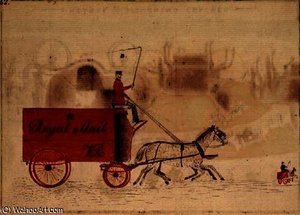
William Francis Freelove
1840 - 1920 , United Kingdom
Dettagli rapidi
- Full Name: William Francis Freelove
- Nationality: British
- Date Of Birth: 1840
- Date Of Death: 1920
- Place Of Birth: United Kingdom
- Notable Artworks:
- Stone & Marble Cart
- The Furniture Van
- Artistic Movement Or Style: French Mannerism
- Artists Who Influenced This Artist: ['Jean-Baptiste Camille Corot']
- Artists Or Movements Influenced By This Artist: ['Romanticism']

