The Enigmatic Mariner: Unveiling the World of Joseph Marshall
Joseph Marshall, a remarkably talented and tragically short-lived 18th-century English painter, remains an intriguing figure in the annals of maritime art. Born around 1755 – though precise dates are elusive – and passing away in 1779, his brief career produced a concentrated body of work that offers a unique window into the naval life and artistic sensibilities of the late Georgian era. Marshall’s paintings aren't merely depictions of ships; they are imbued with a palpable sense of drama, realism, and an almost unsettling intensity, reflecting the turbulent times in which he lived and the subject matter he chose to portray. His work is characterized by meticulous detail, particularly in rendering fabrics, rigging, and the textures of weathered wood – hallmarks of a painter deeply invested in capturing authentic representation.Early Life and Influences: A Shadowy Beginning
Information about Marshall’s early life is remarkably sparse, shrouded in the mists of historical record. He appears to have emerged from relative obscurity, with little documented biographical detail beyond his place of birth – likely within England. The lack of a comprehensive biography fuels speculation regarding his artistic training and influences. While he undoubtedly possessed considerable skill, it's unclear if he received formal instruction or apprenticed under a recognized master. Some scholars suggest that Marshall’s style may have been influenced by the Dutch Golden Age painters, particularly their masterful use of light and shadow, as well as their penchant for dramatic compositions. The influence of contemporary naval art is also evident; Marshall clearly studied the works of his peers, absorbing techniques and stylistic conventions prevalent in the burgeoning field of maritime painting. Notably, he seems to have been a keen observer of the sea itself, spending considerable time on or near coastal waters, which undoubtedly informed his artistic vision.The HMS Ship Illustrations: A Showcase of Naval Precision
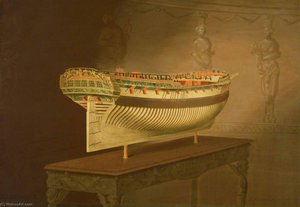
Marshall’s most celebrated works consist of meticulously detailed illustrations of His Majesty's ships – particularly those belonging to the Royal Navy. These paintings are not romanticized fantasies but rather pragmatic representations of naval vessels, capturing their size, complexity, and operational readiness. The HMS ‘Kingfisher’, a vibrant oil painting from 1775, exemplifies this style perfectly. The level of detail is astonishing; every rope, plank, and sail is rendered with painstaking accuracy. Marshall’s ability to convey the sheer scale of these warships – behemoths of timber and canvas – is truly remarkable. Beyond mere documentation, however, there's a sense of dynamism in these paintings—a feeling that the ships are poised for action, ready to engage in battle or navigate treacherous waters. The HMS ‘Enterprize’, another significant work, further demonstrates Marshall’s skill in depicting naval life, showcasing the uniforms and equipment of the sailors aboard.A Tragic Interruption: The Mystery of His Demise
Perhaps the most poignant aspect of Marshall's story is the abruptness of his death at the age of just 24. Records indicate he succumbed to illness in 1779, but the precise cause remains a mystery. Rumors circulated that he had been involved in a naval dispute or perhaps suffered from a debilitating ailment. The lack of definitive information only adds to the aura of intrigue surrounding this talented artist. His premature death cut short a promising career, leaving behind a relatively small body of work—a testament to his skill and a poignant reminder of an artistic life tragically curtailed.Legacy and Historical Significance
Despite its brevity, Joseph Marshall’s contribution to maritime art is significant. He stands as a skilled practitioner of the genre, capturing the essence of naval life with remarkable precision and dramatic flair. His paintings offer valuable insights into the shipbuilding techniques, naval practices, and social dynamics of 18th-century Britain. Furthermore, his work serves as a reminder of the countless unknown artists who contributed to the rich tapestry of art history—individuals whose talents were perhaps overshadowed by circumstance or simply lost to time. The rediscovery and appreciation of Marshall’s paintings today allows us to connect with a bygone era and gain a deeper understanding of the world that shaped these remarkable ships and their crews. His legacy endures, not through grand monuments or widespread fame, but through the enduring beauty and historical value of his meticulously rendered maritime scenes.Domande e risposte
Come posso trovare le opere di Joseph Marshall raggruppate per una specifica palette cromatica?
Le opere di Joseph Marshall possono essere esplorate per palette cromatica nella pagina Per palette di colori dell'artista.
Come si è evoluta l'arte di Joseph Marshall nel tempo?
Un resoconto cronologico delle opere di Joseph Marshall è disponibile nella pagina Cronologia artistica dell'artista, dove le opere sono presentate in ordine di creazione, capitolo dopo capitolo.
Dove posso esplorare le opere di Joseph Marshall suddivise per soggetto?
Le opere di Joseph Marshall possono essere esplorate per soggetto nella pagina Catalogo per soggetti dell'artista.