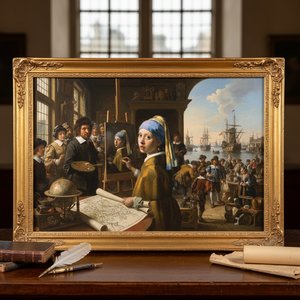
The Enigmatic Brush of Martin Palin
Martin Palin remains a figure shrouded in the mists of art history, an 17th-century painter whose life details are frustratingly sparse. What we *do* know is gleaned primarily from the works attributed to him – portraits that offer tantalizing glimpses into the world of Dutch colonial power and the burgeoning artistic scene of the period. He was active during a time when portraiture wasn’t merely about capturing likeness, but also about conveying status, wealth, and moral character. Palin appears to have been particularly adept at this nuanced form of visual storytelling, though his biography resists easy categorization. It is believed he worked in or travelled extensively through the Dutch East Indies, specifically Batavia (modern-day Jakarta), a bustling hub of trade and cultural exchange. This geographical context profoundly shaped his artistic output, imbuing it with an exoticism that set it apart from more conventional European portraiture.A Portraitist of Power: Style and Technique
Palin’s style is characterized by a remarkable realism tempered with a subtle elegance. His brushwork isn't flamboyant or overtly expressive; instead, he favored meticulous detail in rendering fabrics, jewelry, and the intricate patterns of clothing – hallmarks of affluence and social standing. He possessed an exceptional skill for capturing the textures of skin, conveying both physical presence and psychological depth. The portraits attributed to him often feature sitters posed against dark, neutral backgrounds, which serve to accentuate their features and highlight the richness of their attire. Light plays a crucial role in his compositions, illuminating faces and drawing attention to key details like hands or symbolic objects. His palette tends towards warm earth tones – ochres, browns, and reds – creating an atmosphere of dignified solemnity. While definitively attributing works to Palin remains challenging due to the limited documentation, stylistic similarities suggest a consistent hand across several portraits depicting high-ranking officials of the Dutch East India Company and their families.The Van Goens Portrait: A Defining Work
Perhaps the most well-known work associated with Martin Palin is the *Portrait of Rycklof van Goens, Governor-General*. This painting exemplifies his mastery of portraiture and provides valuable insight into the life of a prominent figure in Dutch colonial history. Van Goens, a powerful administrator who significantly expanded the Company’s influence in Asia, is depicted as a man of authority and gravitas. The details are striking: the elaborate lace collar, the richly embroidered coat, and the stern expression on his face all convey a sense of power and control. The portrait isn't simply a representation of Van Goens; it’s a carefully constructed image designed to project an aura of legitimacy and dominance. The inclusion of specific objects within the composition – perhaps symbols related to his office or personal beliefs – further enhances this symbolic weight, though their precise meanings remain open to interpretation.Influences and Historical Context
Pinpointing Palin’s artistic influences is a complex undertaking. He likely drew inspiration from Dutch masters of the 17th century, such as Rembrandt van Rijn and Frans Hals, whose emphasis on realism and psychological insight resonated throughout Europe. However, his work also reveals an awareness of local Indonesian artistic traditions, particularly in the use of color and pattern. The cultural exchange inherent in Batavia’s cosmopolitan environment undoubtedly played a role in shaping his aesthetic sensibility.- The Dutch Golden Age provided a fertile ground for portraiture.
- The rise of mercantilism fueled demand for images that reflected wealth and status.
- Batavia's unique cultural landscape fostered artistic innovation.
Legacy and Ongoing Research
Despite the limited biographical information, Martin Palin’s work continues to captivate art historians and collectors alike. His portraits offer a rare glimpse into the lives of those who shaped the Dutch colonial world, providing valuable insights into the social, political, and cultural dynamics of the period. Ongoing research focuses on definitively attributing works to him, analyzing his techniques in greater detail, and uncovering new information about his life and artistic training. As more scholarship emerges, we can expect a fuller understanding of this enigmatic painter and his place within the broader history of art. His legacy lies not only in the beauty and technical skill of his portraits but also in their ability to transport us back in time, allowing us to connect with the individuals who inhabited a distant and fascinating world.Domande e risposte
Posso sfogliare le opere di Martin Palin in base all'umore?
Le opere di Martin Palin possono essere esplorate per emozione nella pagina Spazi d'atmosfera, dove le opere sono raccolte in base al mood che trasmettono.
Esiste una linea del tempo delle opere di Martin Palin?
È disponibile una cronologia delle opere di Martin Palin: la pagina Cronologia delle opere dell'artista presenta le opere in ordine cronologico.
Dove si possono trovare le opere di Martin Palin raggruppate per parole chiave?
Per trovare le opere di Martin Palin relative a un tema specifico, consulta la pagina Per parole chiave dell'artista, che raggruppa le opere per parola chiave.