


1


10月 2026 更新 · 当サイトの人気スコア(各作品の検索数、閲覧数、注文数)に基づくランキング · 24点の Julio Gonzálezの作品がカタログにあります
クイック回答
Julio Gonzálezの最も有名な作品はMaternity (1906)で、オリジナルはバルセロナのカタルーニャ国立美術館に所蔵されています。 Personnage à la Main Percée II 16-2 38 (1936)とEtude pour Danseuse à la Palette (1934)は、2と3です。 当カタログに含まれるJulio Gonzálezの全24作品の中から、特に有名な23作品を、制作年と所蔵美術館とともにランキング形式でご紹介します。これらを参考に、ご注文する絵画をお選びください。


The artwork titled Head Shouting is a creation by the artist Julio González. It is a work that carries many names, known in various contexts as Cap cridant or Tête de Montserrat criant. In other records, it appears as Head of the Montserrat, II or Head of Screaming Montserrat. The subject is a peasant woman with a face frozen in terror, a figure often identified as a Catalan Peasant Mother.


このページに掲載されている絵画を最も多く所蔵している 5 の美術館
| 美術館 | 都市 | Julio Gonzálezの作品 | このリストの絵画 |
|---|---|---|---|
 Museu Coleção Berardo |
リスボン | 7 | Personnage à la Main Percée II 16-2 38, Etude pour Danseuse à la Palette, Femme Etrange |
 レジーナ・ソフィア国立芸術センター |
マドリード | 6 | Portrait de Marie-Thérèse (Portrait of Marie-Thérèse), Nature morte aux oignons (Still Life with Onions), Paysanne assise (Seated Peasant Woman) |
 カタルーニャ国立美術館 |
バルセロナ | 4 | Maternity, Head Shouting, Self-portrait 113511-000 |
 シュタットリッヒェ・クンストハレ・カールスルーエ |
カールスルーエ | 1 | Cactus Person II |
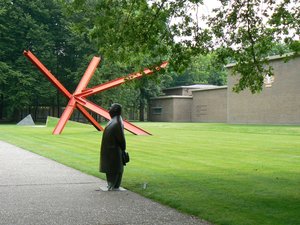 クローラー・ミュラー美術館 |
オッターロー | 1 | Prayer |
年代を選択して、その時代の代表的な絵画を表示します。
Maternity (1906)(カタルーニャ国立美術館, バルセロナ)が第1位、次いでPersonnage à la Main Percée II 16-2 38 (1936)、Etude pour Danseuse à la Palette (1934)の順となっています。
Julio Gonzálezの享年は30歳です。Maternityの制作年は1906年で、Julio Gonzálezは1876年に生まれました。
Maternity, Personnage à la Main Percée II 16-2 38, Etude pour Danseuse à la Palette, Femme Etrange, Deux études pour monsieur Cactus (L, Head Shouting, Self-portrait 113511-000, Les Plans Rigoureux, Femme au Miroir Rouge, Vert et Jaune と Cactus Person II。各作品の制作年および所蔵美術館は、上記のランキングに記載されています。
Julio Gonzálezによる作品が24点、1906年から1942年にかけてのものがカタログに掲載されています。
主にMuseu Coleção Berardo (リスボン), レジーナ・ソフィア国立芸術センター (マドリード) と カタルーニャ国立美術館 (バルセロナ)に所蔵されています。全リストについては、上記の美術館一覧をご参照ください。
1930s年:ここにランクインしている23点の絵画のうち、7点がその時代の作品で、Personnage à la Main Percée II 16-2 38などが含まれます。
このページで最も古い作品: Maternity (1906)。最新の作品: Personnage Spatial (1942)。
ここにランクインしている全23作品のうち、2作品のOil
このページに掲載されている絵画に基づいたCubism
Museu Coleção Berardo, リスボンには、Personnage à la Main Percée II 16-2 38, Etude pour Danseuse à la Palette と Femme Etrangeを含む、ここにランクインしている絵画のうち7点が所蔵されています。
はい。このページに掲載されているすべての絵画は、手描きの油彩複製画、またはプリントとしてご注文いただけます。絵画を選択し、サイズを選んで注文を確定してください。
Julio González stands as a monumental figure in the history of modern sculpture, a visionary who transformed the very language of three-dimensional form. Born in Barcelona on September 21st, 1876, González was destined for a life intertwined with metal. He descended from a lineage steeped in the meticulous traditions of craftsmanship; his grandfather was a goldsmith in Galicia, and his father, Concordio González, operated a workshop specializing in the fabrication of gold, silver, and iron. From his earliest years, the rhythmic clang of the hammer and the intense heat of the forge were not merely background noises but the foundational elements of his artistic vocabulary. This deep-seated mastery of metallurgy would later allow him to achieve what many thought impossible: treating iron with the same lyrical fluidity as a painter treats a brushstroke.
The trajectory of González’s life took a transformative turn when he moved to Paris in 1902, immersing himself in the electric atmosphere of Montmartre. It was here that his technical prowess met the radical spirit of the avant-garde. He found himself part of a vibrant circle of Spanish expatriates, most notably Pablo Picasso and Pablo Gargallo. The relationship with Picasso was particularly profound; their shared passion for experimentation led to a legendary artistic dialogue that would redefine the boundaries of sculpture. While Picasso provided the conceptual spark of Cubism, González provided the technical innovation required to translate those fragmented, multi-dimensional ideas into physical reality. Together, they pioneered a new way of seeing, moving away from the heavy, solid masses of traditional bronze and marble toward something far more ethereal.
González’s true genius lay in his ability to treat iron as if it were a sketch drawn in mid-air. He moved beyond the concept of sculpture as a solid volume, instead embracing the idea of drawing in space. By utilizing flat pieces, strips, and rods of scrap and old iron, he could suggest the presence of a figure through nothing more than a few expressive, ascending lines. This technique allowed him to capture the essence of movement and light, creating works that felt both skeletal and incredibly alive. His favorite subjects—often women captured in moments of quiet introspection, dancing, or grooming—were rendered with a sketchy, rhythmic quality that emphasized line over mass.
As his career progressed, particularly from 1932 onwards, his work underwent a fascinating evolution toward a more sober and austere aesthetic. The complexity of his earlier assemblages gave way to a profound linearity. In masterpieces such as Prayer, the use of simple bars and rods creates a hauntingly beautiful suggestion of a kneeling woman, her arms reaching upward in a gesture of spiritual yearning. This period demonstrated his ability to strip away the unnecessary, leaving behind only the most potent emotional traces. His mastery of welding, cutting, and forging allowed him to manipulate the industrial medium of iron to convey the most delicate human emotions, bridging the gap between the industrial age and the human soul.
Though he remained largely unrecognized by the mainstream during much of his lifetime, the historical significance of Julio González cannot be overstated. He is widely revered as the "father of all iron sculpture of this century," a title that honors his role in legitimizing iron as a primary medium for fine art. His innovations paved the way for generations of abstract sculptors who would continue to explore the interplay between void and solid, line and volume. By breaking the traditional mold of sculpture, he liberated the medium from its reliance on weight and density, offering instead a vision of art that is light, transparent, and infinitely expressive.
Today, the legacy of González lives on in every modern work that dares to use negative space as a structural element. His life's work remains a testament to the power of tradition meeting innovation—a journey from the ancestral forge of Barcelona to the cutting edge of the Parisian avant-garde. Through his hands, the cold, unyielding nature of iron was transformed into a medium of profound grace, forever changing how we perceive the relationship between matter and space.


