


 プレビュー
プレビュー
 シェアする
シェアする シェアする
シェアする
 詳細を見る
詳細を見る

 ダウンロード
 似ている作品
 X線調査
X線調査 スライドショー
Muro


 詳細を見る
詳細を見る
ジークレー/アートプリント
迅速な制作と多彩な仕上げオプションを備えた、ミュージアムクオリティのジークレーまたはキャンバスプリント。 ( 手描きの絵画を購入 画像を購入)




P118B $10

P118H $10

P118W $10

P438Z $10

P508JH $12

P508YH $12

P805H $10

P805Z $10

P919BZ $10

P919G $10

P919XJ $10

P959ZH $10

P968JZ $12

W106C $8

W218G $10

W218JH $8

W218Y $10

W307PJ $10

W316G $10

W316PJ $8

W316Y $10

W398PJ $8

W4111J $10

W500HY $15

W500JH $15

W692G $12

W849H $8

W940BG $15

W953PJ $8




作品のオリジナル比率に合わせた、当店の規定サイズからお選びください。

特定のフレームやスペースに合わせて、ご自身でサイズを指定することも可能です。選択されたサイズが元の画像の比率と一致しない場合、作品をトリミングするか、鏡面反射または単色での塗りつぶしによって画像を拡張いたします。制作を開始する前に、ご確認用のデジタルモックアップをお送りいたします。
画面上のプレビューには、実際のトリミングや拡張は反映されませんのでご注意ください。最終的な構図を正確に確認できるのは、モックアップのみとなります。
カスタムサイズも承っておりますが、元の比率を維持するためには、あらかじめ用意されたリストからサイズを選択することをお勧めいたします。


 ガラスオプションは、110cm未満のサイズでのみご利用いただけます。

Muro
ジークレー/アートプリント
複製画のサイズ
-


合計金額
$ 64
作品詳細説明
Muro: A Study in Solidity – Bosco Smod’s Minimalist Masterpiece
Bosco Smod's 2017 work, “Muro,” presents a deceptively simple composition—a carefully arranged stack of five red bricks on a concrete floor. Yet, within this seemingly mundane subject lies a potent exploration of form, texture, and the enduring qualities of construction. Captured with a photographic precision, the artwork immediately draws the viewer in with its stark geometry and rich color palette, dominated by variations of terracotta and deep crimson hues. The piece’s quiet strength speaks to a fundamental human fascination with stability, permanence, and the tangible world.
Technique and Materiality: A Realistic Still Life
- Photography as Art: Smod's approach transcends mere documentation; it elevates the everyday object into a considered artistic statement. The image possesses a photographic quality, meticulously capturing the rough textures of the brick surfaces and the subtle variations in color – a deliberate choice that emphasizes realism.
- Brick and Concrete: The artwork’s materials—red brick and concrete—ground the piece in a tangible reality. These industrial elements evoke associations with labor, construction, and the foundations upon which society is built.
- Lighting and Composition: The even lighting eliminates harsh shadows, creating a sense of calm and emphasizing the geometric precision of the arrangement. The frontal perspective further reinforces the artwork’s directness and clarity.
Symbolism and Context – Echoes of Basquiat and Urban Landscapes
While seemingly devoid of overt symbolism, “Muro” resonates with deeper meanings. The stack of bricks can be interpreted as a metaphor for resilience, rebuilding, or the accumulation of experience. Considering Bosco Smod’s artistic lineage—influenced by figures like Jean-Michel Basquiat – the work subtly echoes themes of urban decay and social commentary often explored by Basquiat's street art contemporaries. The location of the artwork, Washington Square Park in New York City, further adds to this context, placing it within a landscape of public space and artistic expression.
Emotional Impact – A Quiet Contemplation
"Muro" isn’t an emotionally charged piece in the traditional sense. Instead, it invites a quiet contemplation—a moment of stillness amidst the chaos of modern life. The artwork's solidity and geometric precision offer a sense of order and control, while its simple subject matter allows for personal interpretation. It is a reminder that beauty can be found in the most unassuming of objects, and that even the simplest arrangements can possess profound significance.
Reproduction Details
AllPaintingsStore offers meticulously hand-painted reproductions of Bosco Smod’s “Muro,” ensuring the highest quality and fidelity to the original artwork. Each reproduction is created using archival materials, guaranteeing lasting beauty and value. This piece would be a striking addition to any collection or interior space, offering a timeless study in form and color.
関連作品


アーティストの略歴
Jean-Michel Basquiat: A Voice of the Streets and a Revolutionary Artist
Born in Brooklyn, New York City, on December 22, 1960, Jean-Michel Basquiat emerged from the vibrant, chaotic crucible of the Lower East Side during the late 1970s and early 1980s. His life was tragically cut short at the age of 27 in August 1988 due to a heroin overdose, but his impact on the art world—and beyond—remains profound. Basquiat’s work wasn't merely painting; it was an urgent and often searing commentary on race, power, poverty, and the American experience, delivered with a raw energy that continues to resonate today.
Initially collaborating with Al Diaz under the moniker SAMO (Street Art Movement Organization), Basquiat and Diaz began tagging subway cars in Manhattan with enigmatic epigrams—short, provocative phrases that challenged societal norms. These early works, characterized by bold lettering and a deliberate anonymity, established a foundation for Basquiat’s later explorations of identity and social critique. The partnership dissolved, leaving the exact circumstances shrouded in mystery, but it undoubtedly shaped Basquiat's artistic trajectory.
The Neo-Expressionist Explosion & Urban Influences
By the early 1980s, Basquiat transitioned from street art to gallery exhibitions, aligning himself with the burgeoning neo-expressionism movement. This style, a reaction against the perceived coldness of minimalism and conceptual art, embraced vibrant colors, expressive brushstrokes, and often autobiographical subject matter. However, Basquiat’s work transcended simple categorization; he blended elements of graffiti, collage, drawing, and painting in a uniquely personal way.
His artistic vocabulary was deeply rooted in the urban landscape of New York City—a city teeming with contradictions: wealth alongside poverty, racial tensions, and a burgeoning hip-hop culture. He drew inspiration from sources as diverse as jazz music, boxing matches, historical figures like Napoleon and Rembrandt, and the writings of writers like James Baldwin and Charles Baudelaire. His work frequently referenced black history, social injustice, and the struggles faced by marginalized communities.
A Language of Symbols & Social Commentary
Basquiat’s paintings are instantly recognizable for their layered imagery and complex symbolism. He employed a distinctive visual language—skull motifs (often referencing mortality), crowns (representing royalty and achievement), musical notes, and text fragments—to convey his ideas. His subjects ranged from portraits of historical figures to self-portraits that explored themes of identity and race.
Crucially, Basquiat’s work wasn't simply decorative; it was a direct engagement with social and political issues. Pieces like *Irony of Negro Policeman* (1981) confronted racial prejudice within the police force, while *Defacement* (1982), depicting a black skull overlaid with text referencing Michael Stewart’s murder by a white cop, became an iconic symbol of protest against systemic racism. His use of appropriation—borrowing and recontextualizing images from magazines, newspapers, and advertising—highlighted the pervasive influence of consumer culture and mass media.
Major Achievements & Legacy
Despite his tragically short life, Basquiat achieved remarkable success during his career. He exhibited widely in galleries and museums around the world, including a solo show at the Guggenheim Museum in 1988. He was the youngest artist to be included in the prestigious Documenta exhibition in Kassel, Germany, in 1989, cementing his place as a major figure in contemporary art.
Today, Basquiat’s work is highly sought after and commands staggering prices at auction. His paintings are housed in major museums worldwide, including the Metropolitan Museum of Art, the MoMA (Museum of Modern Art), and the Guggenheim. More than just an artist, Jean-Michel Basquiat became a cultural icon—a voice for the marginalized, a symbol of rebellion, and a testament to the power of art as a tool for social change. His legacy continues to inspire artists and activists alike, reminding us of the urgent need to confront injustice and celebrate diversity.

bosco smodi
1980 - , India
基本情報
- Artistic Movement Or Style: Neo-expressionism
- Artists Or Movements Influenced By This Artist:
- Graffiti art
- Hip-hop culture
- Artists Who Influenced This Artist:
- Andy Warhol
- Keith Haring
- Date Of Birth: December 22, 1960
- Date Of Death: August 12, 1988
- Full Name: Jean-Michel Basquiat
- Nationality: American
- Notable Artworks:
- Irony of Negro Policeman
- Skull of Doom
- Untitled
- Boy and Dog in a Johnnypump
- Defacement
- Hollywood Africans
- Place Of Birth: New York City, U.S.
関連記事

Crimson Threads of Narrative: Exploring Symbolism & Representation in Artworks Featuring the Red Dress
Explore the rich symbolism of the red dress in art history! From ancient power displays to iconic portraits like Cézanne’s 'Madame Cezanne', discover the cultural and artistic significance behind this captivating color. Expert analysis & insights.

幾何学的抽象絵画を定義した傑作10選|アート、アーティスト、インテリア装飾
モンドリアン、マレーヴィチ…幾何学的抽象絵画を代表する傑作10選。各作品の背景や色彩構成、アーティストの情熱に迫ります。美術館品質の複製画はAllPaintingsStore.comで。オンラインでアートコレクションをご覧ください。

Raja Ravi Varma: Bridging Tradition & Modernity in 19th-Century Indian Art
Explore the life & art of Raja Ravi Varma, a pioneer who fused European techniques with Indian iconography. Discover his iconic paintings, lasting legacy, and influence on modern Indian art at AllPaintingsStore.

Silent Narratives: Exploring the Enduring Appeal of Still Life Painting Across Centuries
Explore the rich history of still life painting with AllPaintingsStore. Discover Dutch Masters, decode vanitas symbolism & learn about collecting timeless art. Expert insights and museum-quality reproductions.
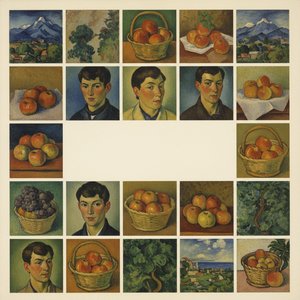
ポール・セザンヌ:至高の25選 - 傑作と革新の軌跡 | AllPaintingsStore
ポール・セザンヌの至高の25選。ポスト印象派を代表する画家、セザンヌの傑作と革新的な技法を紐解きます。AllPaintingsStoreで高品質な複製画やインテリアアートを見つけ、芸術の世界をご自宅に。今すぐコレクションをご覧ください。



