


 プレビュー
プレビュー
 シェアする
シェアする シェアする
シェアする
 詳細を見る
詳細を見る

 ダウンロード
 似ている作品
 X線調査
X線調査 スライドショー
Self-portrait


 詳細を見る
詳細を見る
ジークレー/アートプリント
迅速な制作と多彩な仕上げオプションを備えた、ミュージアムクオリティのジークレーまたはキャンバスプリント。 ( 手描きの絵画を購入 画像を購入)




































作品のオリジナル比率に合わせた、当店の規定サイズからお選びください。

特定のフレームやスペースに合わせて、ご自身でサイズを指定することも可能です。選択されたサイズが元の画像の比率と一致しない場合、作品をトリミングするか、鏡面反射または単色での塗りつぶしによって画像を拡張いたします。制作を開始する前に、ご確認用のデジタルモックアップをお送りいたします。
画面上のプレビューには、実際のトリミングや拡張は反映されませんのでご注意ください。最終的な構図を正確に確認できるのは、モックアップのみとなります。
カスタムサイズも承っておりますが、元の比率を維持するためには、あらかじめ用意されたリストからサイズを選択することをお勧めいたします。


 ガラスオプションは、110cm未満のサイズでのみご利用いただけます。

Self-portrait
ジークレー/アートプリント
複製画のサイズ
-


合計金額
$ 64
作品詳細説明
関連作品


アーティストの略歴
The Crucible of Memory and Loss
Born amidst the lush landscapes of Sochi in 1927, Dmitry Zhilinsky’s early life was a tapestry woven with both profound cultural richness and devastating personal tragedy. The son of a family deeply embedded in the Russian intelligentsia, his world was shaped by the intellectual rigor of educators and the heavy shadow of Stalinist repression. In 1937, the arrest and execution of his father left an indelible scar upon his psyche, creating a melancholic resonance that would later infuse his canvases with a haunting, soulful depth. Growing up in an environment where art, literature, and science were inextricably intertwined, Zhilinsky inherited a legacy of excellence, being the grandson of Nadezhda Nemchinova, the sister of the legendary painter Valentin Serov. This lineage provided not just a connection to greatness, but a profound responsibility to the continuity of Russian artistic tradition.A Synthesis of Sacred and Secular Traditions
Zhilinsky’s artistic evolution was marked by an extraordinary ability to bridge disparate eras, creating a visual language that felt simultaneously ancient and modern. His training at the prestigious Moscow State Art Institute under masters such as Pavel Korin and Semyon Chuikov allowed him to master the technical precision of Soviet Realism while seeking something much more transcendent. He became a master alchemist, blending the austere, spiritual gravity of traditional Russian icon painting with the fluid, humanistic dynamism of the Renaissance. His work often featured:- The structural elegance and anatomical grace of Renaissance composition.
- The symbolic depth and expressive, flattened planes characteristic of Orthodox iconography.
- A meticulous observation of light and form that grounded his more abstract tendencies.
This unique stylistic synthesis allowed him to navigate the complexities of the Soviet era, finding a way to innovate without severing ties to the venerable past. His brushwork captured the tension between the tangible world and the spiritual realm, making his narratives feel both historically grounded and eternally relevant.
The Portraitist’s Vision and Lasting Legacy
While his repertoire spanned landscapes and still lifes, Zhilinsky achieved international renown through his masterful portraiture. He possessed a rare ability to capture the psychological essence of his subjects, ranging from fellow artists like Vladimir Favorsky to members of the Danish Royal Family, including Queen Margrethe II. These portraits, characterized by their formal dignity and subtle emotional complexity, are celebrated for their ability to transcend mere likeness. His work has found permanent homes in prestigious institutions, most notably the Tretyakov Gallery, ensuring that his contribution to the evolution of 20th-century art remains a vital part of the Russian canon. Through his life and work, Dmitry Zhilinsky remains a monumental figure who successfully navigated the turbulent currents of history to preserve and reimagine the sacred flame of artistic tradition.
dmitry d. zhilinsky
1927 - 2015 , Russia
基本情報
- Artistic Movement Or Style: Social realist; Icon painting & Renaissance
- Artists Or Movements Influenced By This Artist: ['Renaissance Painting']
- Artists Who Influenced This Artist:
- Valentin Serov
- Alexander Ivanov
- Date Of Birth: 1927
- Date Of Death: 2015
- Full Name: Dmitry D. Zhilinsky
- Nationality: Russian
- Notable Artworks:
- Self-Portrait
- Family at the Seaside
- Place Of Birth: Sochi, Russia
関連記事

The Enduring Legacy of Oil on Canvas: Technique, History & Aesthetic Impact
Explore the rich history & techniques of oil painting – from Renaissance masters to Impressionism. Discover pigments, layering methods, and why this timeless medium endures. Expert insights for artists & art enthusiasts.
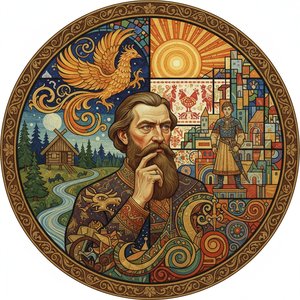
Ivan Bilibin: A Synthesis of Folklore, Modernism & National Identity in Russian Illustration
Explore the enchanting world of Ivan Bilibin, a master Russian illustrator who synthesized folklore, Art Nouveau & national identity. Discover his iconic fairy tale illustrations and legacy with AllPaintingsStore.

Oil on Canvas: A Historical & Technical Exploration of a Timeless Artistic Medium
Explore the rich history & enduring techniques of oil painting on canvas. Discover the science behind its longevity, conservation practices, and contemporary relevance. Expert insights for art enthusiasts.

Reflecting the Self: A History of Portraiture & Psychological Insight
Explore the fascinating history of self-portraiture from Renaissance masters like Dürer & Rembrandt to modern interpretations. Discover the psychological insights and artistic techniques behind these iconic works. Expert analysis for art enthusiasts.

The Enduring Power of Painting: A Historical & Contemporary Exploration of Form and Emotion
Explore the rich history & enduring techniques of oil painting with AllPaintingsStore. Discover masterpieces, learn about art collecting, and find authentic handmade reproductions crafted by skilled artists.



