


 設置イメージを確認
 送る
送る シェア
シェア
 詳細情報
詳細情報 ガイドを表示

 画像をダウンロード
 似ている作品
 X線調査
X線調査 スライドショー
 統計情報
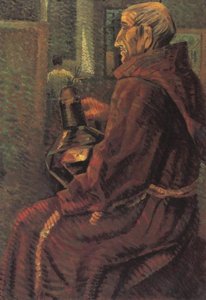
統計情報Monks
 Expressionism
 21.0 x 29.0 cm
 続きを読む
続きを読む
このページに掲載されている作品は著作権法によって保護されており、当社の許可なく同一の複製物を制作または販売することは法律で禁じられています。この保護は、以下のような国際条約に基づき執行されます。 ベルヌ条約 および、以下の条項に定められたものを含む各国の法律により、 米国著作権法 第17編。
この手法は、著作権で保護された作品の複製や複写を伴わないため、著作権法に完全に準拠しています。これは単なる模倣ではなく、創造的な再解釈です。元の作品からインスピレーションを受けつつも、それとは異なる、全く新しい絵画を生み出すものです。
ジークレー/アートプリント
スピーディーな制作と多彩な仕上げオプションが魅力の、ミュージアムクオリティなジークレー・キャンバスプリント。 ( 手描きの複製画を注文する デジタル画像販売へ切り替え)




































作品のオリジナル比率に合わせた、当店の規定サイズからお選びください。

額縁や壁のスペースに合わせて、ご希望の幅と高さを入力してください。プリントはカットすることは可能ですが、元の画像より大きくすることはできないため、異なる比率のサイズを選択された場合は、画像の一部が欠けることになります。印刷を開始する前に、内容を確認していただくためのデジタルモックアップをお送りいたします。このページに表示されている画像は、実際のカット後の状態を示すものではありません。実際の仕上がりはモックアップにてご確認ください。


 ガラスオプションは、110cm未満のサイズでのみご利用いただけます。

Monks
ジークレー/アートプリント
複製画サイズ一覧
-


合計金額
¥ 10077
関連作品




アーティストについて
Henri Masson: A Painter of Quebec’s Soul
Born in Spy, Belgium, in 1907, Henri Masson's artistic journey began early, fueled by a childhood fascination with drawing and painting. His family’s relocation to Canada in 1921, settling in Ottawa, marked the beginning of his Canadian career, initially finding work as a master engraver – a profession he diligently pursued until 1945. It was during this period that a pivotal encounter occurred: a visit to the National Gallery of Canada ignited a profound appreciation for the Group of Seven and their distinctive approach to landscape painting. This experience irrevocably shifted Masson’s trajectory, leading him to embrace painting as his primary artistic focus.
Masson's early training was largely self-directed, supplemented by studies at the Ottawa Art Association with George Rowles and Franklin Brownell. He quickly distinguished himself within the local art scene, joining Les Confrères artistes Le Caveau in 1933 – a collective that provided crucial support, exhibition opportunities, and a vibrant artistic community. This association fostered his development as both an artist and a teacher, shaping his approach to art education and solidifying his commitment to sharing his knowledge.
The Language of Quebec: Subject Matter and Style
Masson’s artistic vision centered on capturing the essence of Quebec – its landscapes, its people, and its everyday life. He wasn't interested in grand, idealized vistas; instead, he sought out the authentic beauty found in rural communities, working-class neighborhoods, and quiet moments of domesticity. His subjects ranged from bustling street scenes to serene depictions of nature, often imbued with a sense of nostalgia and warmth. He frequently employed a loose, vigorous brushstroke, utilizing a broad palette of colors – particularly vibrant blues, greens, and yellows – to create dynamic compositions that conveyed both immediacy and emotional resonance.
His technique was characterized by a deliberate layering of paint, often beginning with an ink outline to establish the composition before adding washes of watercolor. This approach allowed him to capture subtle shifts in light and atmosphere while maintaining a sense of spontaneity and energy. Masson’s work is not simply representational; it's infused with a deeply personal perspective, reflecting his love for Quebec and its people.
A Journey Beyond Borders: Exhibitions and Recognition
Throughout the 1940s and beyond, Masson’s paintings garnered increasing recognition both in Canada and internationally. He participated in numerous solo and group exhibitions, including a significant showing at the 1939 World's Fair in New York, an International Watercolor Exhibition in Brooklyn, and a Canadian Art exhibition in Rio de Janeiro. His work was also featured at UNESCO headquarters in Paris, the National Gallery of Art in Washington D.C., and the Colombo International Exhibition of Modern Art in New Delhi.
His paintings have been collected by prestigious institutions worldwide, including the National Gallery of Canada, the Art Gallery of Ontario, the Musée national des beaux-arts du Québec, and the Remai Modern in Saskatoon. In 1972, a reproduction of his painting *Skaters in Hull* was featured on a Canadian postage stamp – a testament to his enduring popularity and artistic significance.
Legacy and Enduring Influence
Henri Masson’s impact extends beyond the canvases he created. In 1979, Rue Henri-Masson was named in his honor in Roussillon, Quebec, recognizing his contribution to the community and the province's artistic heritage. Furthermore, the City of Ottawa commemorated his life and work by establishing the Karsh-Masson Gallery at City Hall – a dedicated space for showcasing his paintings alongside those of renowned photographer Yousuf Karsh.
Masson’s legacy lies not only in his distinctive style but also in his dedication to documenting the everyday realities of Quebec. His paintings offer a poignant glimpse into a bygone era, capturing the spirit and character of a region that continues to resonate with artists and viewers alike. He remains an important figure in Canadian art history, celebrated for his ability to transform ordinary scenes into works of enduring beauty and emotional depth.

Henri Masson
1907 - 1996
アーティスト情報
- Full Name: Henri Léopold Masson
- Nationality: Canadian
- Date Of Birth: 1907
- Date Of Death: 1996
- Place Of Birth: Spy, Belgium
- Notable Artworks:
- San Marco (1979)
- Street in Ottawa (1938)
- Artistic Movement Or Style: Regionalism, Landscape
- Artists Who Influenced This Artist: ['Group of Seven']
- Artists Or Movements Influenced By This Artist: ['Les Confrères artistes Le Caveau']
関連記事
アンリ・マティスの傑作25選:色彩と情熱の軌跡|AllPaintingsStore
アンリ・マティスの傑作25選🎨 色彩と情熱が織りなす世界を旅する。フォーヴィスム代表の巨匠、マティスの絵画の魅力と歴史を紐解きます。AllPaintingsStoreで高品質なアートプリントや複製画を見つけ、インテリアに芸術的な輝きを✨ Explore the full collection online

Oil on Canvas: A Historical & Technical Exploration of a Timeless Artistic Medium
Explore the rich history & enduring techniques of oil painting on canvas. Discover the science behind its longevity, conservation practices, and contemporary relevance. Expert insights for art enthusiasts.

油彩のキャンバス:技法、歴史、そして現代の実践 - 古典美術愛好家へ
油彩の技法、歴史、巨匠たちの秘密を徹底解説。古典美術愛好家向けに、初期フランドル絵画から現代の実践まで深く掘り下げます。AllPaintingsStoreで高品質な複製画やカスタムオーダーも承ります。

The Enduring Legacy of Oil on Canvas: Technique, History & Aesthetic Impact
Explore the rich history & techniques of oil painting – from Renaissance masters to Impressionism. Discover pigments, layering methods, and why this timeless medium endures. Expert insights for artists & art enthusiasts.

The Enduring Power of Painting: A Historical & Contemporary Exploration of Form and Emotion
Explore the rich history & enduring techniques of oil painting with AllPaintingsStore. Discover masterpieces, learn about art collecting, and find authentic handmade reproductions crafted by skilled artists.

