


 設置イメージを確認
 送る
送る シェア
シェア
 詳細情報
詳細情報 ガイドを表示

 画像をダウンロード
 似ている作品
 X線調査
X線調査 スライドショー
 統計情報
統計情報Before Spring
 Acrylic On Canvas
- WallArt
- Contemporary Realism
 1917
1917 100.0 x 130.0 cm
 ポーランド議会
 続きを読む
続きを読む
ジークレー/アートプリント
スピーディーな制作と多彩な仕上げオプションが魅力の、ミュージアムクオリティなジークレー・キャンバスプリント。 ( 手描きの複製画を注文する デジタル画像販売へ切り替え)




P118B ¥10

P118H ¥10

P118W ¥10

P438Z ¥10

P508JH ¥12

P508YH ¥12

P805H ¥10

P805Z ¥10

P919BZ ¥10

P919G ¥10

P919XJ ¥10

P959ZH ¥10

P968JZ ¥12

W106C ¥8

W218G ¥10

W218JH ¥8

W218Y ¥10

W307PJ ¥10

W316G ¥10

W316PJ ¥8

W316Y ¥10

W398PJ ¥8

W4111J ¥10

W500HY ¥15

W500JH ¥15

W692G ¥12

W849H ¥8

W940BG ¥15

W953PJ ¥8




作品のオリジナル比率に合わせた、当店の規定サイズからお選びください。

額縁や壁のスペースに合わせて、ご希望の幅と高さを入力してください。プリントはカットすることは可能ですが、元の画像より大きくすることはできないため、異なる比率のサイズを選択された場合は、画像の一部が欠けることになります。印刷を開始する前に、内容を確認していただくためのデジタルモックアップをお送りいたします。このページに表示されている画像は、実際のカット後の状態を示すものではありません。実際の仕上がりはモックアップにてご確認ください。


 ガラスオプションは、110cm未満のサイズでのみご利用いただけます。

Before Spring
ジークレー/アートプリント
複製画サイズ一覧
-


合計金額
¥ 10156
A Nostalgic Vision of Poland: The Life and Art of Józef Rapacki
Józef Rapacki’s “Before Spring,” painted in 1917, isn't merely a landscape; it’s a distillation of Polish identity at the cusp of momentous change. Born in Warsaw in 1871 into a theatrical family—his father an actor, writer, and translator, with siblings pursuing similar creative endeavors—Rapacki initially seemed destined for the stage, inheriting his lineage’s passion for performance. However, fate intervened early on when he discovered his true vocation within the quiet contemplation of drawing at fourteen, enrolling in classes taught by Wojciech Gerson, a cornerstone of Polish Realism. This formative mentorship instilled not only technical proficiency but also an unwavering fascination with observing and interpreting the natural world—a preoccupation that would define his artistic trajectory for decades to come. The painting itself depicts a sprawling lowland landscape bathed in muted greys and browns, characteristic of the prevailing atmospheric conditions of 1917 – a year marked by escalating tensions leading up to World War I. Rapacki eschewed the grand staffage compositions favored by earlier Romantic painters, opting instead for a strikingly honest portrayal of Mazovia, his lifelong artistic obsession. The scene unfolds with meticulous detail: field furrows covered in short dark green grass dominate the foreground, punctuated by balks—wooden ridges used to plough fields—that recede towards the horizon. Ditches filled with thawing snow subtly convey the painting’s evocative title, hinting at the impending arrival of spring and its transformative power. Rapacki's technique is rooted firmly in Realism, prioritizing accuracy and observation over idealized representation. He employed short brushstrokes to capture the texture of grass and shrubbery branches, creating a palpable sense of immediacy. Contour lines delineate shapes with understated elegance, while the colour palette—dominated by cool tones—underscores the melancholic beauty of the winter landscape. Notably, Rapacki’s careful attention to detail extends beyond mere visual representation; he sought to convey an emotional resonance that mirrored the anxieties and hopes prevalent during Poland's turbulent era. The painting’s symbolism speaks volumes about Rapacki’s artistic vision. The flock of birds soaring high above—a rare splash of movement against the frozen stillness—represents aspiration and freedom, mirroring the yearning for a brighter future amidst the looming shadow of war. The sparse shrubbery and birch trees symbolize resilience and endurance – qualities deeply ingrained in Polish folklore and embodying the spirit of the nation facing adversity. “Before Spring” isn’t simply a depiction of a place; it's an embodiment of Poland itself—a poignant reminder of its pastoral heritage and a testament to Rapacki’s ability to transform observation into profound artistic expression. Ultimately, "Before Spring" transcends its formal qualities to resonate with viewers on an emotional level. It captures the bittersweet beauty of winter’s dormancy – a period of quiet contemplation preceding renewal – inviting us to consider themes of loss, memory, and the enduring promise of springtime. This artwork remains a powerful symbol of Polish identity and artistic integrity, continuing to inspire admiration for its masterful execution and its timeless exploration of human experience.よくあるご質問
Józef Rapacki作「Before Spring」 の画像はどのようにダウンロードすればよいですか?
Józef Rapacki作「Before Spring」の画像は、作品のダウンロードページからダウンロードいただけます:高解像度デジタル画像のダウンロード。
Józef Rapacki作「Before Spring」の色味の強さはどの程度ですか?
「Before Spring」の彩度はMonochromaticです。彩度とは、色の鮮やかさの度合いを表します。
Józef Rapacki作「Before Spring」は、どのようにしてContemporary Realismをアーティストの母国と結びつけているのでしょうか?
「Before Spring」は、その作者の出生地を通じて、Contemporary Realism運動とPolandを結びつけています。
関連作品


アーティストについて
A Nostalgic Vision of Poland: The Life and Art of Józef Rapacki
Józef Rapacki, born in Warsaw in 1871, was a painter deeply attuned to the soul of the Polish countryside. His life unfolded against a backdrop of shifting political landscapes and burgeoning artistic movements, yet his work remained steadfastly rooted in a nostalgic portrayal of Mazovia – the historical region that became both his muse and his enduring legacy. Coming from a theatrical family—his father an actor, writer, and translator, with siblings following similar paths—Rapacki initially seemed destined for the stage. However, at the age of fourteen, he discovered his true calling within the lines and washes of drawing, enrolling in classes taught by Wojciech Gerson, a prominent figure in Polish Realism. This early mentorship instilled in him not only technical skill but also a deep appreciation for observing and interpreting the natural world. His subsequent studies at the Kraków Academy of Fine Arts under Izydor Jabłoński, Florian Cynk, and Feliks Szynalewski further refined his abilities, preparing him for a journey that would ultimately define his artistic identity.From Munich to Mazovia: Artistic Development and Influences
Rapacki’s artistic development was significantly shaped by his time in Munich, where he studied with Conrad Fehr beginning in 1889. Exposure to the “Munich School” broadened his perspective, influencing his approach to composition and color. However, it was a study trip to Italy around 1898 that truly ignited his passion for landscape painting. He returned to Poland imbued with a desire to capture the unique beauty of his homeland. Initially working in landscapes, cityscapes, and genre scenes, Rapacki gradually focused on the Mazovian countryside, drawn to its vast plains, scattered woodlands, and humble rural life. His work began appearing in prominent Warsaw periodicals like *Tygodnik Ilustrowany*, and he illustrated works by Ignacy Krasicki, demonstrating his versatility as an artist. He exhibited at the Exposition Universelle in 1900, gaining international recognition for his talent. This period saw him absorbing influences from various sources, yet always filtering them through a distinctly Polish sensibility. The Barbizon School’s emphasis on direct observation and natural light would later become particularly evident in his work.Landscapes of the Heart: Style and Subject Matter
Józef Rapacki's paintings are characterized by their quiet realism, luminous atmosphere, and a profound sense of tranquility. He masterfully captured the subtle nuances of light and shadow, imbuing his landscapes with an almost ethereal quality. His palette favored muted tones—soft greens, browns, grays, and ochres—reflecting the natural colors of the Mazovian countryside. While he occasionally depicted figures within his scenes – peasant women gathering mushrooms or working in fields – they were rarely the focal point; instead, they served to enhance the sense of place and evoke a feeling of harmony between humanity and nature. He became known as “the painter of birches and lilac heathers,” subjects that recurred frequently throughout his oeuvre. His compositions often feature expansive vistas, drawing the viewer into the depth of the landscape and creating a sense of spaciousness. Buttercups, painted in 1927, exemplifies this style—a vibrant marsh scene rendered with delicate brushwork and bathed in golden light. Similarly, Mushroom Picking (1910) showcases his ability to capture the serenity of rural life, inspired by the Barbizon School’s approach to depicting everyday scenes.Wartime Reflections and Lasting Legacy
Rapacki's life was marked by personal hardship; a severe lung ailment forced him to relocate from Warsaw to Kraków and eventually to Olszanka, where he found solace in the landscapes that would become his signature subject matter. The outbreak of World War I brought new challenges and responsibilities. He contributed numerous drawings to the Warsaw press, including the powerful series *Prusak w Polsce* (“Prussian in Poland”), which served as propaganda during the Silesian Uprisings. This work demonstrates Rapacki’s willingness to use his art for a political purpose, reflecting his deep patriotism and concern for the fate of Poland. He passed away in Olszanka in 1929, leaving behind a rich artistic legacy that continues to resonate with audiences today. His paintings can be found in prominent museums such as the Muzeum w Warszawie and the Museum Pomorskie (Danzig), ensuring his place within the canon of Polish art history. Józef Rapacki’s work offers more than just picturesque scenes; it provides a poignant glimpse into a vanishing way of life, a nostalgic tribute to the beauty and spirit of Mazovia, and a testament to the enduring power of landscape painting.
Józef Rapacki
1871 - 1929 , Poland
アーティスト情報
- Full Name: Józef Rapacki
- Nationality: Polish
- Date Of Birth: 1871
- Date Of Death: 1929
- Place Of Birth: Warsaw, Poland
- Notable Artworks:
- Buttercups
- Mushroom Picking
- Before Spring
- Artistic Movement Or Style: Realism, Munich School
- Artists Who Influenced This Artist:
- Wojciech Gerson
- Conrad Fehr
関連記事

Romantic Realism's Finest: 10 Masterpieces for Your Home | AllPaintingsStore
Explore 10 defining masterpieces of Romantic Realism! Discover Courbet, Millet & Daumier's powerful paintings—capturing emotion and social realities. Find museum-quality reproductions for your home at AllPaintingsStore.com.

Evocations of Place: A Historical Journey Through Landscape Art
Explore the rich history of landscape art with AllPaintingsStore. Discover renowned artists, movements like Impressionism & Romanticism, and expert guidance for collecting timeless pieces. Find your perfect serene escape today!

ロマン派ランドスケープ:時代を彩る巨匠の10選|アートとインテリアの世界
ロマン派絵画の時代を彩る10選。巨匠たちの風景が織りなす感動の世界へ。ターナー、ルーベンスなど、名作の裏話と高精細複製でアートをお部屋に。AllPaintingsStore.comで至福のアート体験を。

ジョン・コンスタブルの傑作25選:英国風景画の巨匠が描く自然と光の詩 | AllPaintingsStore
ジョン・コンスタブルの傑作25選。英国風景画の巨匠が描く自然と光の詩の世界へ。ロマン主義を代表する絵画、デダム・ヴェールやヘイ・ウェインなど、AllPaintingsStoreで高品質なアートプリントをお楽しみください。インテリアに深みと感動を。コレクションはこちら。
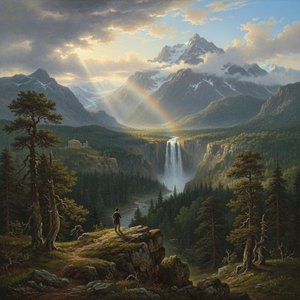
Evoking Nature's Sublime: A Comprehensive Exploration of 19th-Century Landscape Painting
Explore the captivating world of 19th-century landscape painting! Discover renowned artists like Friedrich & Monet, key movements, and find the perfect artwork to bring nature's serenity into your home. Expert insights at AllPaintingsStore.


