


 プレビュー
プレビュー
 シェアする
シェアする シェアする
シェアする
 詳細を見る
詳細を見る

 ダウンロード
 似ている作品
 X線調査
X線調査 スライドショー
Three nudes
 Acrylic On Canvas
- WallArt
- Surrealism
Surrealism
 1984
1984 54.0 x 42.0 cm
 詳細を見る
詳細を見る
ジークレー/アートプリント
迅速な制作と多彩な仕上げオプションを備えた、ミュージアムクオリティのジークレーまたはキャンバスプリント。 ( 手描きの絵画を購入 画像を購入)




P118B $10

P118H $10

P118W $10

P438Z $10

P508JH $12

P508YH $12

P805H $10

P805Z $10

P919BZ $10

P919G $10

P919XJ $10

P959ZH $10

P968JZ $12

W106C $8

W218G $10

W218JH $8

W218Y $10

W307PJ $10

W316G $10

W316PJ $8

W316Y $10

W398PJ $8

W4111J $10

W500HY $15

W500JH $15

W692G $12

W849H $8

W940BG $15

W953PJ $8




作品のオリジナル比率に合わせた、当店の規定サイズからお選びください。

特定のフレームやスペースに合わせて、ご自身でサイズを指定することも可能です。選択されたサイズが元の画像の比率と一致しない場合、作品をトリミングするか、鏡面反射または単色での塗りつぶしによって画像を拡張いたします。制作を開始する前に、ご確認用のデジタルモックアップをお送りいたします。
画面上のプレビューには、実際のトリミングや拡張は反映されませんのでご注意ください。最終的な構図を正確に確認できるのは、モックアップのみとなります。
カスタムサイズも承っておりますが、元の比率を維持するためには、あらかじめ用意されたリストからサイズを選択することをお勧めいたします。


 ガラスオプションは、110cm未満のサイズでのみご利用いただけます。

Three nudes
ジークレー/アートプリント
複製画のサイズ
-


合計金額
$ 64
作品詳細説明
A Symphony of Dreams: Exploring Marc Chagall’s “Three Nudes”
Marc Chagall's "Three Nudes," painted in 1984, stands as a testament to the artist’s enduring fascination with Surrealism and his unwavering commitment to translating inner visions onto canvas. More than just a depiction of nude figures—though undeniably present—the painting embodies a profound exploration of memory, folklore, and the boundless realm of imagination—themes central to Chagall's entire oeuvre. It resides within Vitebsk’s vibrant cultural tapestry, reflecting both Jewish Hasidic traditions and Orthodox Christian influences, shaping an aesthetic sensibility that distinguishes itself from prevailing artistic currents of the era.The Surrealist Landscape: Composition and Technique
Chagall’s masterful technique—characterized by bold brushstrokes, flattened perspectives, and a deliberate disregard for realistic representation—serves to heighten the painting's dreamlike quality. The figures are positioned amidst an undulating landscape reminiscent of Vitebsk itself, rendered in swirling hues of ochre, crimson, and turquoise. These colors aren’t merely decorative; they convey emotion directly, mirroring the psychological state of contemplation and yearning that permeates the scene. Chagall employs a technique he termed “écriture automatique”—automatic writing—allowing subconscious impulses to guide his hand, resulting in compositions that defy logical coherence yet resonate with palpable feeling. The inclusion of a bird soaring above adds dynamism and symbolizes freedom – an aspiration deeply ingrained within Chagall’s artistic worldview.Symbolism Rooted in Folklore: Figures and Gestures
The three nude women are not presented as idealized beauties but rather as embodiments of primal femininity—figures imbued with symbolic significance drawn from Jewish folklore and Kabbalistic mysticism. Their intertwined hands represent unity and interdependence, reflecting the interconnectedness of human experience. The woman holding another’s hand is particularly poignant, conveying compassion and support – qualities that resonate throughout Chagall's artistic output. Furthermore, their gaze directs upwards towards the bird, reinforcing the notion of transcendence and spiritual aspiration. Each gesture and posture contributes to a narrative beyond mere visual observation, inviting viewers to delve into layers of meaning.Historical Context: Vitebsk’s Cultural Crossroads
Painted during a period marked by political upheaval and artistic experimentation—specifically amidst the burgeoning Surrealist movement—"Three Nudes" reflects Vitebsk's position as a crossroads between Eastern Orthodox Christianity and Jewish Hasidic Judaism. Chagall himself experienced firsthand the persecution faced by Jewish communities in Europe during World War II, shaping his artistic sensibility with an awareness of suffering and resilience. The painting’s dreamlike atmosphere serves as a counterpoint to the anxieties of the time, offering solace and affirmation—a reminder that beauty can emerge even from darkness. It stands alongside other works exploring similar themes of memory and identity within Vitebsk's cultural landscape.Emotional Resonance: A Portrait of Contemplation
Ultimately, “Three Nudes” transcends its formal elements to evoke a profound emotional response in the viewer. The painting’s serene stillness encourages introspection—prompting contemplation on themes of vulnerability, compassion, and spiritual yearning. Chagall’s ability to capture the essence of human emotion through color and gesture remains unparalleled, cementing "Three Nudes'" place as an enduring masterpiece of Surrealist art. It continues to inspire artists and collectors alike, serving as a beacon of imagination and beauty—a celebration of the transformative power of dreams.関連作品


アーティストの略歴
夢と色彩の詩人:マルク・シャガールの生涯
マルク・シャガール。その名は、鮮やかな色彩と幻想的なイメージが瞬時に浮かび上がるでしょう。1887年、ベラルーシのヴィテブスク近郊リオーズネ村にモーシェ・シャガルとして生まれた彼は、20世紀を代表する芸術家の一人として、絵画を通して独自の詩の世界を創造しました。彼の作品は、幼少期に育まれたユダヤ教の伝統や民話、そして故郷ヴィテブスクへの深い愛情が色濃く反映されており、現実と夢、記憶と感情が織りなす独特の美学を確立しました。「私は絵を描き終えるとき、自然が作り出したものをそれに当てはめてみます—岩、花、木の枝、あるいは自分の手です。もしその絵が人間の手で作りえないものとならぶことができれば、その絵は本物です。もし二つが衝突すれば、それは悪い芸術です。」シャガール自身の言葉が示すように、彼の作品は、内なる感情と精神性を追求したものであり、単なる現実の模倣を超越した表現を試みたのです。ヴィテブスクとパリ:芸術的探求の旅
幼少期を故郷ヴィテブスクで過ごしたシャガールにとって、その町は単なる生まれ故郷以上の意味を持ちました。それは彼の芸術的な宇宙の中心であり、空中に浮かぶ人物や奇妙な動物たちが住む、記憶に彩られた風景でした。ロシア正教の教会と賑やかなユダヤ人市場が共存するヴィテブスクの多様な文化は、彼独自の美意識を育み、その後の彼の芸術的探求に大きな影響を与えました。サンクトペテルブルクで地元のサイン画家から絵画を学び、その後レオン・バクストの下で研鑽を積んだシャガールは、パリへと旅立ちます。そこで彼は、キュビスムや象徴主義といった当時の最先端の芸術運動に触発されながらも、自身の内なる世界と故郷への想いを融合させた独自のスタイルを確立していきます。初期作品である『私と村』(1911年)は、場所の描写を超え、自己、記憶、そして個人と共同体の関係を探求する試みとして、彼の芸術的才能を示唆しています。革命と流浪:苦難の中で開花する創造性
第一次世界大戦が勃発すると、シャガールは一時的にロシアに留まり、ヴィテブスクで芸術学校を設立するなど、文化的な活動に積極的に参加しました。しかし、ロシア革命後の混乱期には、政治的な抑圧と経済的な困難に直面し、その創造性は試練にさらされます。1923年、彼は再びパリへと旅立ち、国際的な評価を得るようになります。『ヴィテブスクの上空』(1920-1922年)は、故郷への想いが色濃く反映された作品であり、彼の芸術的成熟度を示しています。第二次世界大戦の勃発により、ナチス占領下のフランスからアメリカへと逃れ、7年間をニューヨークで過ごすことになります。この時期は、精神的な苦悩と芸術的な実験が交錯するものであり、『白い十字架』(1938年)に見られるように、彼の作品に深い悲しみと不安の色合いが加わりました。戦後、彼はフランスに戻り、生涯をかけて絵筆を握り続けました。遺産:色彩と夢の普遍的なメッセージ
晩年は、パリ歌劇場天井画(1964年)やエルサレムのハダッサ・ヘブライ大学医学部病院のシナゴーグステンドグラスなど、数々の重要なプロジェクトを完成させます。これらの大規模な作品は、彼の芸術的ビジョンを建築空間に具現化し、見る者を魅了する没入型の環境を作り出しました。シャガールの影響は、シュルレアリスムを含む後世の多くの芸術家に及んでいます。彼は、ヨーロッパの近代主義とユダヤ文化のアイデンティティを結びつけ、「20世紀における最も重要なユダヤ人芸術家」として称賛されています。彼の作品は、愛、記憶、そして人間の想像力の無限の可能性を祝福するものであり、世界中の観客に普遍的なメッセージを伝えています。ヴィースバイエルン州のニースにあるマルク・シャガール美術館は、彼の遺産を称え、彼の作品群を展示しています。彼の鮮やかな色彩と夢のようなイメージは、これからも人々の心に深く刻まれ続けるでしょう。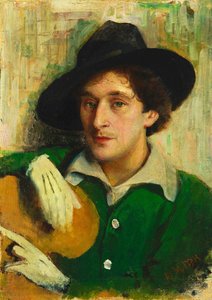
マルク・シャガール
1887 - 1985 , ベラルーシ
基本情報
- フルネーム: マルク・シャガール
- 主な作品:
- 私と村
- 白十字架
- イェルサレムの窓
- 出生地: リヴォナ(ベラルーシ)
- 国籍: ロシア、フランス、ユダヤ系
- 影響を与えたアーティスト:
- パブロ・ピカソ
- ジョアン・ミロ
- 影響を受けたアーティスト:
- レオン・バクスト
- ロベルト・デラunay
- 死亡年月日: 1985年3月28日
- 生年月日: 1887年7月6日
- 芸術運動・スタイル: モダニズム、キュビスム、象徴主義
関連記事
Ivan Bilibin: A Synthesis of Folklore, Modernism & National Identity in Russian Illustration
Explore the enchanting world of Ivan Bilibin, a master Russian illustrator who synthesized folklore, Art Nouveau & national identity. Discover his iconic fairy tale illustrations and legacy with AllPaintingsStore.

Victor Vasnetsov: Myth, Nationalism & the Revival of Russian Fairy Tale Painting
Explore the captivating world of Victor Vasnetsov, a co-founder of Russian folklorist painting. Discover his iconic works, influence on national identity, and lasting legacy in this expert guide.

The Enduring Allure of the Nude: A Historical & Artistic Exploration of the Human Form
Explore the captivating history of nude art! Discover iconic paintings & artists from classical to modern eras. Uncover symbolism, techniques & find museum-quality reproductions at AllPaintingsStore.

Russian Realism: The Soulful Power of Truth and the Unyielding Spirit of the Peredvizhniki
Explore the profound depth of Russian Realism. From the social truths of the Peredvizhniki to epic folklore, discover the soulful power of masters like Perov and Yaroshenko through our expert art history insights and museum-quality reproductions.

Vladimir Makovsky: Realism, Social Commentary & Russian Life in Late 19th-Century Painting
Explore the captivating world of Vladimir Makovsky, a leading Russian realist painter. Discover his insightful depictions of 19th-century life, social commentary & legacy with AllPaintingsStore.


