


 プレビュー
プレビュー
 シェアする
シェアする シェアする
シェアする
 詳細を見る
詳細を見る

 ダウンロード
 似ている作品
 X線調査
X線調査 スライドショー
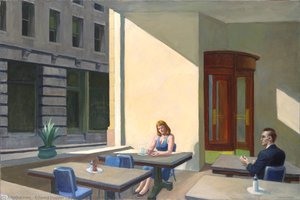
At the Gold Nugget
 114.0 x 163.0 cm
 詳細を見る
詳細を見る
ジークレー/アートプリント
迅速な制作と多彩な仕上げオプションを備えた、ミュージアムクオリティのジークレーまたはキャンバスプリント。 ( 手描きの絵画を購入 画像を購入)




































作品のオリジナル比率に合わせた、当店の規定サイズからお選びください。

特定のフレームやスペースに合わせて、ご自身でサイズを指定することも可能です。選択されたサイズが元の画像の比率と一致しない場合、作品をトリミングするか、鏡面反射または単色での塗りつぶしによって画像を拡張いたします。制作を開始する前に、ご確認用のデジタルモックアップをお送りいたします。
画面上のプレビューには、実際のトリミングや拡張は反映されませんのでご注意ください。最終的な構図を正確に確認できるのは、モックアップのみとなります。
カスタムサイズも承っておりますが、元の比率を維持するためには、あらかじめ用意されたリストからサイズを選択することをお勧めいたします。


 ガラスオプションは、110cm未満のサイズでのみご利用いただけます。

At the Gold Nugget
ジークレー/アートプリント
複製画のサイズ
-


合計金額
$ 64
関連作品


アーティストの略歴
The Poetics of the Ordinary: The Life and Vision of Robert Bechtle
In the quiet, sun-drenched streets of mid-century America, there exists a profound beauty in the unremarkable. Robert Bechtle (1932–2020) possessed the rare, almost supernatural ability to freeze these fleeting, mundane moments and transform them into enduring monuments of light and memory. Born in San Francisco during the Great Depression, Bechtle’s lifelong fascination with his surroundings—particularly the unassuming landscapes of the Bay Area—became the bedrock of a distinctive visual language that would eventually redefine American painting. Unlike many of his contemporaries who sought grand narratives or dramatic, sweeping expressions, Bechtle found his muse in the quietude of the everyday: the glint of chrome on a parked car, the stillness of a suburban driveway, and the familiar geometry of neighborhood streets.
His artistic journey was shaped by both formal discipline and unexpected global encounters. His formative years at the California College of Arts and Crafts (CCAC) provided him with the foundational skills that would underpin his groundbreaking style, fueled by a scholarship secured through national competition. However, it was perhaps the most unplanned chapter of his life that broadened his aesthetic horizons; his service in the German Army in 1960 allowed him to immerse himself in the great European art museums. This period of exploration deepened his understanding of artistic tradition, providing a classical counterpoint to the burgeoning modern movements he would later help lead back in California.
A Revolution in Precision: The Photorealist Technique
Bechtle’s approach to the canvas was nothing short of revolutionary, marking him as a cornerstone figure in the Photorealism movement that emerged in the late 1960s and early 1970s. Rejecting the expressive, often turbulent brushstrokes favored by Impressionists and Expressionists, Bechtle sought an unparalleled level of detail. His method was meticulous, often involving the painstaking transfer of photographs onto canvas to achieve a clarity that many described as photographic. Yet, to view his work as mere mechanical mimicry would be to miss its soul. As noted by critics like Peter Schjeldahl, there was a subtle, textured complexity beneath the surface.
Upon closer inspection, Bechtle’s paintings reveal a sophisticated web of meticulous strokes and delicate dabs. He utilized the photograph as a foundational guide rather than a final destination, employing light and color to create a sense of depth that a camera alone could not capture. In masterpieces such as Alameda Gran Torino (1974), the polished surfaces of a vintage automobile reflect the soft glow of a California afternoon with a painterly richness. This tension between the sharp edges of reality and the soft, impressionistic touch of his brush allows light to dance across the canvas, creating a tactile quality that rewards the discerning eye.
Legacy of the Bay Area Master
Throughout his career, Bechtle remained deeply rooted in the geography of his home. Whether teaching at San Francisco State University or establishing his studio in Potrero Hill, his work remained an intimate dialogue with the Bay Area. He focused on what he knew best: family, cars, houses, and neighborhoods. In doing so, he elevated middle-class American life to a level of high art, turning the ephemeral into the eternal. His significance lies in this very act of elevation—the ability to find the extraordinary within the ordinary.
The enduring impact of his work can be summarized through several key contributions to the art world:
- Redefining Subject Matter: He challenged the hierarchy of art by proving that commonplace, suburban scenes possessed profound aesthetic and emotional value.
- Technical Innovation: His mastery of the Photorealist technique bridged the gap between the mechanical precision of photography and the expressive potential of oil painting.
- Cultural Documentation: His paintings serve as a nostalgic window into a bygone era of American life, capturing the textures, vehicles, and atmospheres of the mid-to-late 20th century with unmatched clarity.
Robert Bechtle left behind a legacy that continues to inspire collectors and historians alike. He taught us that beauty does not always require grand gestures; sometimes, it is found in the quiet, sun-drenched stillness of a street corner, waiting patiently to be noticed.

Robert Bechtle
1932 - , United States of America
基本情報
- Artistic Movement Or Style: Photorealism
- Artists Or Movements Influenced By This Artist: ['Hyperrealism']
- Artists Who Influenced This Artist:
- Chuck Close
- Richard Estes
- Date Of Birth: May 14, 1932
- Date Of Death: September 24, 2020
- Full Name: Robert Alan Bechtle
- Nationality: American
- Notable Artworks:
- Alameda Gran Torino
- Potrero Stroller Crossing Arkansas Street
- At the Gold Nugget
- Place Of Birth: San Francisco, United States



