


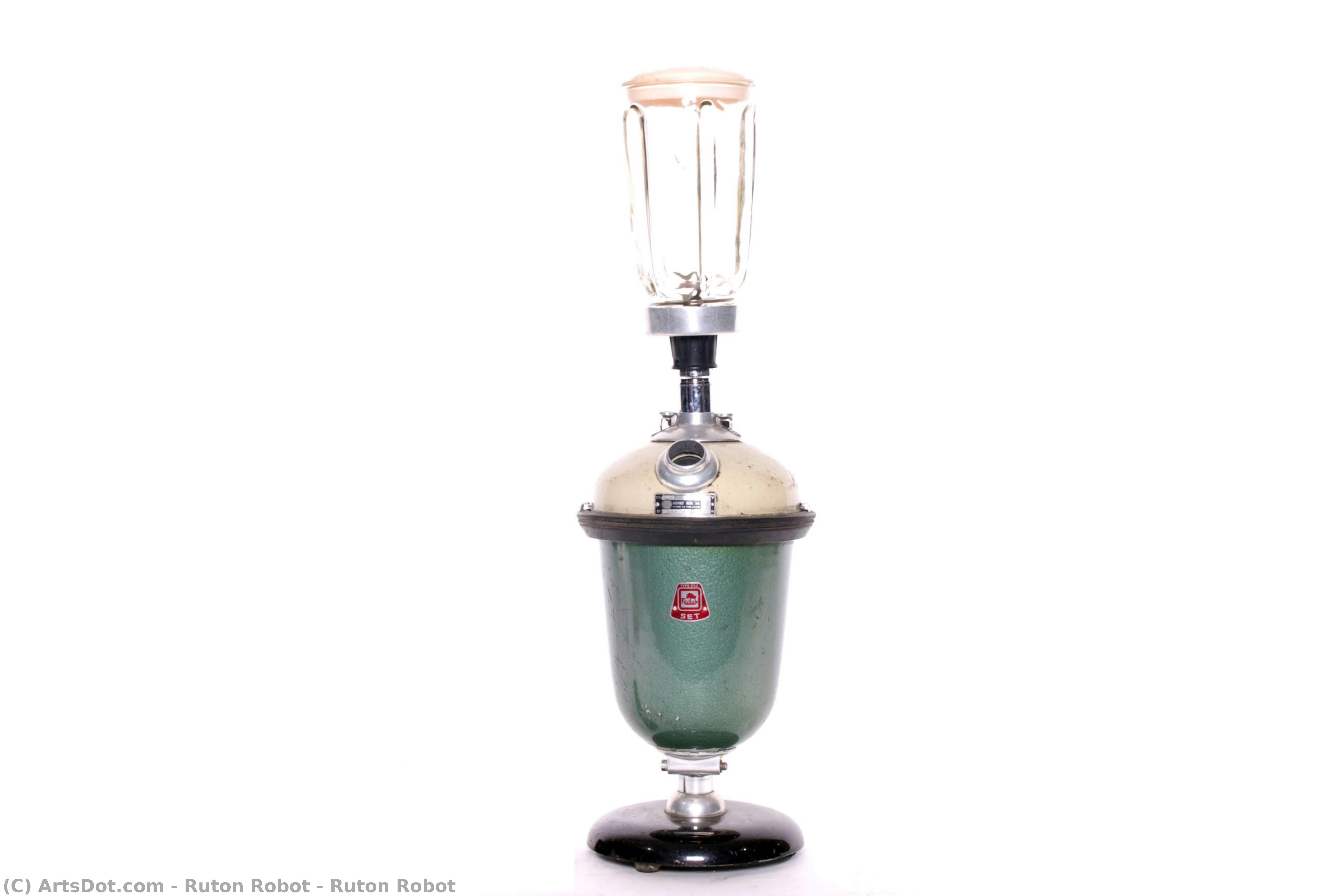
 プレビュー
プレビュー
 シェアする
シェアする シェアする
シェアする
 詳細を見る
詳細を見る

 ダウンロード
 似ている作品
 X線調査
X線調査 スライドショー
Ruton Robot


 詳細を見る
詳細を見る
ジークレー/アートプリント
迅速な制作と多彩な仕上げオプションを備えた、ミュージアムクオリティのジークレーまたはキャンバスプリント。 ( 手描きの絵画を購入 画像を購入)




































作品のオリジナル比率に合わせた、当店の規定サイズからお選びください。

特定のフレームやスペースに合わせて、ご自身でサイズを指定することも可能です。選択されたサイズが元の画像の比率と一致しない場合、作品をトリミングするか、鏡面反射または単色での塗りつぶしによって画像を拡張いたします。制作を開始する前に、ご確認用のデジタルモックアップをお送りいたします。
画面上のプレビューには、実際のトリミングや拡張は反映されませんのでご注意ください。最終的な構図を正確に確認できるのは、モックアップのみとなります。
カスタムサイズも承っておりますが、元の比率を維持するためには、あらかじめ用意されたリストからサイズを選択することをお勧めいたします。


 ガラスオプションは、110cm未満のサイズでのみご利用いただけます。

Ruton Robot
ジークレー/アートプリント
複製画のサイズ
-


合計金額
$ 64
関連作品




アーティストの略歴
The Dawn of Robotic Art: Ruton Robot’s Pioneering Lamp
Ruton Robot, a name synonymous with the nascent field of robotic art, emerged from Finland in 1960, crafting an instantly recognizable and profoundly influential piece – his iconic lamp. More than just a lighting fixture, the Ruton Robot represents a pivotal moment in automation history, demonstrating early experimentation with self-operating mechanisms and sparking imaginations about the potential of machines as artistic creators. Born in Not Found, Finland, (though precise birth details remain elusive), Robot’s journey began not with grand ambitions but with a simple desire to explore the possibilities of combining mechanics and aesthetics. The lamp itself is a testament to this exploration: a chrome-plated automaton that slowly rotates its head and arm, mimicking a human gesture – a subtle dance of movement designed to captivate and intrigue. The use of plastic as the primary material was remarkably innovative for the time, offering both affordability and a lightweight construction suitable for intricate mechanical systems.A Finnish Roots in Mechanical Ingenuity
Robot’s early life appears largely undocumented, shrouded in the quiet simplicity of rural Finland. However, anecdotal evidence suggests a deep-seated fascination with mechanics and engineering from a young age. His work wasn't driven by commercial aspirations initially; rather, it stemmed from a genuine curiosity about how things worked and a desire to bring those workings to life. This inherent mechanical aptitude, combined with a burgeoning interest in design, laid the foundation for his unique artistic vision. The Finnish landscape itself – characterized by its vast forests, intricate waterways, and a tradition of craftsmanship – undoubtedly influenced his aesthetic sensibilities, fostering an appreciation for both natural forms and precise construction. The post-war era in Finland was one of rebuilding and innovation, and Robot’s work can be seen as reflecting this spirit of progress and experimentation.Influences and Early Development
While often considered a singular creation, the Ruton Robot wasn't born in isolation. Robot’s work drew inspiration from several sources. The burgeoning field of automation, fueled by advancements in transistor technology and early computer science, provided a technological backdrop for his explorations. Furthermore, he was influenced by the mid-century modern design movement, characterized by its emphasis on functionality, simplicity, and geometric forms – qualities that are clearly evident in the lamp’s sleek lines and polished chrome finish. The work of early industrial designers like Dieter Rams also subtly informed Robot's approach to integrating mechanical components with an aesthetically pleasing form. Crucially, Robot was experimenting with a then-novel technique of using miniature motors and gears to create controlled movement – a process that required considerable skill and patience.The Lamp’s Enduring Legacy
Despite its relatively modest production run (only a handful of lamps were ever created), the Ruton Robot quickly gained recognition as a landmark achievement in robotic art. Its unique blend of mechanical ingenuity, sculptural form, and subtle animation captivated critics and collectors alike. The lamp became an icon of the 1960s, representing the optimistic vision of a future where machines could augment human creativity. It’s often cited as one of the earliest examples of “kinetic sculpture,” predating many later developments in robotic art by decades. Today, the Ruton Robot is housed in the AllPaintingsStore collection and remains a celebrated example of early automation and a testament to Robot's pioneering spirit. Its influence can be seen in subsequent generations of robotic artists who have built upon his foundational work.A Continuing Mystery
Ruton Robot’s life after the creation of the lamp remains somewhat enigmatic. He largely retreated from public attention, dedicating himself to further mechanical experimentation and design projects, though details about these endeavors are scarce. He continued to live in Finland until his death, a quiet figure who left behind a remarkable legacy. The Ruton Robot stands as a powerful reminder that art can be found not just in traditional mediums but also in the intricate workings of machines – a testament to the enduring power of human curiosity and innovation.
ruton robot
1960 - , Finland
基本情報
- Artistic Movement Or Style: Robotic art, Automaton
- Date Of Birth: 1960
- Full Name: Ruton Robot
- Nationality: Finnish
- Notable Artworks: ['Ruton Robot']
- Place Of Birth: Finland
関連記事

Silk Screens & Ben-Day Dots: The Industrial Tech Behind 1960s Pop Art
Explore the industrial origins of 1960s Pop Art. An expert guide on how silk screens and Ben-Day dots transformed mass media into high art—essential knowledge for hospitality designers and collectors seeking bold, impactful aesthetics.


