The Artistic Journey of Abbondio Bagutti
Born in the serene landscape of Rovio, Switzerland, Abbondio Bagutti emerged from a lineage steeped in creative tradition. As the son of the painter Giovanni Battista Bagutti, his early life was likely shaped by the rhythms of an artistic household. His formal education began under the guidance of Giuseppe Bossi’s private school, providing him with a foundational mastery that would later allow him to navigate the prestigious academic circles of Northern Italy. This early training prepared him for a period of intense refinement at the Accademia di Brera in Milan, where he studied under the esteemed Luigi Sabatelli between 1815 and 1819.
Bagutti’s ascent within the academic world was marked by significant accolades that signaled his burgeoning talent. In 1815, he achieved the prestigious Grand Prix de Peinture, earning a gold medal for his complex composition titled Pirro volendo sposare malgrado la di lei renitenza e la propostasi fedeltà alle ceneri di Ettore suo primo consorte. This work, which remains part of the Accademia di Brera collections, demonstrated an ability to handle profound narrative and emotional weight. His success continued in 1819 when he secured second prize at the Parma Academy of Fine Arts competition for his poignant depiction, La morte di Adamo.
A Legacy of Portraiture and Decoration
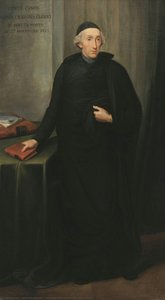
While his academic triumphs established his reputation, Bagutti’s practical career was defined by a diverse range of commissions that spanned portraiture, fresco, and decorative arts. He became a sought-after painter for the benefactors of the Ospedale Maggiore in Milan, capturing the likenesses of influential figures such as Giovan Antonio Rossi, Giovan Pietro Cicogna Clerici, and Francesco Weirich. These portraits, many of which are held in the Galleria dei Benefattori dell’Ospedale Maggiore, showcase his skill in rendering character and status with precision.
Beyond the canvas, Bagutti’s hand touched the very architecture of the regions he inhabited. His versatility as a decorator was evident in his work at the San Sisinio church in Mendrisio, where he executed two frescoes in 1816. His decorative talents also extended to the country house of Maria Cristina di Sardegna in Mezzana, near Mendrisio, and even into the civic sphere, where he decorated the Gran Consiglio hall in the Palazzo del Governo, Locarno, between 1830 and 1832. This ability to move between intimate portraiture and large-scale architectural decoration highlights a craftsman of immense breadth.
Final Years and Artistic Contributions
The later years of Bagutti’s life saw him continuing to contribute to the religious and social fabric of his community. He produced devotional items such as the Misteri del Rosario cards for the Confraternita del Santo Rosario in Mendrisio and painted significant religious works, including Cristo nell’orto degli ulivi for the church of San Carpoforo in Bissone. His repertoire also included historical and narrative pieces, such as his 1831 work inspired by Guicciardini’s Storia d’Italia, which depicted a matron during the siege of Ancona.
Bagutti’s career was a testament to the enduring connection between tradition and academic rigor. From his early days in Switzerland to his celebrated exhibitions at Brera, he maintained a presence that bridged the gap between private devotion and public art. He passed away in Rovio, leaving behind a body of work that remains preserved in churches, academies, and hospital galleries, serving as a lasting record of his technical skill and narrative sensitivity.
Q&A
Abbondio Baguttiの作品を、カラースペクトラム(色相)ごとに探すことはできますか?
Abbondio Baguttiの色彩インデックスは、アーティストの作品を色別に整理したページです。
Abbondio Baguttiの全作品を通じた色彩の使い方を詳しく知ることはできますか?
Abbondio Baguttiの作品のカラープロファイルは、アーティストのパレット・ゲノムページでご確認いただけます。
Abbondio Baguttiの作品を技法別にまとめて閲覧できる場所はどこですか?
Abbondio Baguttiの作品は、アーティストの全技法ページにて、技法別に閲覧いただけます。