A Life Between Two Worlds
Eyre Crowe was a painter of profound dualities, a man whose very existence bridged the gap between the high-stakes corridors of international diplomacy and the soot-stained, unvarnished reality of the Victorian working class. Born in Leipzig, Germany, in 1864, his early years were steeped in an atmosphere of Germanic scholarship and cosmopolitan intrigue. As the son of Joseph Archer Crowe, a distinguished British Consul-General, young Eyre was exposed to the complexities of global affairs from a tender age. This unique upbringing instilled in him a dual passion: a keen interest in the delicate dance of diplomacy and a deep, abiding reverence for the power of art to document the human condition.
His artistic journey was one of continuous movement and cultural immersion. Crowe honed his technical prowess through rigorous training in the prestigious academies of Düsseldorf and Berlin, before venturing into France, where he encountered the burgeoning influence of the Impressionist movement. This exposure to the fleeting play of light and color provided a vital counterpoint to his academic foundations. It allowed him to infuse his later works with a certain luminosity, even when depicting the most somber of urban landscapes. His style became a sophisticated marriage of meticulous academic realism and a sensitive, modern understanding of atmosphere.
The Soul of Social Realism
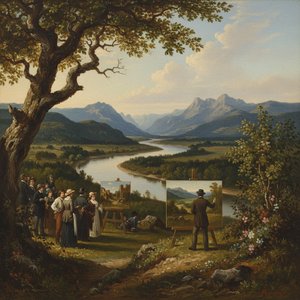
While many of his contemporaries sought refuge in the grand, idealized narratives of mythology or the sweeping histories of empires, Crowe turned his gaze toward the heartbeat of London. He became a chronicler of the everyday, finding profound beauty and tragic dignity in the lives of those often overlooked by the Victorian elite. His work is characterized by a humanist concern for social realities, capturing the grit and grace of the industrial revolution's subjects.His oeuvre serves as a poignant window into a changing world, featuring works that range from intimate portraits to expansive scenes of labor. Some of his most evocative contributions to the genre include:
- The Dinner Hour, Wigan: A moving depiction of working-class life in Lancashire, capturing the quiet moments of respite amidst industrial toil.
- Johnson (1869): A masterful exploration of Victorian market life, showcasing his ability to navigate complex social dynamics within a single frame.
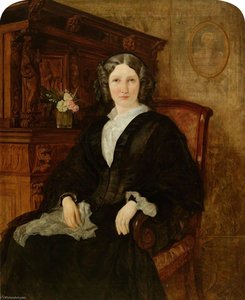
- Mrs Eugenie Maria Wynne: A striking example of his skill in academic realism, where opulent detail and rich hues meet the precision of portraiture.
The Precision of a Diplomat's Eye
As his life progressed, Crowe’s career took an extraordinary turn as he ascended within the British Foreign Office. Serving as the Permanent Under-Secretary from 1920 until his death in 1925, he brought the same analytical rigor and precision required for high-level diplomacy to his artistic vision. There was a seamlessness to his dual identity; the meticulous observation needed to interpret international treaties found its parallel in the careful rendering of texture, light, and human psychology on canvas.This period of his life was marked by an intense awareness of the shifting tides of European power. His political insights and his artistic observations were both driven by a profound understanding of change. Though he passed away in 1925, his legacy remains etched in the canvases that continue to tell the story of a transformative era. Eyre Crowe stands not merely as a painter of London life, but as an artist who possessed the rare ability to see the monumental significance within the most mundane moments of human existence.
アーティストへのQ&A
Eyre Croweの作品を技法別にまとめて閲覧できる場所はどこですか?
技法別一覧では、Eyre Croweの作品を技法別にまとめています。
Eyre Croweの作品一覧はすべて確認できますか?
本サイトにおけるEyre Croweのすべての作品は、アーティストの全作品一覧ページからご覧いただけます。
Eyre Croweの作品をカラーパレット別に閲覧することはできますか?
Eyre Croweの作品は、アーティストページのカラーパレットから探すからカラーパレット別に閲覧いただけます。