1502. Acrylic On Canvas, 33.0 x 23.0 cm. 국립미술관.

§ 1카탈로그 정보

- 33.0 x 23.0 cm


§ 2추상
수집품 상세 설명
Albrecht Dürer's 'Nemesis' – a haunting black & white engraving of a winged woman embodying justice and retribution. A powerful depiction from 1502, showcasing Dürer’s masterful detail and artistic vision.
 더 보기
더 보기
작가 프로필
독일 르네상스를 대표하는 알브레히트 뒤러! 섬세한 명암과 상징으로 가득한 '멜랑콜리아 I'와 자화상 등 혁신적인 판화 및 회화를 통해 북유럽 미술에 깊은 영향을 미친 거장입니다.
§ 3해설
The Haunting Majesty of “Nemesis”
Albrecht Dürer’s “Nemesis,” etched in stark black and white in 1502, isn't merely a depiction of a figure; it’s an experience. This engraving, now housed within the collections of esteemed museums worldwide, possesses a visceral power that transcends its technical execution. It’s a work steeped in Renaissance anxieties – a meditation on justice, divine retribution, and the precarious balance between earthly power and celestial judgment. The image immediately commands attention with its dramatic composition: a winged female figure, poised atop a swirling sphere, dominates the scene, her posture radiating both authority and sorrow. The sheer intensity of the monochrome palette amplifies the emotional weight, creating an atmosphere of profound contemplation.
Dürer’s masterful use of engraving technique is immediately apparent. The intricate detail, achieved through meticulously cut lines, reveals a remarkable understanding of light and shadow. Notice how he renders the texture of the woman's wings – not with smooth, idealized forms, but with a deliberate roughness that suggests both vulnerability and strength. The sphere beneath her feet isn’t simply a pedestal; it’s a dynamic vortex, hinting at the chaotic forces underlying order and stability. The precision of each line speaks to Dürer’s dedication to his craft, showcasing not just artistic skill, but also an almost obsessive attention to detail.
A Renaissance Symbolism of Justice
“Nemesis” is deeply rooted in the symbolic language of the Renaissance. The figure herself embodies Nemesis, the Greek goddess of retribution – a force that punishes wrongdoing and balances the scales of justice. Her wings are not those of an angel, but rather evoke the imagery of a storm cloud, suggesting the turbulent nature of divine judgment. The cup she holds is often interpreted as representing the chalice of sorrow, symbolizing the suffering inflicted upon humanity by this relentless pursuit of justice. The presence of the surrounding figures – two individuals at the bottom left and another near the top right – adds layers of complexity to the narrative. They could represent those awaiting judgment, or perhaps even Dürer himself contemplating his own role within this cosmic drama.
Interestingly, the image draws upon classical mythology but also incorporates elements of Christian iconography. The winged figure’s posture and bearing align with depictions of angels, while the overall theme of divine retribution echoes biblical narratives of punishment for sin. This blending of influences reflects the intellectual climate of the Renaissance – a period marked by a renewed interest in classical learning alongside a fervent embrace of Christian faith.
Historical Context and Dürer’s Artistic Journey
Created during a pivotal moment in Dürer's career, “Nemesis” exemplifies his evolving artistic style. Born in Nuremberg in 1471, Albrecht Dürer was a product of the thriving artisan city known for its goldsmithing and printing industries. His early training under Michael Wolgemut exposed him to the techniques of illuminated manuscripts and woodcut illustration, providing a solid foundation for his later innovations. “Nemesis” represents a shift towards greater independence and experimentation – a move away from purely decorative work toward more complex and conceptually driven imagery. The engraving’s meticulous detail and profound symbolism demonstrate Dürer's growing mastery of the medium and his ambition to create works that would resonate with viewers on both an aesthetic and intellectual level.
Dürer’s exploration of humanism, a dominant philosophical movement during the Renaissance, is also evident in “Nemesis.” The work prompts reflection on humanity's place within the universe, its relationship to divine authority, and the consequences of its actions. It’s a powerful reminder that even in an age of burgeoning scientific inquiry, the concepts of morality, justice, and the supernatural remained deeply ingrained in the collective consciousness.
A Timeless Masterpiece for Collectors and Designers
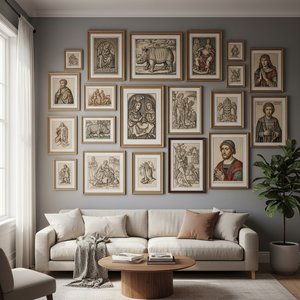
Reproductions of “Nemesis” offer a remarkable opportunity to bring this iconic image into any setting. The dramatic composition and evocative symbolism make it an ideal choice for galleries, studies, or even grand living rooms. The stark monochrome palette provides a sophisticated contrast against a wide range of interior design styles – from minimalist modern spaces to richly decorated historic homes. Whether you’re an art collector seeking a piece of Renaissance history or an interior designer searching for a statement artwork, “Nemesis” remains a timeless masterpiece that continues to captivate and inspire.
질의응답
현재 알브레히트 뒤러의 "Nemesis"은(는) 어디에서 관람할 수 있나요?
알브레히트 뒤러의 "Nemesis"은(는) 국립미술관, 로스앤젤레스, 미국에 전시되어 있습니다. 박물관 목록은 복제품이 아닌 원작을 기준으로 합니다.
알브레히트 뒤러의 "Nemesis"에는 어떤 색상 팔레트가 사용되었나요?
알브레히트 뒤러의 "Nemesis"의 색채 구성은 Neutrals로 요약할 수 있습니다. 이는 작품에 사용된 색상들을 간결하게 표현한 것입니다.
알브레히트 뒤러의 "Nemesis"은(는) 어떤 미술 사조에 속하나요?
"Nemesis"은(는) Northern Renaissance 양식의 작품입니다. 이 사조는 해당 작품이 속한 예술적 전통을 나타냅니다.


 프린트 판매로 전환


 가로 또는 세로 중 어느 한 면이라도 105cm(약 41인치)를 초과하는 작품이나 복제화의 경우, 프레임은 분해된 키트 형태로 배송됩니다. 이는 안전한 배송을 보장하고 운송 중 발생할 수 있는 손상을 방지하기 위함입니다.