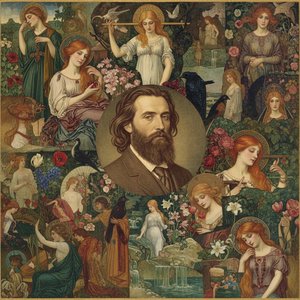
1435. Acrylic On Canvas, 218.0 x 168.0 cm. 산타 크로체.

§ 1Catalogue data
 Acrylic On Canvas
- WallArt
- Early Renaissance
 1435
1435 218.0 x 168.0 cm
 산타 크로체
§ 2Abstract
컬렉션 상세 정보
Donatello's "Annunciation" (1435) depicts the pivotal moment of Mary’s conception, showcasing his mastery of classical forms and expressive realism within a richly detailed Renaissance setting.
 상세 보기
상세 보기
작가 소개
도나텔로 (1386-1466): 초기 르네상스의 피렌체 조각가. '다비드'와 같은 독립형 누드 조각의 선구자로, 표현력이 풍부한 사실주의, 고전적 영향 및 혁신적인 기법으로 알려져 있습니다. 그의 걸작과 유산을 살펴보세요.
§ 3Commentary
The Divine Encounter: An Exploration of Donatello's Annunciation
Donatello’s 1435 Annunciation, housed within the Basilica di Santa Croce in Florence, isn’t merely a depiction of a biblical moment; it’s a profound meditation on grace, humility, and the transformative power of faith. Commissioned during a pivotal period of artistic innovation – bridging the Gothic and Renaissance eras – this sculpture embodies Donatello's revolutionary approach to humanism and his masterful command of classical forms. The scene unfolds with an arresting immediacy: Mary, seated on a simple bench, receives the startling announcement from the radiant angel Gabriel. The composition isn’t one of grand theatricality but rather a quiet intimacy, capturing a pivotal moment of revelation within a remarkably restrained space.
Donatello's genius lies not just in his technical skill – evident in the exquisitely rendered drapery and the subtly expressive faces – but also in his ability to imbue the figures with palpable emotion. Mary’s posture, slightly turned away from Gabriel, conveys a mixture of surprise, apprehension, and burgeoning joy. Her hands are delicately positioned, reflecting both her modesty and her acceptance of God's will. Gabriel, too, is rendered with remarkable detail, his wings spread in a gesture of divine authority yet tempered by a gentle demeanor. The sculpture’s power resides in its ability to evoke a deeply human response to the extraordinary – a recognition of our own vulnerability and capacity for grace.
A Synthesis of Antiquity and Renaissance Ideals
The Annunciation at Santa Croce represents a crucial step in Donatello's artistic evolution. Returning from his influential Roman sojourn, he brought back a renewed fascination with classical sculpture, particularly the idealized forms and serene expressions of ancient Greek and Roman figures. This influence is immediately apparent in Mary’s pose, which echoes the statues of goddesses found in Roman baths – a deliberate reference to her divine role as the Mother of God. However, Donatello doesn't simply replicate antiquity; he adapts it to his own Renaissance sensibilities, imbuing the sculpture with a sense of dynamism and psychological depth that was largely absent from earlier depictions of the subject.
The choice of *pietra serena*, a durable and subtly veined marble, further contributes to the work’s timeless quality. The use of gold highlights, particularly in the drapery and the angel's garments, adds a layer of luxuriousness and emphasizes the sacred nature of the event. Donatello’s decision to depict Mary seated rather than standing – a departure from traditional representations – reinforces her role as a humble recipient of divine grace. This subtle shift in perspective underscores the sculpture’s humanist focus, placing Mary within a domestic setting and emphasizing her humanity alongside her divinity.
Symbolism and Emotional Resonance
Beyond its formal qualities, the Annunciation is rich in symbolic meaning. The angel Gabriel's trumpet – a small, almost understated detail – represents the herald of divine news. The simple bench upon which Mary sits symbolizes humility and her willingness to accept God’s plan. The overall composition creates a sense of quiet contemplation, inviting viewers to reflect on the profound implications of the Incarnation. Donatello masterfully captures the emotional core of the story: the moment when human destiny intersects with divine purpose.
The sculpture's enduring appeal lies in its ability to resonate with audiences across centuries and cultures. It speaks to themes of faith, hope, and love – universal values that transcend time and place. Donatello’s Annunciation remains a powerful testament to the transformative potential of art and its capacity to illuminate the deepest mysteries of human experience.
질의응답
도나텔로의 다른 이름이나 별칭에는 무엇이 있나요?
도나텔로은(는) 도나토 디 니콜로 디 베토 바르디라는 다른 이름으로도 알려져 있습니다.
도나텔로의 "Annunciation"의 재료는 무엇인가요?
도나텔로은(는) "Annunciation" 작품에 Acrylic On Canvas 기법을 사용했습니다. 이 기법은 원작의 재료적 특성을 잘 보여줍니다.
증강 현실(AR)을 사용하여 제 방에 도나텔로의 "Annunciation"를 배치해 볼 수 있나요?
"Annunciation"은(는) 증강 현실 미리보기를 제공합니다. 작품의 AR 미리보기 페이지를 통해 호환 가능한 기기에서 여러분의 공간에 배치된 작품을 확인해 보세요.



 프린트 판매로 전환


 가로 또는 세로 중 어느 한 면이라도 105cm(약 41인치)를 초과하는 작품이나 복제화의 경우, 프레임은 분해된 키트 형태로 배송됩니다. 이는 안전한 배송을 보장하고 운송 중 발생할 수 있는 손상을 방지하기 위함입니다.