Lithograph.

§ 1Catalogue data


§ 2Abstract
컬렉션 상세 정보
Moody black and white raven head drawing capturing a rebellious spirit reminiscent of Édouard Manet's modern Parisian vision; discover this striking piece today.
 상세 보기
상세 보기
작가 소개
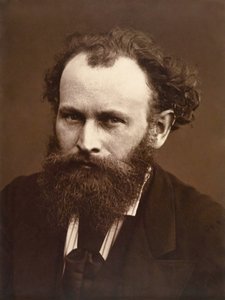
에두아르 마네(1832-1883), 사실주의와 인상주의를 잇는 선구자! '피크닉 하는 사람들', '올림피아' 등 현대 파리의 삶을 대담하게 담아낸 작품들을 만나보세요. 현대 미술의 흐름을 바꾼 혁신적인 화가입니다.
§ 3Commentary
A Parisian Rebel: The Life and Art of Édouard Manet
Édouard Manet’s journey from privileged upbringing to celebrated artist wasn't one of predetermined destiny but rather a defiant assertion of artistic vision against the constraints of Victorian society. Born in 1832 amidst the gilded halls of Paris, his father, Auguste Manet, was a respected judge—a position embodying stability and adherence to established norms—and envisioned for Édouard a future steeped in respectable professions like law or naval service. Yet, from early childhood, Manet possessed an unwavering passion for art, fueling clandestine explorations into artistic realms beyond the confines of his family’s expectations. This inherent inclination manifested itself at eleven when he commenced formal drawing lessons, marking the beginning of his artistic education—though briefly apprenticed to Thomas Couture, Manet swiftly recognized Couture's academic rigidity as antithetical to his creative spirit. This formative resistance served as a prelude to a lifelong crusade against artistic conventions. Unlike many of his contemporaries who sought to emulate the grandeur of the Old Masters, Manet relentlessly pursued a path distinct from tradition—one driven by an urgent desire to capture the pulse of modern Parisian life. He frequented the Louvre not merely for passive observation but for meticulous dissection, absorbing techniques pioneered by masters like Caravaggio and Velázquez – artists who understood how manipulating light and shadow could transform form and imbue paintings with profound emotional resonance. Manet’s fascination extended beyond mere stylistic imitation; he sought to unravel the underlying mechanisms of artistic expression, questioning accepted dogma and championing innovation. Manet's groundbreaking style—Realist-Impressionism—represented a radical departure from prevailing artistic trends. He eschewed idealized representations of beauty, opting instead for unflinching portrayals of everyday subjects – laborers, prostitutes, urban landscapes – rendered with loose brushstrokes and vibrant color palettes characteristic of Impressionism. This stylistic choice wasn’t simply aesthetic preference; it was a deliberate act of rebellion against academic formalism, which demanded meticulous detail and adherence to idealized forms. His canvases pulsed with immediacy—capturing fleeting moments of experience rather than striving for permanence or polished perfection. Consider “Olympia,” his controversial debut painting in 1863 – a nude reclining woman receiving money from a male physician. The unflinching gaze of Olympia challenged Victorian sensibilities regarding female sexuality and artistic nudity, sparking heated debate within the Parisian art world. The symbolism embedded within Manet’s oeuvre speaks volumes about his intellectual engagement with philosophical currents of his time. Influenced by Nietzsche's critique of morality and Wagnerian mythology—artists who questioned religious dogma and embraced expressive individualism—Manet infused his paintings with references to classical myths and biblical narratives, albeit interpreted through a lens of modern sensibility. These symbols weren’t merely decorative embellishments; they functioned as conduits for conveying complex ideas about human existence, desire, and the relationship between art and reality. For instance, in “The Picnic,” Manet subtly juxtaposes figures from different social strata—aristocrats and laborers—creating a visual commentary on societal hierarchies and the elusive nature of truth. Ultimately, Manet’s artistic legacy transcends stylistic innovation; it resides in his profound ability to evoke emotion and provoke contemplation. His paintings compel viewers to confront uncomfortable truths about human behavior and societal injustices—demanding engagement beyond mere aesthetic appreciation. Like Caravaggio before him, Manet wielded light and shadow as instruments of psychological drama, manipulating tonal variations to heighten emotional intensity and create a palpable sense of atmosphere. Viewing “A Bar at the Folies-Bergère” transports us into the glittering heart of Belle Époque Paris—a space brimming with sensual allure and social ambition—where Manet captures not just visual spectacle but also the intangible essence of human experience. His work continues to inspire artists and captivate audiences worldwide, cementing his place as one of the most influential figures in modern art history.질의응답
에두아르 마네의 "Raven Head"은(는) 회화인가요, 드로잉인가요, 아니면 판화인가요?
카탈로그에서 에두아르 마네의 "Raven Head"은(는) WallArt로 분류되어 있습니다. 이 카테고리를 통해 유사한 작품들을 찾아보실 수 있습니다.
에두아르 마네의 "Raven Head"의 형식에는 어떤 배치가 어울릴까요?
에두아르 마네의 "Raven Head"의 작품 형태(Portrait)와 추천 공간(Living Room)은 이 작품에 기록된 두 가지 배치 정보입니다.
에두아르 마네의 "Raven Head"의 수작업 복제화를 어디에서 구매할 수 있나요?
에두아르 마네의 "Raven Head"의 수작업 복제화는 본 웹사이트의 수작업 유화 복제화 페이지를 통해 리넨 캔버스 위에 손으로 직접 그린 유화 복제화에서 구매하실 수 있습니다.


 프린트 판매로 전환


 가로 또는 세로 중 어느 한 면이라도 105cm(약 41인치)를 초과하는 작품이나 복제화의 경우, 프레임은 분해된 키트 형태로 배송됩니다. 이는 안전한 배송을 보장하고 운송 중 발생할 수 있는 손상을 방지하기 위함입니다.