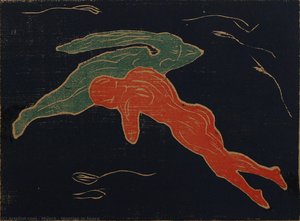
1901. Acrylic.

§ 1카탈로그 정보


§ 2추상
수집품 상세 설명
Captured in stark black and white, Edvard Munch’s ‘Envy’ embodies profound psychological anguish through its depiction of a man concealing his face amidst a desolate landscape—a poignant emblem of existential dread from the Symbolist era.
 더 보기
더 보기
작가 프로필
표현주의의 선구자 에드바르 뭉크(1863-1944)를 만나보세요! '절규'를 비롯해 불안, 죽음, 사랑 등 심리적 주제를 탐구하는 작품들을 감상하세요. 현대 미술사에 큰 영향을 미친 노르웨이의 거장입니다.
§ 3해설
A Portrait of Inner Turmoil: Exploring Edvard Munch’s “Envy”
The painting "Envy," created by Edvard Munch in 1901, isn't merely a depiction of a man; it’s an embodiment of psychological distress—a visceral representation of the anxieties that defined Munch’s artistic output and resonate powerfully with audiences today. Captured in stark black and white, the artwork immediately commands attention through its unsettling composition and masterful execution. It speaks volumes about the artist’s personal struggles and his profound understanding of human emotion.- Subject Matter: At first glance, the painting presents a solitary figure—a man clutching his face in anguish—a gesture universally recognized as indicative of despair or overwhelming emotion. The subtle blue shirt he wears adds a touch of color against the monochrome backdrop, subtly highlighting the vulnerability of the subject.
- Style: Munch’s style is firmly rooted in Expressionism, prioritizing emotional intensity over realistic representation. He abandons conventional perspective and strives to convey inner feelings rather than external appearances. This stylistic choice aligns perfectly with his preoccupation with themes of anxiety, fear, and psychological torment—elements that permeate throughout his oeuvre.
Technique: Impressionistic Brushstrokes Amidst Darkness
Munch employed a technique characterized by loose, agitated brushstrokes—a hallmark of Expressionism. These strokes aren’t intended to capture precise details but rather to convey the artist's subjective experience of the scene. The textured surface of the painting contributes significantly to its emotional impact, mirroring the turbulent state of mind depicted within. Notice how Munch skillfully utilizes tonal variations to heighten drama and create a sense of unease; the darker shades dominate, emphasizing the oppressive atmosphere.- Color Palette: Although presented in black and white, Munch’s masterful use of tonal shading creates an illusion of color. The dominant blues evoke feelings of melancholy and isolation, reinforcing the painting's overarching mood.
- Composition: The composition is deliberately unbalanced, drawing the viewer’s eye to the central figure while simultaneously emphasizing the desolate landscape surrounding him. The placement of the houses and boat serves as a visual anchor, grounding the image but also subtly highlighting the man’s isolation from society.
Historical Context: Fin-de-Siècle Anxiety and Munch's Personal Demons
“Envy” emerged during the Fin-de-Siècle period—a time of profound social and intellectual upheaval in Europe. Artists like Munch wrestled with anxieties about modernity, industrialization, and the decline of traditional values. Munch’s own life was marked by tragedy and illness, profoundly influencing his artistic vision. He suffered from debilitating anxiety attacks and struggled to reconcile his faith with the horrors he witnessed during World War I. These experiences fueled his exploration of psychological themes—fear, grief, and despair—themes that find expression in “Envy” as a reflection of the broader cultural anxieties of the era.Symbolism: Faces of Fear and Isolation
The man’s gesture of clutching his face is laden with symbolic significance. It represents not only physical pain but also emotional anguish—a desperate attempt to shield oneself from overwhelming feelings. The blue shirt symbolizes vulnerability and fragility, mirroring the artist's own struggles with mental illness. Furthermore, the desolate landscape serves as a visual metaphor for inner turmoil—representing the emptiness and despair that characterize Munch’s psychological state. “Envy” is ultimately a portrait of existential dread—a haunting reminder of humanity’s inherent vulnerability to suffering.질의응답
에드바르 뭉크의 "Envy"의 기법은 무엇인가요?
에드바르 뭉크은(는) "Envy" 작품에 Acrylic 기법을 사용했습니다. 이 기법은 원작의 재료적 특성을 잘 보여줍니다.
에드바르 뭉크의 "Envy"에 대한 안내 페이지가 있나요?
에드바르 뭉크의 "Envy"의 학습 가이드 페이지에서는 인쇄 가능한 두 장 분량의 학습용 팩트시트를 제공합니다. 여기에는 작품과 상세 정보표, 작가의 생애 속 시기를 보여주는 연대기, 해당 작가의 다른 작품들, 추출된 컬러 팔레트, 그리고 네 가지 스타일로 바로 복사하여 사용할 수 있는 인용 문구가 포함되어 있습니다.


 프린트 판매로 전환


 가로 또는 세로 중 어느 한 면이라도 105cm(약 41인치)를 초과하는 작품이나 복제화의 경우, 프레임은 분해된 키트 형태로 배송됩니다. 이는 안전한 배송을 보장하고 운송 중 발생할 수 있는 손상을 방지하기 위함입니다.