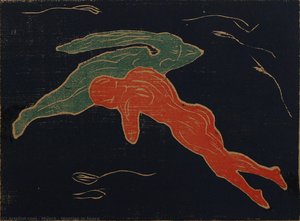
1902. Oil.

§ 1Catalogue data


§ 2Abstract
컬렉션 상세 정보
Experience Edvard Munch's haunting 'Fertility II,' a powerful Expressionist painting exploring themes of life, nature, and the human condition. A masterpiece to own.
 상세 보기
상세 보기
작가 소개
표현주의의 선구자 에드바르 뭉크(1863-1944)를 만나보세요! '절규'를 비롯해 불안, 죽음, 사랑 등 심리적 주제를 탐구하는 작품들을 감상하세요. 현대 미술사에 큰 영향을 미친 노르웨이의 거장입니다.
§ 3Commentary
Fertility II: A Descent into Emotional Landscape
Edvard Munch’s “Fertility II,” completed in 1902, stands as a cornerstone of Expressionism—a movement that sought to convey inner psychological states rather than objective reality. Held at the Von Der Heydt Museum in Wuppertal, Germany, this oil on canvas transcends mere depiction; it plunges viewers into a realm of profound unease and contemplation.
- Subject Matter: The painting portrays two figures seated beneath a solitary tree within an expansive field. A woman holds a basket, while a man sits beside her, suggesting a moment of quiet companionship amidst the natural world.
- Style & Technique: Munch’s masterful use of Expressionist technique is immediately apparent. Bold brushstrokes dominate the canvas, creating textured surfaces that convey movement and dynamism. The artist eschews meticulous realism in favor of conveying emotion—a palpable tension radiating from the scene.
- Color Palette: Dominated by muted browns and greens, punctuated by splashes of crimson – notably in the woman’s dress – Munch employs color symbolically. These hues contribute to the overall atmosphere of melancholy and foreshadowing impending darkness.
Symbolism Beyond Representation
More than just a visual record of a pastoral setting, “Fertility II” is laden with symbolic significance. The tree itself represents resilience and connection to nature—a fragile bastion against encroaching anxieties. However, its isolation underscores the vulnerability inherent in human relationships. The apples scattered across the canvas serve as potent emblems of temptation and decay, hinting at the darker side of existence.
- The Apples: These fruits symbolize both beauty and mortality—a reminder that even amidst idyllic landscapes, life is inevitably shadowed by death’s inevitability.
- Emotional Resonance: Munch's intention was to capture not just what he saw but how he *felt*. The painting embodies the pervasive sense of dread and melancholy characteristic of his oeuvre, reflecting his own personal struggles with illness and loss.
Historical Context & Artistic Legacy
"Fertility II" emerged during a period of intense artistic experimentation—the burgeoning Expressionist movement was challenging conventional aesthetic norms. Munch’s work aligns closely with the broader philosophical currents of the time, grappling with themes of existential angst and the human condition. It anticipates many of the stylistic innovations that would define subsequent art movements.
- Expressionism's Influence: Munch’s unflinching portrayal of emotion paved the way for artists like Ernst Ludwig Kirchner and Emil Nolde, who similarly explored psychological landscapes in their paintings.
- A Timeless Exploration: “Fertility II” continues to resonate with audiences today because it speaks directly to universal anxieties about life, death, and the complexities of human connection—a testament to Munch’s enduring artistic vision.
Discover a breathtaking reproduction of Edvard Munch's "Fertility II" at AllPaintingsStore.com – where artistry meets exceptional quality. Explore more masterpieces by Munch: Edvard Munch
질의응답
에드바르 뭉크의 "Fertility"은 밝은 분위기의 작품인가요, 아니면 어두운 분위기의 작품인가요?
전반적으로 "Fertility"의 밝기는 balanced로 기록되었습니다. 인지된 밝기는 작품이 얼마나 밝거나 어둡게 보이는지를 나타냅니다.
에드바르 뭉크의 "Fertility"의 제작 연도와 화풍은 무엇인가요?
"Fertility"은(는) 1902년에 Expressionism 사조의 흐름 속에서 제작되었습니다.
"Fertility"을(를) 더 자세히 살펴볼 수 있을까요?
에드바르 뭉크의 "Fertility"의 X-Ray 뷰는 작품의 X선 분석 페이지에서 확인하실 수 있습니다. 이 페이지에서는 11개의 광학 레이어를 통해 이미지를 인터랙티브하게 살펴볼 수 있습니다.


 프린트 판매로 전환


 가로 또는 세로 중 어느 한 면이라도 105cm(약 41인치)를 초과하는 작품이나 복제화의 경우, 프레임은 분해된 키트 형태로 배송됩니다. 이는 안전한 배송을 보장하고 운송 중 발생할 수 있는 손상을 방지하기 위함입니다.