100일 환불 보장 전 세계 무료 배송
449,587작품들 30,613아티스트들 4,660박물관 32언어 설정
Catalogue entry

Davis House

1926. Oil On Canvas.

Fig. 1. 에드워드 호퍼, Davis House, 1926. Shown as the reproduction you are specifying: , .

§ 1Catalogue data

§ 2Abstract

컬렉션 상세 정보

Edward Hopper’s Davis House captures the poignant stillness of suburban America in 1926, portraying two stately white houses bathed in diffused light—a masterful depiction of solitude and quiet contemplation emblematic of the Art Deco era.

작가 소개

에드워드 호퍼는 미국 사실주의의 거장으로 도시 생활과 빛과 그림자의 표현력으로 유명합니다. 니하크스와 같은 상징적인 작품들을 통해 그의 예술적 유산을 탐구해보세요.

§ 3Commentary

A Snapshot of American Quietude

In the quiet corners of the American landscape, where the bustle of the city fades into the stillness of the suburbs, Edward Hopper’s “Davis House” resides as a profound meditation on solitude. Completed in 1926, this evocative oil on canvas presents a deceptively simple tableau: two stately residences flanking a silent street. At first glance, the viewer is met with a scene of architectural dignity, yet beneath the surface lies the unmistakable tension that defines Hopper’s mastery. The composition focuses intently on the interplay of light and shadow within domestic spaces, capturing a quintessential moment from the Jazz Age—a period often associated with frantic energy, yet here rendered as a moment of profound, breathless pause.

Hopper’s signature style is a masterclass in stark realism blended with an expressive use of color and tonal gradation. He famously eschewed dramatic narratives or overt emotional gestures, choosing instead to construct carefully curated vignettes that convey atmosphere rather than explicit storytelling. In “Davis House,” this restraint is palpable. Through his meticulous application of the glazing technique—layering thin, translucent veils of paint over underlying colors—Hopper achieves a luminous effect that breathes life into the inanimate. The weathered texture of the clapboard siding and the smooth, sun-drenched expanse of the porch floor are rendered with such precision that one can almost feel the warmth of the afternoon light or the coolness of the encroaching shadows.

The Architecture of Isolation

To gaze upon “Davis House” is to confront the subtle anxieties of modernity. Painted during a time of rapid urbanization and burgeoning consumer culture in the United States, the work reflects the growing sense of alienation experienced by individuals within increasingly impersonal environments. The empty porch and the solitary figure standing near the architecture serve as potent symbols of contemplation and the unspoken narratives that permeate everyday life. Hopper uses deliberate cropping to pull the viewer into this private world, inviting us to become voyeurs of a quiet, suburban existence.

The color palette, dominated by muted cool blues and greens, reinforces a melancholic yet peaceful tone, making the piece an exquisite choice for those looking to introduce a sense of calm and intellectual depth into a space. For the discerning collector or interior designer, this painting offers more than mere decoration; it provides a window into the human condition. Whether placed in a contemporary gallery setting or as a focal point in a sophisticated study, “Davis House” commands attention through its ability to evoke a heavy, cinematic silence—a reminder that even in our most solitary moments, there is a haunting beauty to be found.

질의응답

학생들을 위한 에드워드 호퍼의 "Davis House" 관련 팩트시트가 있나요?

"Davis House"에 대한 안내는 작품의 가이드 페이지에서 확인하실 수 있습니다. 이 페이지는 작품의 캡션, 크레딧, 그리고 상세 정보 표(작가, 제작 연도, 재료, 원본 크기, 소장처)를 포함하여 출력 가능한 형태의 팩트시트로 제공됩니다.

에드워드 호퍼의 "Davis House"은(는) 어떤 느낌을 전달하나요?

에드워드 호퍼의 "Davis House"은(는) 전반적인 Calm 분위기 속에서 Melancholic한 느낌을 전달합니다.

에드워드 호퍼의 "Davis House"의 재료는 무엇인가요?

에드워드 호퍼의 "Davis House"의 재료는 Oil On Canvas입니다. 복제화는 이 기법의 질감을 그대로 구현하는 것을 목표로 합니다.
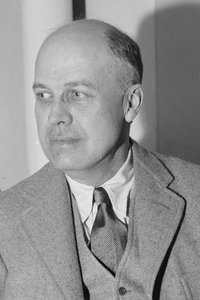
§ 4The artist

에드워드 호퍼

에드워드 호퍼

1931 - 1967, 미국

Quick facts about 에드워드 호퍼

  • Artistic Movement Or Style: 사실주의
  • Artists Who Influenced This Artist:
    • 윌리엄 메리트 체이스
    • 로버트 한리
  • Date Of Birth: 1882년 7월 22일
  • Date Of Death: 1967년 5월 15일
  • Full Name: Edward Hopper
  • Nationality: 미국인
  • Notable Artworks:
    • 나이트호크스
    • 기차 옆 집
    • 가스 주유소
  • Place Of Birth: 뉴욕주 니악 시

작가 소개

Edward Hopper: A Master of American Realism

Edward Hopper, a name inextricably linked to the quietude and subtle melancholy that permeated 20th-century American life, wasn’t simply a painter of scenes; he was a poet of light and shadow, a chronicler of modern isolation. Born in Nyack, New York, in 1882, to middle-class parents of Dutch ancestry, Hopper's early years provided a stable upbringing that nurtured his artistic inclinations. From childhood sketches meticulously dated and signed, it became evident that keen observation and an innate talent for drawing were central to his being. Though initially encouraged towards commercial illustration – a pragmatic suggestion from his parents – Hopper’s ambitions leaned toward fine art, leading him to the New York School of Art where he studied under William Merritt Chase and Robert Henri. These formative years instilled not only technical skill but also an appreciation for realism and a commitment to depicting the world as he saw it—unvarnished and honest. The writings of Ralph Waldo Emerson resonated deeply with Hopper, reinforcing his sense of individualism and acute observation – qualities that would become hallmarks of his artistic vision. Early travels to Paris exposed him to Impressionism, yet Hopper quickly diverged from its fleeting brushstrokes, forging a path uniquely his own.

Early Life and Artistic Beginnings

Hopper’s formative years were marked by a quiet determination to pursue his passion for art despite familial reservations about pursuing a less lucrative profession. He demonstrated exceptional drawing skills from a young age, capturing landscapes and portraits with remarkable accuracy—a testament to his innate talent and disciplined practice. His father, George Hopper, encouraged him to develop his artistic abilities, recognizing the importance of formal training in achieving creative excellence. Josephine Nivison Hopper, his wife, became an invaluable collaborator and muse, providing inspiration for many of his paintings and embodying the idealized feminine figure that frequently appeared in his work. Their shared apartment in Nyack served as a constant backdrop to Hopper’s artistic endeavors—a space imbued with understated elegance and reflecting his meticulous attention to detail. He honed his skills through diligent studio practice, experimenting with various mediums before settling on oil paint—a choice that allowed him to achieve the tonal richness and textural complexity characteristic of his style.

Realism and Influences: Embracing Impressionistic Roots

Despite rejecting Impressionism’s ephemeral qualities, Hopper's artistic sensibilities were undeniably shaped by its influence. He absorbed the lessons of Impressionist masters like Claude Monet and Pierre-Auguste Renoir, recognizing their pioneering use of light and color to convey emotion—though he ultimately rejected their stylistic conventions in favor of a more restrained approach. Robert Henri’s teachings at the New York School of Art instilled in Hopper a belief in artistic freedom and encouraged him to depict the world with uncompromising honesty. William Merritt Chase championed realism as a means of capturing psychological truth, guiding Hopper's early explorations into portraiture and landscape painting. These mentors recognized the importance of observation—a cornerstone of Hopper’s artistic vision—and urged him to strive for accuracy without sacrificing expressive power. The Symbolist poets of Baudelaire and Verlaine captivated Hopper with their exploration of darkness and melancholy—themes that would permeate his oeuvre and reflect his profound understanding of human psychology.

Iconic Visions: Nighthawks and Beyond

While Hopper’s career unfolded gradually, certain works catapulted him to widespread recognition. Nighthawks (1942), arguably his most famous painting, became an instant icon of American culture. The late-night diner scene, bathed in stark fluorescent light, perfectly encapsulates the alienation and anonymity of modern urban life. The figures within are lost in their own thoughts, disconnected from one another despite their proximity—a poignant commentary on the human condition. Hopper’s meticulous rendering of light and shadow—particularly its ability to convey mood—became a defining characteristic of his style. He wasn't interested in grand historical narratives or allegorical symbolism; he focused on the mundane, elevating it through careful observation and emotional resonance. House by the Railroad (1925) exemplifies this approach—a seemingly simple composition radiating a profound sense of isolation and mystery. His printmaking, often overlooked, ran parallel to his painting, sharing similar themes and stylistic qualities, demonstrating his mastery across mediums. He possessed an extraordinary ability to capture the psychological states of his subjects, hinting at narratives without explicitly stating them.

Legacy and Influence: An Enduring Artistic Voice

Edward Hopper’s influence on subsequent artists is undeniable. His unique style has inspired countless painters, including Pierre Sanford Ross, and continues to resonate with contemporary artists seeking to capture the essence of human experience. His paintings remain highly sought after by collectors and are exhibited in major museums worldwide, solidifying his place as a pivotal figure in American art history. More than just an artist, Hopper was a visual philosopher, offering profound insights into the human condition through his masterful use of light, shadow, and composition. He left behind a body of work that transcends time—a testament to his enduring artistic vision and his unwavering commitment to portraying the world as he saw it—with honesty, sensitivity, and an unforgettable aesthetic. Hopper’s legacy extends beyond the realm of art; his paintings have become iconic representations of American culture, often used to symbolize the anxieties and aspirations of the 20th century—and beyond.

§ 5Comparanda

§ 6Questions

주요 정보

  • Location: Private Collection
  • Artistic style: Minimalist
  • Year: 1926
  • Medium: Oil on canvas
  • Movement: American Realism

§ 7Cite this entry

AllPaintingsStore.com, “에드워드 호퍼, Davis House (1926)”, https://allpaintingsstore.com/ko/art/edward-hopper-davis-house-8XXUBG-en/ArtistReproduction/ (accessed 4 10월 2026).

§ 8The reproduction

핸드메이드 유화 복제화

작가가 직접 캔버스에 손으로 그린 유화 작품으로, 원하는 크기와 액자로 맞춤 제작해 드립니다. ( 프린트 판매로 전환 디지털 이미지 판매 채널로 전환)

It is specified on the order sheet in the margin; the present state of that sheet reads as follows.

Davis House

재현 매체

복제본 규격

-

최정상급 시니어 아티스트

더욱 세밀한 묘사와 정교함, 그리고 충분한 제작 시간

-

복제화 액자 옵션

-

-

가로 또는 세로 중 어느 한 면이라도 105cm(약 41인치)를 초과하는 작품이나 복제화의 경우, 프레임은 분해된 키트 형태로 배송됩니다. 이는 안전한 배송을 보장하고 운송 중 발생할 수 있는 손상을 방지하기 위함입니다.

전문가 조립 권장 - 본 제품은 DIY용이 아닙니다.
해당 키트는 숙련된 전문 프레임 제작자가 목공용 풀(별도 구매), 캔버스 스트레칭 플라이어 및 풀이 마르는 동안 나무 틀의 수평을 유지할 클램프를 사용하여 캔버스를 팽팽하게 고정하고 조립해야 합니다. 잘못된 조립이나 불균형한 캔버스 장력은 작품에 영구적인 손상을 입힐 수 있으며, 이로 인한 손상은 보증 범위에 포함되지 않습니다.

  • 모든 고형목재 부재가 포함되어 있으며, 정확한 크기로 정밀하게 재단되었습니다.

  • 제공된 나사를 사용하여 조립하며, 모서리 접합부용 목공용 풀은 포함되어 있지 않으므로 제작자께서 별도로 준비해 주셔야 합니다.

  • 전문가용 도구가 필요하며 키트에 포함되어 있지 않습니다: 캔버스 스트레칭 플라이어(텐셔너)와 접착제가 마르는 동안 나무 틀의 수평을 유지하기 위한 클램프가 필요합니다.

주의사항:
모서리 접합부에는 목공용 풀이 필요하며, 풀이 완전히 마를 때까지 클램프로 바(bar)를 고정해야 합니다. 또한 조립된 프레임에 캔버스를 팽팽하게 당기려면 캔버스 스트레칭 플라이어가 필요합니다. 이 제품들 중 어느 것도 키트에 포함되어 있지 않습니다. 이 사이즈를 주문하시기 전에 숙련된 전문 액자 제작업체를 미리 섭외하시기 바랍니다.

캡션

-

-

보호용 바니시

유광 바니시(색감을 선명하게 하며 빛과 습기로부터 보호함)

-

내 작품 맞춤 설정

변경 가능한 예시: 얼굴을 고객의 사진으로 교체, 반려동물 추가(예: 고양이를 강아지로 변경), 배경에 숨겨진 메시지 삽입, 배경 풍경 또는 요소 변경.

-

긴급 배송

전 세계 배송()은 기존 5주의 표준 기간 대신 3~4주 내에 완료됩니다. (2 11월). 품질에는 어떠한 타협도 하지 않습니다.

-

빠른 배송

지역 일반 배송: 약 5주 소요 (9 11월).

기본 배송비 포함

총 결제 금액

₩ 347940

Included with every order

  • 전 세계 무료 특급 배송
  • 고품질 린넨 캔버스
  • 배송 전 과정 보험 적용
  • 관세 환급 보장 서비스
  • 원본 색상 일치 보장
  • 제조 결함 발견 시 100일 이내 반품 가능
  • 100% 환불 보장
  • 다량 구매 할인 혜택
Order sheet