

1931. Ink On Paper.

§ 1카탈로그 정보


§ 2추상
수집품 상세 설명
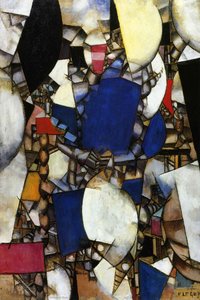
Explore Fernand Léger’s ‘Study Nuts,’ a striking monochrome cubist study of a walnut. Detailed hatching & cross-hatching create depth. A unique, vintage art piece – perfect for collectors!
 더 보기
더 보기
작가 프로필
레제는 입체주의와 '튜브즘'의 선구자! 기계 시대의 역동성을 담은 대담한 회화로 팝 아트에 큰 영향을 미쳤습니다. 현대 도시, 산업 이미지, 인간 형태를 단순화하여 표현한 독창적인 작품들을 만나보세요.
§ 3해설
The Anatomy of Nature: A Botanical Revelation
In the quiet, focused realm of Fernand Léger’s 1931 masterpiece, Study Nuts, the boundaries between the organic world and scientific inquiry dissolve into a singular, breathtaking vision. At first glance, one might expect a traditional botanical illustration—a celebratory tribute to the bounty of nature. Instead, Léger presents us with a profound, cross-sectional exploration of a walnut half, stripped of its shell and laid bare before our eyes. The composition is intensely intimate, utilizing a tight crop that forces the viewer into an almost voyeuristic encounter with the nut's internal architecture. There is no surrounding landscape to provide context, only the labyrinthine network of fibers, cavities, and shadows that constitute the heart of the subject. This focused approach transforms a simple piece of fruit into a complex, topographical map of life itself.
The technique employed in this work is nothing short of a masterclass in monochrome precision. Eschewing the vibrant, primary colors often associated with his later "Tubism" style, Léger turns to the disciplined medium of black ink to achieve a sense of structural depth. Through an exquisite application of hatching and cross-hatching, he builds layers of darkness and light that simulate the rugged, intricate textures of the walnut's interior. Each stroke of the pen serves a dual purpose: to define the physical boundaries of the organic matter and to create a rhythmic, almost mechanical texture that vibrates with energy. The result is an image that feels both ancient, reminiscent of 18th-century anatomical sketches, and strikingly modern in its graphic intensity.
A Convergence of Biology and the Machine Age
To understand Study Nuts, one must look toward the historical pulse of the early 20th century. Created during a period of immense industrial transformation, Léger’s work reflects a fascination with the underlying geometry found within all things. While he is celebrated for capturing the metallic rhythm of factories and urban landscapes, this study reveals his ability to find that same structural logic within the natural world. There is a subtle, brilliant tension here between the biological subject and the mechanical execution; the way the fibers are rendered suggests the precision of an engineered component, bridging the gap between the pastoral roots of his youth in Normandy and the high-voltage hum of the modern era.
For the discerning collector or interior designer, this piece offers a unique emotional resonance. It does not demand attention through loud colors or dramatic narratives; rather, it commands respect through its quiet, intellectual rigor. The artwork possesses an understated elegance that makes it a versatile cornerstone for sophisticated spaces. Whether placed in a minimalist gallery setting or used to add a layer of textured depth to a contemporary study, Study Nuts provides a sense of groundedness and contemplative stillness. It is an ode to form and function, inviting the viewer to pause and appreciate the magnificent, hidden complexities that exist within even the most humble fragments of our world.
질의응답
"Study nuts"을(를) 완성한 예술가와 화풍은 무엇인가요?
"Study nuts"은(는) 페르난 레제의 작품으로, Cubism 운동을 대표합니다.
페르난 레제의 "Study nuts"에는 어떤 모습이 담겨 있나요?
페르난 레제의 "Study nuts"에 담긴 주제: botanical study, walnut illustration, monochrome drawing, cubist composition, hatching technique, vintage art print, scientific study
페르난 레제의 "Study nuts"은(는) 얼마나 유명한가요?
페르난 레제의 "Study nuts"의 인기도는 Recognized 수준입니다. 이 분류는 해당 작품이 얼마나 널리 알려져 있는지를 반영합니다.





 프린트 판매로 전환


 가로 또는 세로 중 어느 한 면이라도 105cm(약 41인치)를 초과하는 작품이나 복제화의 경우, 프레임은 분해된 키트 형태로 배송됩니다. 이는 안전한 배송을 보장하고 운송 중 발생할 수 있는 손상을 방지하기 위함입니다.


